Kenya mineral output falls to nine-year low of Sh20bn

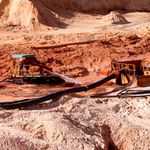
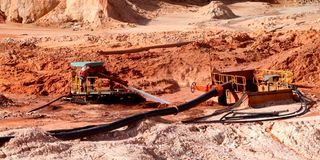
Final mining activities at Base Titanium in Msambweni, Kwale County on May 7, 2024.

Photo credit: File | Nation Media Group

Total value of Kenya’s mineral output fell to a nine-year low of Sh20.3 billion in 2025, reflecting the closure of titanium ore mines in Kwale County, and exposing the sector’s heavy reliance on the once-dominant mineral.

Latest figures from the Kenya National Bureau of Statistics show the total value of mineral production declined from Sh33.8 billion in 2023 to Sh25.5 billion in 2024 before falling further to Sh20.3 billion last year, the lowest level recorded since 2016.
This drop in value came as the sector recorded a strong rebound in activity, highlighting a growing disconnect between production volumes and earnings.

According to the newly released Economic Survey 2026, the mining and quarrying sector staged a recovery from a 7.8 percent contraction in 2024 to achieve a 14.9 percent growth rate in 2025, making it one of the fastest-growing sectors in the economy.

The growth, however, was driven largely by low-value industrial minerals rather than high-value exports. Increased production of materials used in cement manufacturing—aligned with an 18.0 percent jump in cement output to 10.4 million tonnes—helped meet demand from a construction sector that expanded by 6.8 percent.

As a result, while output increased, the overall market value of minerals declined amid weakening global prices for key exports.

The data shows titanium continued to dominate export earnings in the sector.

“Titanium ores and concentrates continued to account for the largest share of the total value of mineral output,” the Economic Survey notes, underscoring the industry’s concentration risk.

However, the value of titanium ore minerals has collapsed, with earnings falling to Sh7.8 billion in 2025, down 53.9 percent from Sh17.0 billion in 2024 and a steep drop from the peak of Sh28.3 billion in 2022.

The decline reflects both softer global prices and the winding down and closure of mining operations in Kwale, which had been the backbone of Kenya’s mineral exports.

Despite the shrinking total value of the sector, workers appear to be benefiting from increased activity.

Wage employment in private mining and quarrying rose by 2.0 percent in 2025, while average earnings grew by 6.0 percent, suggesting that the recovery in production is translating into improved incomes on the ground.

Data also shows mixed performance across other minerals. Gold output increased, supported by expanding artisanal and small-scale mining, while soda ash production also improved.

However, fluctuations in global prices meant that these gains did not translate into proportionate increases in total mineral earnings.

While rising gold production points to gradual diversification, its scale remains insufficient to offset the loss of titanium revenues.

The government-backed exploration efforts, including airborne geophysical surveys and mapping, are beginning to identify new mineral prospects that could boost the sector in the long term.

Follow our WhatsApp channelfor the latest business and markets updates.

PAYE Tax Calculator

Note: The results are not exact but very close to the actual.