Kenya eyes additional Sh65bn from Samurai bond

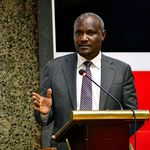
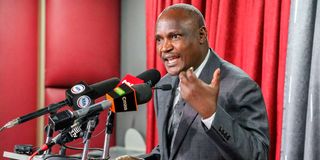
The Cabinet Secretary for the National Treasury and Economic Planning John Mbadi addressing the media on the Financial Year 2026/27 budget and the economic measures to support Kenyans at the National Treasury, Nairobi on May 25, 2026.

Photo credit: Dennis Onsongo | Nation Media Group

Kenya is eyeing an additional Sh64.6 billion from a Japan-backed Samurai bond in the current financial year, as the government looks to broaden its sources of credit offered on terms more favourable than market rates.

National Treasury Cabinet Secretary John Mbadi says that after securing Sh22.1 billion from Japan in the just-ended fiscal year, the government is keen to further tap the East Asian market owing to the low interest rates on the loans.
Nairobi has long floated the idea of a Samurai bond to diversify its external borrowing from dollar-denominated facilities and commercial debt from Eurobonds and syndicated loans. It has also mulled issuing other facility types such as Shariah bonds, green bonds and Chinese yuan-denominated Panda bonds.

Samurai financing refers to debt denominated in Japanese yen and subject to Japanese regulations.

“In this financial year, we are targeting $500 million (Sh64.6 billion) from the Samurai bond. That is because we are diversifying our sources of debt and looking for more concessional rates, and if you look at Samurai bonds, the interest rate is around 4 percent or even less,” Mr Mbadi said last week.

The government has targeted to borrow Sh116.2 billion from external lenders in the current fiscal year, down from the target of Sh2544.8 billion.

Overall, the government’s fiscal deficit for 2026/27 stands at Sh1.146 trillion, with the domestic market expected to lend out Sh1.03 trillion to plug the deficit.

In addition to the expected Samurai financing, the government has this month taken up a $750 million (Sh97 billion) tranche from the World Bank’s Development Policy Operations funding programme.

Last month, Kenya drew down its first Samurai financing of $171.31 million (Sh22.1 billion), earmarking the funds for the manufacturing and energy sectors.

This disbursement was, however, not a Samurai bond, because it was not raised from the market, but was instead a yen-denominated loan from the Nippon Export and Investment Insurance, Japan’s official export credit agency.

Mr Mbadi did not disclose whether the new financing for this year will come from the same agency, or from the Japanese bonds market.

Under the June financing, Sh13.1 billion was channelled towards promoting local motor vehicle assembly as part of Kenya’s automotive policy and efforts to create jobs.

The funding has been made available to local assemblers and spare parts manufacturers in the form of soft loans that will be administered by a bank appointed by the government. The financing also covers technical training, legal and regulatory reforms in the automotive sector.

Another Sh5 billion is earmarked for the energy sector under a programme aimed at reducing energy losses and improving affordability of electricity. Cutting energy losses is expected to reduce the cost of power for industries and make Kenya’s manufactured goods more competitive in the export market.

The remaining Sh4 billion will support Kenya’s reform and development agenda by reinforcing essential public services, protecting key social investments and institutions.

Japan remains one of Kenya’s biggest bilateral lenders, with outstanding loans of Sh77.23 billion at the end of April 2026. Only China at Sh611.4 billion and France at Sh102.75 billion account for larger outstanding bilateral loans to Kenya.

Follow our WhatsApp channel for the latest business and markets updates

PAYE Tax Calculator

Note: The results are not exact but very close to the actual.