Time flies with great content! Renew in to keep enjoying all our premium content.
Prime
Kenya, EAC States dominate global trade obstacle warnings
Records by the World Trade Organisation (WTO) showed that its members in 2024 submitted 4,334 notifications on TBT measures, which surpassed the previous year’s record high of 4,098.
Kenya and other partner States of the East African Community (EAC), including Uganda, Tanzania, Rwanda, and Burundi, last year dominated record-high global notifications of policy measures that potentially posed Technical Barriers to Trade (TBT), new disclosures showed.
This signals improved transparency amid pressure for lower commerce costs and market predictability.
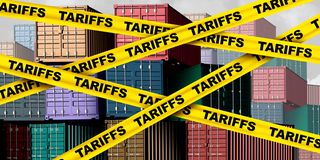
TBTS are state regulations, standards, and conformity assessment procedures that can restrict international trade if they are more trade-restrictive than necessary or not applied in a non-discriminatory way.
Records by the World Trade Organisation (WTO) showed that its members in 2024 submitted 4,334 notifications on TBT measures, which surpassed the previous year’s record high of 4,098.
The number of notifying members also rose slightly from 90 in 2023 to 91 in 2024, with the WTO attributing the higher notifications to increasing transparency in trade. “Uganda submitted the most notifications, followed by the United States, Tanzania, Kenya, Rwanda, Egypt, Burundi, Brazil, China, and Israel,” the WTO revealed.
Kenya made several TBT notifications to the WTO in 2024, including notifications for draft and final standards on products such as pumpkin and other measures to protect health and prevent deceptive practices.
These notifications, managed by the WTO/TBT National Enquiry Point at the Kenya Bureau of Standards (Kebs), inform other WTO members about Kenya's developing regulations and standards to facilitate trade and allow for comments from affected countries.
“This draft Kenya Standard specifies requirements and methods of sampling and testing for seeds obtained from pumpkin (Cucurbita pepo L.) intended for human consumption or for other use in the food industry. This standard applies to raw and roasted pumpkin seeds,” Kenya stated in a TBT notification to the WTO on January 26, 2024.
Kenya, Burundi, Rwanda, Tanzania, and Uganda also notified the WTO of potential TBTs on fish protein concentrates, sampling and test methods for frozen lobster tails, fish flour, and fish liver, among others.
Kenya is currently under pressure from partners such as the US to level the playing field by addressing both tariffs and TBTs that impair trade.
For example, the US listed a raft of drawbacks to trade, including a 35 percent tariff on second-hand clothes or mitumba, graft, and a series of temporary tax waivers to curb rises in domestic food prices, prompting President Donald Trump to hit Kenya with a 10 percent reciprocal tariff.
The US Trade Representative flagged Kenya’s tax policy on second-hand clothes and clean energy stoves, as well as price subsidies on key agricultural products, as a barrier to trade.
“Kenya applies the East African Community (EAC) Customs Union’s Common External Tariff (CET), with four tariff bands: (1) zero percent duty for raw materials and inputs, (2) 10 percent duty for processed or manufactured inputs, (3) 25 percent duty for finished products, and (4) 35 percent for a list of products the EAC concluded would promote regional integration and domestic industrial sectors” the USTR Jamieson Greer pointed out.
“Among the imports that are impacted by the 35 percent fourth tariff band are US exports of second-hand clothing and environmentally cleaner cooking products. Many textiles and agricultural products are classified as “sensitive items” under the EAC and, as a result, are subject to ad valorem tariff rates above 35 percent.”
The US said the high special taxes include rates of 50 percent for some textiles, 60 percent for most milk products, 50 percent for corn and corn flour, 75 percent for rice flour, 50 percent for wheat flour, and 100 percent for sugar—a position it said disadvantaged American producers.
“When deemed necessary, the Kenyan government has temporarily waived agricultural tariffs to stabilise prices when domestic agricultural prices exceeded certain levels. When the Kenyan Government has taken such action, it has applied for and regularly received from the EAC an exemption from the CET,” the USTR said.
The US also flagged trade facilitation and customs barriers in Kenya, as well as persistent graft and slack procurement processes in Kenya.