Kenyans will have spent additional Sh25 billion on fuel in the two months to June 14, highlighting the impact of US President Donald Trump’s war on Iran on household and business budgets.
A Business Daily analysis of fuel consumption trends and revised Energy and Petroleum Regulatory Authority (Epra) prices shows motorists and households will spend an additional Sh25.09 billion between April 15 and June 14.
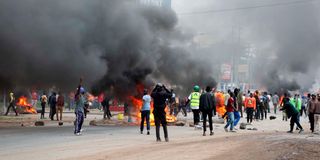
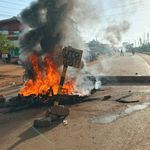
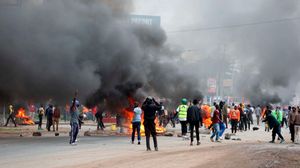
The fallout from the Iran war is driving inflation to its highest level and creating a growing political problem for President William Ruto in the wake of protests and a nationwide public transport strike that was paused yesterday for seven days.
Higher prices at the pump have not only taken a toll on motorists but have also pushed up the cost of everything from groceries to fares and manufacturing as escalating fuel expenses feed through to other sectors.
Inflation rose to 5.6 percent year-on-year in April from 4.4 percent a month earlier, driven largely by higher fuel costs, marking the fastest increase in seven years.
The additional burden excludes nearly Sh14 billion government subsidies and the impact of the halving of Value Added Tax (VAT) on petroleum products to 8.0 percent, meaning the actual cost to consumers could have been higher without State intervention.
Diesel users will bear the heaviest additional burden at Sh16.13 billion, followed by petrol consumers at Sh6.75 billion and kerosene users at Sh2.20 billion.
The estimates are based on average monthly fuel consumption derived from official data for the 12 months ending February 2026, covering diesel, super petrol and kerosene usage across the country.
The additional cost was calculated by comparing changes in pump prices across successive pricing cycles against estimated monthly consumption volumes as reported by the Kenya National Bureau of Statistics.
According to the analysis, Kenyans consume about 243.3 million litres of diesel, 187.7 million litres of super petrol and 57.1 million litres of kerosene monthly.
This translated to a projected fuel bill of Sh107.8 billion in the May 15-June 14 cycle alone, compared to Sh82.7 billion in the March 15-April 14 period before the steep increases linked to the Middle East conflict.
Epra started adjusting fuel prices upward from mid-April after increased shipping and importation costs linked to the Gulf conflict filtered into Kenya’s petroleum supply chain.
The impact started emerging in the April 15-May 14 pricing cycle because Kenya’s fuel pricing system operates with roughly a one-month lag between importation and local pump price adjustments.
Diesel prices rose from Sh166.54 per litre in the March 15-April 14 cycle to Sh206.84 in April-May before climbing further to initial Sh242.92 in the May 15-June 14 cycle.
Super petrol increased from Sh178.28 per litre in March-April to Sh206.97 in April-May and Sh214.25 in the current cycle.
Following protests by public transport operators demanding a Sh46 per litre reduction, Epra on Monday lowered diesel prices by Sh10 to Sh232.86 per litre, while petrol prices remained unchanged.
The fuel price increases triggered a public transport strike that disrupted commuter services and increased pressure on the government to review pump prices.
Interior Cabinet Secretary Kipchumba Murkomen said on Tuesday that the government had reached a deal with public transport operators to suspend the strike for seven days to allow “high-level” negotiations on their demands.
The agreement followed talks that began Monday between the government and the operators protesting rising diesel prices.
Federation of Public Transport Sector chairman and Kenya Bus Service Management managing director Edwins Mukabana said operators had agreed to temporarily suspend the strike to give negotiations a chance.
“We have had serious consultations from yesterday [Monday], and today [Tuesday], we have just had a breakthrough, not because we are satisfied but we want to give negotiations a chance,” said Mr Mukabana.
“So we are waiting for negotiations at high level, but we would like to let customers and those who we work with understand that if this is not taken seriously within the seven days that we have given, the strike will be back.”
Association of Matatu Transport Owners chairman and Federation of Public Transport Sector chief executive Kushian Muchiri said operators had not abandoned demands for a deeper reduction in diesel prices.
“As much as we would have been happy to say that we have got the Sh46 [reduction per litre] that we were seeking, we are also glad that at least negotiations have started in earnest,” said Mr Muchiri.
“The need for our demands to be met and for our transport industry to be taken seriously has been well noted by the government.”
Kenya, like many African countries, relies heavily on fuel imports from Gulf producers through government-to-government supply arrangements, exposing it directly to geopolitical tensions in the Middle East.
The conflict, which began on February 28, disrupted supply routes and triggered fears over oil shipments through the Strait of Hormuz, where about a fifth of the world’s oil passes.
Although a ceasefire has since been declared, fuel prices have remained elevated amid continued uncertainty around the critical shipping channel.
Global crude prices surged past $100 per barrel at the height of the tensions as traders feared Iran could disrupt tanker traffic through the Gulf, sending shockwaves across fuel-importing economies such as Kenya.
The increases would have been steeper without government intervention through subsidies and tax cuts.
Energy Cabinet Secretary Opiyo Wandayi said the State had spent Sh13.9 billion in subsidies between April and May to cushion consumers from higher global oil prices.
“On subsidy alone between last month and this month, the government has applied Sh13.9 billion to manage the cost of petroleum products,” said Mr Wandayi.
“Last night’s reduction of Sh10 on diesel took Sh2.7 billion to demonstrate that the government continues to be sensitive on the plight of Kenyans.”
Last month, the government also cut VAT on fuel from 16 percent to 8.0 percent until July in an attempt to ease pressure on consumers and businesses.
Treasury Cabinet Secretary John Mbadi said on Monday the State had lost an estimated Sh24 billion in fuel taxes due to the VAT reduction from April 15.
Mr Mbadi added that only Sh5 billion remained in the Petroleum Development Levy (PDL), the fund used to subsidise fuel prices and funded through a Sh5.40 charge per litre of petrol and diesel.
The government said it used Sh6.2 billion to subsidise fuel prices in the monthly cycle ending April 14 and a further Sh5 billion in the current round ending May 14.
The rapid depletion of the subsidy fund has increased pressure on the State to inject more public money to cushion households and businesses from surging fuel prices.
Fuel taxes remain a major contributor to pump prices in Kenya, with the Roads Maintenance Levy accounting for the largest share at Sh25 per litre of petrol and diesel.