How Uganda board seat fight put KPC sale at risk

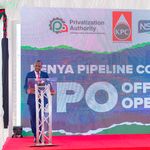
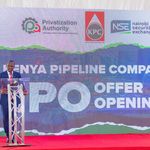
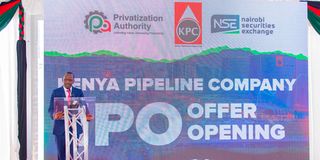
 Kenya Pipeline Company CEO Joe Sang during the company's IPO launch.

Photo credit: Pool

Uganda secured two seats in the board of the Kenya Pipeline Company (KPC) after last-ditch crunch talks saved the sale of the government’s 65 percent stake in the pipeline firm from collapse.

Five people familiar with the talks said Uganda had threatened to walk away from the KPC initial public offering (IPO) because of lack of a legal commitment offering Kampala at least two board seats in the firm whose sale has struggled to hit targets.
The Ugandan threat would have denied the IPO over Sh20 billion from Kampala in what could have sparked the collapse of KPC sale given Kenyan investors were trailing targets.

This triggered alarm bells in Nairobi, which yielded to the demand and forced the revision of KPC’s articles of association to guarantee Uganda board seats should it snap at least 20 percent of Kenya pipeline shares.

The amended articles association was made public a day after Kenya announced it was extending the IPO by three working days amid indications that deal makers had received commitments for less than half of the Sh106 billion the State sought for sale of a 65 percent stake in the firm.

The offer had been due to close on Thursday but will now remain open until Tuesday and the IPO must raise at least Sh53.1 billion from more than 250 investors for it to proceed.

Top brokers who sought anonymity for fear of State reprisals said about 20 percent or nearly Sh23 billion of the offer had been sold at the close of business on Wednesday amid a split on views over the valuation of KPC.

This made the commitment from Kampala to buy shares worth over Sh20 billion that is seen as critical for success of the IPO.

Sources close to the talks reckon a meeting between Kenya and Ugandan top officials broke the ice, setting off a series of actions, including release of the amended articles of association and extension of the IPO sale period. 

Treasury Cabinet Secretary John Mbadi approved amendments to KPC’s articles of association while attributing the late change to the company’s strategic regional importance.

“The amendment of articles of association to grant nomination rights to the government of Uganda acting through its Minister of Energy and Mineral Resources to appoint at least two directors so long as they hold not less than 20 percent of the issued share capital of the company,” Treasury said in a Friday press notice co-signed by KPC and the Privatization Authority.

“The amendment of the articles to enhance board composition considerations incorporating the consideration of regional interests reflecting the company’s strategic position as a regional entity.”

The National Treasury says that the amendments would not affect the existing voting rights of shareholders including the government of Kenya or introduce any new class of shares.

The Ugandan government is however expected to have a veto vote over certain ‘reserved matters.’

“The amendment of Article 21 (reserved matters) to require an affirmative vote of a government of Uganda director, in addition to a director appointed by the government of Kenya, acting through the Cabinet Secretary Treasury, in respect of certain reserved matters as se out in the amended and restated articles of association, and to provide for the inclusion of additional reserved matters,” the National Treasury added.

Of the total stake on offer, 15 percent is reserved for oil marketing companies, five percent for employees and the remainder will be allocated to local retail, local institutional, East African and foreign investors, with each category receiving 20 percent.

The government will retain a 35 percent stake.

“In cases of under subscription, valid applications in the affected category be allocated in full, with remaining shares reallocated in the order of local retail, local institutional, East African investors, international investors and oil marketing companies (OMCs),” KPC investor memorandum says.

“In cases of oversubscription, Kenyan investors will be given priority.”

Mr Mbadi earlier indicated that Uganda has sought more shares, and indication of its appetite to snap shares left on that table by other investors.

“Ugandan investors want more shares from us and are annoyed that we are only offering 20 percent under the East African pool,” Mbadi said.

Uganda through its pension fund, National Social Security Fund (NSSF), has in recent years bought stakes in companies listed on the Nairobi Securities Exchange (NSE).

NSSF Uganda has significant ownership in Safaricom and blue-chip banks like Absa Kenya, Stanbic Holdings, DTB Group and Cooperative Bank.

Analysts expect Uganda NSSF to snap substantial shares in the Kenya pipeline.

The push for Kampala’s wider say in KPC affairs comes less than two years after Kenya allowed landlocked Uganda's state oil firm to import petroleum products through its port of Mombasa, ending a row between the two neighbours.

The deal saw Kenya give Uganda National Oil Company (UNOC) licence to use KPC to move the products from Mombasa port.

Using Kenyan firms to import oil had "exposed Uganda to occasional supply vulnerabilities" where Uganda retail companies were considered secondary whenever there were supply disruptions affecting retail prices.

Uganda had been seeking alternative ways of importing petroleum products, including through a Tanzanian port, after its oil retailers for decades received their cargo through affiliated firms in Kenya. 

The government priced the Kenya pipeline IPO at Sh9 per share for the offer that opened on January 19 amid a split on views over its valuation.

The sale of a 65 percent stake in KPC is part of the Treasury's drive to divest from state companies.

The government is also reducing its stake in telecoms operator Safaricom, with the sale of a 15 percent stake to South Africa’s Vodacom for Sh204 billion.

Burdened by high national debt, limited room to raise taxes and annual loan repayments that consume 40 percent of government revenues, the State has sought new funding models.

The Kenya Pipeline IPO will be the region's biggest, surpassing the 2008 Safaricom offering, which raised just over Sh50 billion.

In dollar terms, the Safaricom IPO may still rank as the largest, given the weakening of the Kenyan shilling over the past 17 years.

The Kenya Pipeline IPO comes amid a sharp rally at the NSE.

KPC’s expected reduction in its dividend payout ratio and future capital expenditure commitments (Capex) including laying a new pipeline between Mombasa and Nairobi have led to investor scrutiny of the offer.

KPC share sale offer documents show the firm will reduce its average dividend payout from 94.5 percent of profits to 50 percent.

Wesley Manambo, a senior research associate at Standard Investment Bank (SIB), has issued a buy recommendation to investors with a long horizon on KPC, arguing that there is less attraction for short-term oriented investors.

Follow our WhatsApp channelfor the latest business and markets updates.

PAYE Tax Calculator

Note: The results are not exact but very close to the actual.