How Sh299bn fees crashed Mau-Summit toll road deal

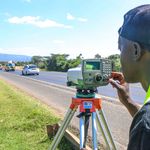
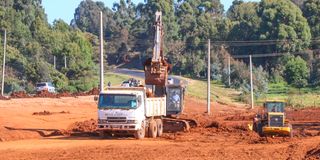
Dualing of the Sh200 billion Rironi-Mau Summit highway project ongoing at Manguo Swamp near Limuru junction on December 15, 2025.

Photo credit: Boniface Mwangi | Nation Media Group

A standoff over a Sh299 billion service fee over 13 years prompted the Ruto administration to cancel a deal with a consortium of French contractors for the construction of the Rironi-Mau summit toll road.

Fresh Treasury disclosures have revealed the secret fee — Sh23 billion annually — that would have been financed through debt as French firms continued to collect toll charges from motorists using the critical 175 km road on a public-private partnership (PPP) contract.
Treasury officials reckon that the Sh299 billion pay, which was structured during the era of President Uhuru Kenyatta, was untenable given the tight public finance, triggering the cancellation of the French deal in favour of Chinese contractors.

The French consortium, comprising Vinci Highways SAS, Meridian Infrastructure Africa Fund, and Vinci Concessions SAS, had inked a deal in September 2020 to build the highway and recover its investments over 30 years.

But it agreed with Kenya to pay the Sh299 billion in the first 13 years to help the French firms recoup their investments speedily.

From year 14, Kenya was also expected to cover the toll shortfall in the event that fewer cars use the highway, tilting the deal in favour of the consortium.

The Treasury reckons the French deal failed to align with fiscal consolidation objectives, which demands reducing the budget deficit and stabilising public debt, despite talks that aimed at restructuring the commercial project.

“Significant macroeconomic developments during the 2020-2022 period including sustained global inflation, depreciation of the Kenya shilling, tightening fiscal space, and rising public debt service obligations materially affected the assumptions upon which the original project agreement had been developed, necessitating a reassessment of its long-term affordability and fiscal sustainability,” Treasury Cabinet Secretary John Mbadi said in disclosures seen by the Business Daily.

“The reassessment undertaken by the government established that the original project agreement no longer aligned with fiscal objectives necessary to support sustainable infrastructure financing.”

Kenya last year terminated the highway expansion deal with the French consortium and handed it to Chinese contractors, with National Social Security Fund (NSSF) getting a piece of it.

It paid off the consortium led by Vinci Highways Sh7.3 billion to avoid a costly legal battle in London.

The deal to turn the single-lane road into a multilane highway linking Nairobi to Kericho was signed in Paris in 2020 during a visit by then President Kenyatta.

Kenya's decision to cancel the contract came after the government unsuccessfully sought to revisit the terms of the agreement, which it warned put the risk from insufficient traffic on the taxpayers.

The French consortium was awarded the contract on September 30, 2020.

However, the deal was cancelled by the Ruto administration even before the contractor commenced the works, ushering in Chinese contractors. The development came after Dr Ruto visited Beijing in April 2025.

Initially, there was a push to have Chinese contractors settle the Sh7.3 billion compensation bill and inherit the works done by the French contractors, like the feasibility fees. However, this was dropped during President Ruto's visit to China, leaving the bill in the hands of Kenyan taxpayers.

The Treasury said earlier it pursued an out-of-court settlement to avoid a costly and protracted suit at the London Court of International Arbitration. Kenya was also fretful that without the payment, the French would block attempts to take away the contract—a move that would have marred the President’s Beijing tour in April 2025.

Besides the Sh299 billion service charge, Kenya was uncomfortable with the high toll fees. Motorists were to pay $6 (Sh780) to drive 175 kilometres in a small car and close to $50 (Sh6,500) for a truck to go the same distance under the French deal.

Under the current deal, a consortium of China Road and Bridge Corporation (CRBC) and the NSSF is building 81 kilometres from Nairobi to Gilgil via Naivasha and a 58 Kilometre stretch from Nairobi to Naivasha through Maai Mahiu.

Another Chinese firm — Shandong Hi-Speed Road and Bridge International Engineering (SDRBI)—will construct 94 kilometers from Gilgil to Mau Summit.

The projects were launched on November 28, 2025, and construction is currently ongoing.

The government will receive 60 percent of excess profits from the Rironi–Mau Summit toll road in a move aimed at limiting the potential for excessive earnings by the Chinese firm during the 30-year concession period.

Treasury documents show that the owners of the road will transfer to the State 60 percent of earnings above the agreed 16 percent of the internal rate of return (IRR) on equity.

Negotiations with the two Chinese firms also saw the exclusion of a minimum revenue guarantee (MRG), which would have required that the State to compensate the operators if toll collections fall below an agreed level.

This means that the project’s demand and revenue risks have been transferred to the private sector.

The NSSF will take a Sh9.59 billion stake in the consortium with CRBC on an ownership split of 40 percent and 60 percent.

The pair is projecting to make an annual dollar return of about 13 percent on their investment via user fees or toll charges.

They will fund their investment through a 25 percent equity injection of Sh23.97 billion and debt of Sh71.89 billion, with the NSSF contributing 40 percent of the equity component.

The profit share model marks a departure from the demand-risk model used for the Nairobi Expressway, where the Chinese operator absorbs losses if traffic volumes fall short of projections, but retains all excess revenue when usage exceeds expectations.

The Nairobi Expressway has not made a profit since its launch, with operational costs always exceeding toll revenues.

President Ruto is keen to see the project completed before the next General Election in 2027, viewing it as a key selling point to residents of the Rift Valley, western Kenya and Nyanza regions, where motorists often endure long traffic snarl-ups, especially during the festive season.

This project forms a critical part of both the Northern Corridor and the Trans-African Highway, serving as a vital transport artery that links East and Central African countries to the Port of Mombasa.

The highway plays a key role in supporting the movement of goods and services across the region, accommodating a substantial volume of heavy commercial traffic that is essential for regional trade and economic development.

Follow our WhatsApp channel for the latest business and markets updates.

PAYE Tax Calculator

Note: The results are not exact but very close to the actual.