The Treasury has cut Sh96 billion from its tax target for the year starting July amid efforts to avoid youth-led protests and an eye on voters in an election year.
It projects to raise Sh2.9 trillion from taxes in the year ending June 2027 from an initial target of Sh2.99 trillion, says the Budget Policy Statement, which guides the preparation of county and national budgets as well as the Finance Bill.
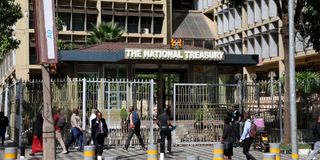
The Treasury admits that there is little room to raise taxes, forcing it to turn to raising cash by offloading some state assets, such as the sale of stakes in Safaricom and Kenya Pipeline Company (KPC).
The fear of protests hasĀ forced the abandonment of aggressive tax hikes amid the pressure to raise additional revenues from tax cheats.
The State is also seeking to ease taxes and placate the electorate in the last full fiscal year before the General election of August 2027 President William Ruto administration has introduced a raft of new taxes and raised old ones, since he was elected president in August 2022, making the moves unpopular with many Kenyans who believe he has betrayed his campaign pledge to champion the interests of āhustlersā - those who struggle financially.
Mr Ruto previously acknowledged that the taxes are āpainfulā but termed them necessary to reduce government borrowing and bring down the national debt before youth-led protests in 2024 changed the narrative.
More than 50 people were killed when the youth-led marches broke out last June, forcing President William Ruto to abandon tax hikes worth Sh346 billion.
The Treasury says the soft Finance Act, which lacked new taxes, has slowed revenue growth, forcing the State to borrow more and plug the budget deficit currently estimated at Sh901 billion.
The projected fiscal deficit for the 2026/27 fiscal year has already been revised upwards to 5.3 percent of GDP or Sh1.1 trillion from a prior estimate of 4.9 percent or Sh1 trillion.
Total spending for the cycle remains unchanged at Sh4.64 trillion, mirroring the difficulties of budget cuts to offset declining revenues. The pressure on revenues could escalate further if the government gives tax concessions in the Finance Bill, 2026 as the Kenya Kwanza administration seeks a second term at the August 2027 polls.
āTax receipts have not grown as much as we wanted,ā said Treasury Principal Secretary Chris Kiptoo.
āThis reflects slower-than-expected tax receipts, largely due to compliance gaps, administration challenges and the impact of revenue-reducing measures introduced by the National Assembly in the Finance Act, 2025.ā
The revenue collection gap has widened above Sh100 billion at the end of October 2025.
Total revenue collected, including fees for government services, stood at Sh942 billion against a target of Sh1.049 trillion.
The underperformance of taxes was Sh107.7 billion, while fees for the issuance of items like passports were above target by Sh169.2 million.
āThe ordinary revenue collection was Sh766.8 billion against a target of Sh874.5 billion. All ordinary revenue categories recorded below target performance during the period under review,ā the National Treasury said.
Income tax recorded the largest shortfall at Sh74.6 billion, totaling Sh331 billion against a target of Sh405.7 billion.
Value-added tax (VAT) missed the mark by Sh16.2 billion in the four months to October 2025, while shortfalls on import duty, excise and other revenues were recorded at Sh1.6 billion, Sh9.1 billion and Sh5.9 billion, respectively.
The Finance Act, 2025 departed from popular tax-raising measures such as higher excise duty on products such as alcohol, airtime, data, cigarettes, alcohol and confectionery.
The Act was the tamest in years, with the National Treasury only expecting to raise Sh30 billion in new revenues, a 91 percent reduction in expected taxes from the previous tax laws.
āLast yearās events were a learning point for all of us. Even those who joined the government after that, we had to look for ways of doing things differently,ā Treasury Cabinet Secretary John Mbadi said previously.
The government is betting on a mix of tax administrative and policy measures to grow domestic revenues in the backdrop of the reduced scope for new taxes, including nabbing tax cheats.
The finance bill departed from popular tax-raising measures such as higher excise duty on products such as alcohol, airtime, data, cigarettes, alcohol and confectionery.
Without the aggressive tax measures, the Kenya Revenue Authority (KRA) is expected to be aggressive with tax cheats flagged after it conducted a series of background checks, lifestyle audits and vetting.
KRA is leveraging on increased use of data and linkages between KRA systems with third parties such as banks and mobile money platforms like M-Pesa to spy on taxpayersā activities, use of Internet-enabled cameras at excisable goods processing plants and full rollout of digital electronic tax registers (ETRs) to grow revenue.
In terms of tax collected as a proportion of annual economic output, Kenya has been underperforming other nations like South Africa, the State House said.
The focus on tax base expansion and closing loopholes is yet to bear fruit as taxes consistently underperform set targets.