World Bank pushes for higher VAT, excise duty

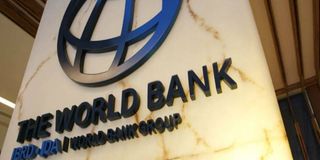
Signage of the World Bank.  

Photo credit: Pool

The World Bank has asked Kenya to consider additional consumption taxes like excise duty and value added tax (VAT) to clear mounting supplier arrears in what could spark fresh social unrest if adopted.

The multilateral lender wants high consumption taxes to clear pending bills, which rose to Sh526 billion in June from Sh421.6 billion in March, triggering business closures, layoffs and non-performing loans.
The World Bank did not specify if it is pushing for an increase in excise duty and VAT on specific goods or whether it wants the Treasury to increase the range of products that attract the two taxes.

Kenya levies VAT of 16 percent on a range of goods, including electricity, fuel and cooking gas, but basic items like the staple maize flour and bread are exempted from the consumption tax.

Excise duty varies across goods like airtime, fuel, alcohol, betting and cigarettes, and is often favoured by the Treasury when seeking tax increases.

“To clear pending bills, finance their payment with higher consumption taxes,” the World Bank said in its sub-Saharan Africa economic outlook report.

Excise duty for the year to June rose from Sh276.7 billion to Sh296.9 billion but was slightly off the desired target by Sh4.4 billion.

Total VAT receipts rose to Sh660.6 billion from Sh645.4 billion a year earlier but hit the set target.

The government opted against imposing new taxes or increasing existing ones in this year’s budget proposals, the Treasury Cabinet Secretary said, after deadly protests broke out last year against the government’s measures to raise revenue.

More than 50 people were killed when the youth-led protests broke out in June last year, forcing President William Ruto to abandon tax hikes worth Sh346 billion.

The Treasury has preferred to widen the tax net and launch a crackdown on tax cheats to grow national income, and ease the appetite for borrowings amid mounting public debt.

The World Bank’s proposal comes as salary rises continue to lag inflation or cost of living measure for the fifth year in a row, weakening workers’ purchasing power and their standards of living.

The renewed squeeze on Kenyans’ living standards came in a year when the economy grew at the slowest pace since the Covid-19 pandemic four years ago, hobbled by floods that damaged crops, costly bank loans and disruptions that followed anti-government protests against the Finance Bill.

The average monthly real pay fell from Sh62,256 in 2020 to Sh55,451 last year, translating to an erosion of Sh6,805.

Workers’ disposable income has shrunk further on additional taxes and levies, including the housing tax and the controversial healthcare insurance levy.

The affordable housing law requires employers in the formal and informal sectors to deduct 1.5 percent of gross monthly pay to workers and match the contributions towards the housing levy.

The levy sparked an outcry from the opposition and many Kenyans, who feel burdened by the raft of taxes introduced under President William Ruto’s administration.

The World Bank proposal on use of additional taxes to ease pending bills come as the national and county governments struggle with supplier arrears, despite payment of contractors via a securitised bond.

National government pending bills shot up by Sh104 billion in the second quarter to buck a trend of reduced arrears witnessed when the securitisation process began.

In the quarter ended March, the pending bills had fallen by Sh118 billion from Sh539.9 billion in December 2024 as the government began clearing arrears in the roads sector.

The Treasury indicated earlier in May that the pending bills verification committee had verified arrears of Sh578 billion out of submissions of Sh663 billion.

The term of the committee, which was set to expire at the end of April this year, has since been extended to the end of December 2025, signalling the long wait to the resolution of the supplier bills.

Of the verified pending bills as of May, only Sh229 billion was certified for payment including Sh80 billion covering the roads sector.

The government is banking on the securitisation of pending bills using part of collections from the road maintenance levy to settle arrears in the roads sector.

The Kenya Roads Board (KRB) started paying verified pending bills in June using a short-term loan from a coalition of local banks, including UBA Kenya Bank, Absa Bank Kenya and KCB Bank Kenya.
The Trade and Development Bank (TDB) has been advising the government on the issuance of the KRB bonds.

These payments are ahead of the issuance of two bonds (Sh175 billion and Sh125 billion respectively) which are secured using Sh12 of the Sh25 collected from the road maintenance levy fund (RMLF).

KRB wired Sh60.6 billion to road agencies, including Sh29 billion to the Kenya National Highways Authority (KeNHA), Sh27 billion to the Kenya Rural Roads Authority (KERRA) and Sh4.67 billion to the Kenya Urban Roads Authority (Kura).

Previously, Treasury Principal Secretary Chis Kiptoo said the State had met all funding requests for the fiscal year to June 2025, raising a concerns over the accumulation of new pending bills.

“As we cross over to the 2025/26 fiscal year, we have paid all counties their dues. We also did the same for CDF, all ministries and State departments,” he said in August.

“This addresses the issue of pending bills.”

Pending bills accruing to county governments meanwhile stood at Sh172.5 billion as of the end of March, according to data from the Controller of Budget (CoB).

The devolved units were asked to submit plans to clear the arrears to the COB by August 15 as the World Bank intensified pressure for the clearance of debts owed to businesses.

The heavy stock of pending bills has been deemed a hurdle for the banking industry as private sector credit growth remains constrained by sky-high non-performing loans, which have seen commercial banks maintain caution on lending to businesses on elevated default risks.

The ratio of gross non-performing loans remained unchanged in April and June 2025 at 17.6 percent.

Reforms proposed as a fiscal package for Kenya include the review of export promotion levies, the reduction of the corporate income tax to 25 percent from 30 percent, an increase on dividend taxes and reduced exemptions on corporate income taxes (CIT).

The World Bank has also pushed for an end to exemptions for goods with low consumption by the poor.

“Putting these policies into action requires the deployment of policy packages that exploit the complementarities among the different proposed fiscal and structural policy actions, have a large potential impact on growth and jobs, and contribute to strengthening the country’s social contract,” the World Bank stated.

PAYE Tax Calculator

Note: The results are not exact but very close to the actual.