Time flies with great content! Renew in to keep enjoying all our premium content.
Prime
Foreign firms to pay capital gains tax on sale of shares in Kenya companies
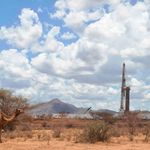
The proposed changes appear closely linked to recent disputes involving the sale of Kenyan assets through offshore holding companies, including the transfer of Tullow Oil’s interests in the Lokichar oil project in Turkana.
A foreign firm selling shares in a Kenyan entity abroad will be compelled to pay 15 percent capital gains tax (CGT) under changes proposed in the Finance Bill 2026, in a move that tax experts fear could hurt Kenya’s attractiveness to foreign investors.
The Bill seeks to expand the scope of CGT by taxing gains arising from indirect transfers of Kenyan assets by non-resident firms, even where the transaction takes place offshore.
The Bill proposes to amend Paragraph 2 of the Eighth Schedule of the Income Tax Act, which defines the transactions and gains subject to Capital Gains Tax, by introducing a new sub-paragraph (d) immediately after subparagraph (c).
“Gains derived from the alienation of shares by a non-resident person where the shares derive their value from Kenya or the alienation results in a change of the group membership of a company resident in Kenya or of ownership of, title in, or interest in property located in Kenya,” reads part of the amendment contained in the Finance Bill tabled in the National Assembly by the National Treasury.
The CGT is normally paid on the profit or gains made by investors when they sell, transfer, or dispose of an asset such as unquoted shares or property, including homes, land, and buildings. Sellers pay 15 percent of the gain, a rate that was increased from five percent in January 2023.
However, the Kenya Revenue Authority (KRA) has struggled to collect CGT in transactions executed offshore. Through the Finance Bill, the Treasury now seeks to cure this problem by expressly requiring foreign entities to pay the tax.
“So, if a non-resident person sells a company in Kenya through an offshore intermediary, there has been debate on whether the gain realised from such a sale is taxable in Kenya,” said Robert Waruiru, Managing Partner and Head of Tax at Ichiban Tax and Business Advisory.
“With this new proposal, such gains will be captured to the extent that the sale or alienation drives the value of the shares sold or results in a change of ownership of a Kenyan company or a change in ownership of property in Kenya.”
Some of the assets being targeted in offshore share transactions include land, infrastructure, and real estate held by Kenyan subsidiaries, according to Steve Okoth, Tax Advisory Director and Regional Head of Tax at BDO East Africa.
Mr Okoth, however, expressed concern over the wording of the second part of the amendment, warning that it “may catch legitimate internal restructurings where there is no real sale of the Kenyan economic value”.
“Any offshore transaction involving a Kenyan company or Kenyan assets now needs Kenyan CGT analysis before signing.”
The Institute of Certified Public Accountants of Kenya, in its submission to the National Assembly, said: “As drafted, the provision may create Kenyan CGT exposure for offshore investor exits, capital raising transactions, group restructurings and internal reorganisations undertaken at holding company level.”
The proposed changes appear closely linked to recent disputes involving the sale of Kenyan assets through offshore holding companies, including the transfer of Tullow Oil’s interests in the Lokichar oil project in Turkana.
Tullow Oil Plc sold its Kenyan subsidiary, Tullow Kenya BV, to Gulf Energy in a deal announced in 2024.
Although the transaction involved Kenyan petroleum assets, the sale was structured through offshore entities, prompting the KRA to issue a tax demand estimated at Sh21 billion because the transferred shares derived their value from Kenyan oil resources.
Tax experts say the proposed amendment is intended to eliminate ambiguity in such transactions by expressly allowing Kenya to tax gains arising from offshore transfers where the underlying value is tied to local assets.
The Sh21 billion tax demand mirrors a similar dispute in neighbouring Uganda, where Tullow was forced to increase the amount it paid as CGT before Uganda cleared the sale of its Lake Albert oil project to Total and China National Offshore Oil Corporation more than 12 years ago.
Tullow Kenya BV sold the Turkana oil fields to Gulf Energy last year. Gulf has paid two instalments of $40 million (Sh5.16 billion) each, while the final payment is due before June 2033.
Analysts say the proposed changes were also inspired partly by the difficulties the KRA faced in seeking taxes from the sale of Java House by US private equity firm Emerging Capital Partners (ECP) to Dubai-based Abraaj Group in 2017 through an offshore transaction.
The Tax Appeals Tribunal allowed the taxman to slap ECP Kenya with a tax bill of Sh773.8 million after the company failed to convince the tribunal that the income earned from the sale of Java House was an offshore disposal whose proceeds should not be subjected to tax in Kenya.
The same argument, the government reckons, applies to CGT.
A similar precedent was set in Uganda when Heritage Oil sold its exploration licences to Tullow Oil Uganda Limited for $1.45 billion before exiting the country.
The Uganda Revenue Authority (URA) demanded 30 percent of the proceeds as capital gains tax.
Heritage Oil objected to the assessment, arguing that the transaction did not occur in Uganda and that the company was incorporated in Mauritius.
The company further argued that the Production Sharing Agreement did not provide for CGT and that Uganda’s Tax Appeals Tribunal lacked jurisdiction to hear the matter.
The URA, however, maintained that the assets sold were located in Uganda and that the transaction had been approved by the Ugandan government, making it subject to Ugandan law. The tribunal ruled in favour of URA, upholding the tax assessment against Heritage Oil.