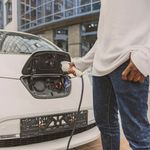
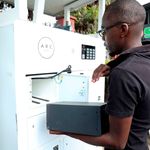
Habib Lukaya was optimistic that Kenya’s incentives for electric vehicle (EV) assemblers would spur growth of the nascent sector as the country positions itself as an e-mobility leader in Africa.
But with a new proposed law that seeks to strip electric motorcycles, minivans and buses of their zero-rated VAT status, that hope fast fading.
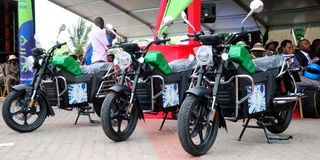
“The shift from zero-rating to VAT-exempt is the most impactful change in our business,” Mr Lukaya, the Kenya country manager of electric motorcycle firm Roam, told the Business Daily in an interview.
“It is just not a technical tax classification. It directly increases our manufacturing costs and reduces our margins, pushing the cost of these EVs higher.”
In this year’s Finance Bill, the Treasury proposes a change to the tax treatment of the three classes of EVs in a move that assemblers warn could drive up the cost of these vehicles by as much as 16 percent.
The proposal reclassifies electric motorcycles, buses and bicycles, as well as solar batteries and lithium-ion batteries -- which EVs use – from zero-rated to VAT-exempt.
It means assemblers will not get the 16 percent VAT refund they have claimed from the Kenya Revenue Authority (KRA) for vehicle assembly supplies.
This refund is what has subsidised the high EV prices for the last three years, since it was introduced in the 2023 Finance Bill.
Under Kenya’s current tax regime, electric vehicle firms can reclaim input VAT paid on raw materials and components because their products are classified as zero-rated.
While consumers do not pay VAT on the finished products, manufacturers can seek refunds from KRA for taxes incurred along the production chain.
But the 2026 Finance Bill proposes to move these products into the exempt category, meaning firms would still not charge VAT on the final products, but would no longer be allowed to recover VAT paid on what they paid on inputs.
The Bill proposes to amend the VAT Act schedules to make exempt supply of electric motorcycles, electric bicycles, electric buses, and solar and lithium-ion batteries.
It would increase production costs that EV manufacturers are likely to pass on to consumers.
As a result, the average electric motorcycle costs could go up by as much as Sh46,000, minivans by Sh1.1 million and buses by well over Sh2.5 million, according to assemblers.
It also risks undermining years of investment in local assembly and supply chains.
Kenya has been positioning itself as an electric mobility leader in East Africa, attracting billions of shillings in investment towards startups such as the motorcycle assemblers Roam, Spiro, ARC Ride, and the bus maker BasiGo.
In addition to the zero-rated VAT, electric vehicle assemblers enjoy exemption from the 35 percent import duty charged on fully built vehicles, pay a lower import declaration fee and Railway Development Levy rates on completely knocked-down (CKD) vehicle kits, and a reduced excise duty of 10 percent.
These incentives have helped offset the high costs of assembling EVs locally and competing against Kenya’s dominant second-hand vehicle market.
Most of Kenya’s EV firms source their technical parts from Chinese original equipment manufacturers, and components such as tyres and glass from local suppliers.
“The moment we switch to VAT exempt, the tax amount on the parts is an expense to us, which increases operational costs, and we are forced to increase the price of the finished product to avoid incurring losses,” Andrew Kamanu, fiscal policy specialist at Roam, told the Business Daily.
Roam estimates that prices of electric motorcycles could rise within three months of the law taking effect. An electric bike currently retailing at about Sh290,000 could increase to roughly Sh336,400.
The company says the impact could also ripple through Kenya’s growing local manufacturing ecosystem, where EV firms source metal motorcycle parts and fabricated components from.
“We source 40 percent of the value of our components locally, so if we are spending Sh1 million on local sourcing, it means we will lose Sh160,000 in money we cannot claim back from KRA,” said Mr Lukaya.
“Where do we push this cost? To the customer, and then if the customer starts complaining, what do we do? Get rid of the local supply network that we have already invested millions to build over the years, and return to China.”
Similarly, electric bus firms are warning of steep price increases. BasiGo, which assembles buses locally and sources components such as seats, steel and glass from Kenyan suppliers, says the changes could undermine local industrialisation efforts.
“It is a shocking proposal, given the support we have had from the government,” said Moses Nderitu, BasiGo Kenya managing director and vice president of the E-Mobility Alliance of Kenya.
“In other words, what the government is now telling us is, why bother buying from locals?”
The company operates a financing structure where customers buy buses without batteries, allowing them to pay about Sh7.5 million upfront — comparable to diesel buses — and then lease the battery separately.
A full 36-seater electric bus costs between Sh16 million and Sh18 million.
“We’ve been counting on the big growth of mobility, both on vehicles and energy, but that growth will slow down. When you talk about a Sh15 million bus, 16 percent more is a lot of money,” Mr Nderitu said.
The company’s electric minivans, introduced last year as alternatives to the popular 16- and 19-seater diesel matatus, could rise from Sh5.6 million to Sh6.7 million if the proposed changes are adopted.
“We have manufacturers that have created specific line assemblies for electric vehicle components, so what this means is we stop sourcing from these people. People lose jobs,” Mr Nderitu said.
Treasury’s latest proposals are part of a push to widen Kenya’s tax base amid rising public debt pressures and a weaker economic outlook.
KRA is required to collect Sh2.985 trillion as tax revenue for the year starting July, up from Sh2.784 trillion, according to the exchequer’s documents tabled in Parliament, reflecting a 7.21 percent increase.
This year’s finance bill is expected to deliver most of the revenue. Treasury projects new tax measures to generate Sh120 billion, up from Sh30 billion it targeted via last year’s bill.
But industry executives say frequent tax and policy changes are also making long-term investment planning difficult in a sector that requires heavy upfront capital.
Analysts warn that Kenya is already falling behind regional peers such as Rwanda and Ethiopia in electric mobility adoption despite being among East Africa’s earliest EV markets.
A recent study by German think tank Agora Verkehrswende and the German Agency for International Cooperation (GIZ) said Kenya’s electric mobility sector continues to face uncertainty around incentives, standards and long-term policy direction.
“Progress has been limited by incomplete national policy frameworks, gaps in institutional coordination, and uncertain fiscal incentives often tied to short-term budget cycles,” the report said.
“If you can have policies that last several years, companies know that whatever was agreed on today remains for a certain period,” Roam’s Mr Lukaya said.
“Otherwise, it becomes very unpredictable for us in terms of operational expenses and attracting investors.”