Competition watchdog steps up crackdown on tender cartels

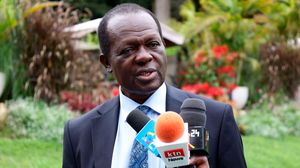
Competition Authority of Kenya (CAK) Director-General David Kemei.

Photo credit: File | Nation Media Group

Kenya's competition watchdog and the public procurement regulator have stepped up a crackdown on tender cartels accused of inflating the cost of government projects and denying taxpayers value for money.

The Competition Authority of Kenya (CAK) said it was working more closely with the Public Procurement Regulatory Authority (PPRA) to identify and eliminate bid-rigging schemes that distort competition in the award of public contracts.

The move comes as the government seeks to tighten oversight of procurement, which accounts for about 60 percent of public expenditure and remains vulnerable to collusive practices among suppliers.

Bid rigging occurs when firms that are expected to compete for a contract secretly coordinate their bids instead of submitting independent offers.

The practice is regarded as one of the most harmful forms of anti-competitive conduct worldwide, as it directly impacts public spending and can result in governments paying significantly more than market prices.

The Treasury estimates that about Sh1.68 trillion —60 percent of the Sh2.8 trillion budget for the national government [executive] in the next financial year, starting July — will be spent on procurement of goods, services and public works, making the integrity of tendering processes critical to public finance management.

Speaking during the inaugural CAK Research Conference on Competition and Consumer Welfare, Treasury Principal Secretary Chris Kiptoo described bid rigging as one of the most urgent competition challenges facing the public sector.

"Every shilling lost through bid rigging is a shilling stolen from a school, a road or a hospital," Dr Kiptoo said. “One area where the response is particularly urgent is public procurement. Government procurement accounts for roughly 60 percent of the national budget.”

One of the most common schemes is cover bidding, where some firms deliberately submit artificially high bids or unacceptable proposals to create the illusion of competition, while ensuring a predetermined company wins.

Another tactic is bid suppression, where competitors agree not to submit bids or withdraw from a tender process to allow a chosen firm to secure the contract unchallenged.

Competition and procurement watchdogs are also tracking bid rotation arrangements, where cartel members take turns winning contracts according to a pre-arranged schedule while others submit non-competitive bids.

There are also schemes that are involved in market allocation, where competing firms divide customers, regions, government agencies or categories of contracts among themselves and avoid competing against one another.

Dr Kiptoo said the partnership between CAK and PPRA should focus on eliminating schemes that undermine competition and lock out deserving businesses, particularly small and medium-sized enterprises.

CAK Director-General David Kemei said the authority views bid rigging as a major economic threat because it increases procurement costs and diverts resources away from essential public services.

“It is very critical that bid rigging is really minimised, if not eliminated, because of the negative impact that it has on the economy. I'm confident because PPRA leadership understands that, and is also convinced that we should have a competitive aspect when it comes to public procurement,” Mr Kemei said.

There are also cases where businesses use subcontracting arrangements to compensate losing bidders, thereby preserving cartel agreements and discouraging genuine competition. Such practices can be difficult to detect because the bids appear legitimate on paper, yet they often leave patterns such as recurring winners, identical pricing structures or suspicious bid withdrawals.

Mr Kemei acknowledged that tackling procurement cartels would not be easy but said the law gives CAK sufficient powers to investigate anti-competitive conduct.

“We will really save a lot for this economy when we join hands [with PPRA]. It is not an easy job, though. But since the law gives us a mandate, we will actually take it on,” he said.

This has come at a time when the Treasury has started rolling out the electronic government procurement system (e-GP), which is expected to enhance transparency in line with the Public Procurement and Asset Disposal Act of 2015 and accompanying regulations.

Under e-GP, all government contracts are initiated, evaluated, and awarded online.

Follow our WhatsApp channel for the latest business and markets updates.

PAYE Tax Calculator

Note: The results are not exact but very close to the actual.