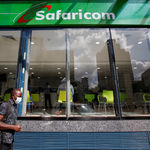
The government has moved to the Court of Appeal seeking to lift orders that froze the sale of a 15 percent stake in Safaricom Plc to the parent firm, Vodacom Group Limited, warning that the delay threatens a multi-billion-shilling transaction and could undermine investor confidence.
Attorney General reckons that the orders have effectively stalled a live, time-sensitive and market-facing transaction, preventing the government from closing the deal the sale.
Vodacom had readied to wire the billions of shillings to Kenya in anticipation that the High Court on May 18 would lift a freeze on the deal.
The deal has dragged on, putting the State in line to receive a Sh16 billion dividend from the 15 percent stake if Kenya remains with full ownership of 35 percent into August.
The application to lift the orders is scheduled for hearing on June 29, the same day the main suit is set to be heard before the High Court.
In court papers filed through principal State counsel Christopher Marwa, the Attorney-General argues that the intended appeal is arguable and has a high chance of success.
“The intended appeal is arguable. Among other grounds, the applicants contend that the High Court misapplied the threshold for conservatory relief and fell into internal inconsistency by finding that the transaction had not been completed, that no contract had been executed, and that the substratum remained intact and capable of preservation, yet still holding that the petition would be rendered nugatory absent a conservatory restraint,” the Attorney-General states.
Treasury Cabinet Secretary John Mbadi supported the application, warning that the continued suspension of the transaction could have far-reaching economic consequences.
The High Court on May 18 suspended the proposed sale of the Treasury’s stake to Safaricom’s parent company, Vodacom Group Limited, pending the hearing and determination of a petition filed by activist Tony Gachoka and three others.
A joint parliamentary committee had approved the sale, paving the way for the conclusion of the transaction before the litigants struck.
Under the deal, the National Treasury is to receive Sh204.3 billion for the 15 percent stake, representing a price of Sh34 per share. The Exchequer is also to receive a Sh40.2 billion dividend top-up, representing a loan backed by what will be Kenya’s remaining 20 percent stake in Safaricom.
The delayed sale, which had been expected to close before March 2026, will see the Treasury collect Sh16.1 billion, representing its share of final dividends from its current 35 percent stake when book closure happens on August 4, if the transaction remains on pause. Vodacom has insisted that the completion of the stake purchase fully rests in the court decision.
Concurrent to the purchase of the 15 percent stake from the government, Vodacom is also buying a five percent stake in Safaricom that is held by its parent firm, Vodafone Group, at the same price of Sh34 per share. Once the twin deals are sealed, Vodacom will raise its ownership in the telco to 55 percent, attaining majority control.
Mr Mbadi says the orders have disrupted fiscal planning, created uncertainty around a market-sensitive transaction involving a listed company, interfered with regulatory processes and risk eroding investor confidence.
According to the Treasury CS, the funds were earmarked for the National Infrastructure Fund, budgetary support, fiscal-stability programmes and long-term national savings. He further argues that the anticipated foreign investment inflow would boost external liquidity and support the country's foreign exchange position.
“There is further a real commercial risk that prolonged restraint may cause the proposed purchaser to reconsider, re-price or abandon the transaction altogether,” Mr Mbadi says.
He argues that the court order has frozen not just a commercial deal but a broader revenue-generation and asset-reallocation programme intended to finance roads, energy projects, digital infrastructure and other key development initiatives.
Mr Mbadi warns that prolonged uncertainty of this magnitude could prompt the investor to walk away or demand revised terms, consequences he says would not be easily remedied even if the government ultimately succeeds on appeal.
“The resulting prejudice extends to fiscal planning, debt-management options, capital-market confidence, regulatory sequencing and the wider economy," he says.
Mr Gachoka, however, has opposed the application, insisting that the government has failed to demonstrate any specific harm that cannot be addressed once the constitutional petition is heard and determined.
“The public interest favours the preservation of the status quo pending determination of serious constitutional and public-law questions concerning the intended disposal of a significant public asset," he says.