The International Fund for Agricultural Development (IFAD) and Equity Group have launched a $200 million (Sh25.8 billion) financing agreement for smallholder farmers and rural businesses in East Africa to help them adapt to effects of climate change.
The Africa Rural Climate Adaptation Finance Mechanism (ARCAFIM) is a 12-year private sector-led programme aimed at closing the financing gap for climate adaptation in farming.
It comprises $180 million (Sh23.3 billion) in lending capital and $20 million (Sh2.6 billion) in non-financial expertise and training needed to support the investment.
According to a statement by IFAD and Equity Group, the loan capital is expected to revolve through four investment cycles, generating about $266 million (Sh34.5 billion) in loans to MSMEs and smallholder farmers.
Equity Group said it would provide $90 million of the $180 million lending base from its balance sheet, alongside concessional capital from development partners.
ARCAFIM will operate in Kenya, Uganda, Tanzania and Rwanda. It aims to finance 260,000 smallholder farmers and 500 MSMEs.
“ARCAFIM will support tailored financial products and a climate adaptation financing taxonomy, so that participating institutions gain the experience, systems and confidence to continue expanding adaptation finance,” IFAD's Vice President Gérardine Mukeshimana said.
“The mechanism starts in East Africa but is designed to be adapted and replicated across the continent.”
The funding is convened with co-financiers of the Green Climate Fund, the Finnish Ministry for Foreign Affairs and the Nordic Development Fund. It is also financed by the governments of Denmark and the European Union.
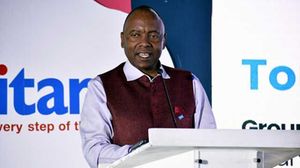
“By committing our balance sheet alongside concessional capital, we are building a market, one in which lending climate resilience becomes an ordinary banking business rather than an act of charity,” Equity Group CEO James Mwangi said.
The programme will work with participating microfinance institutions and saccos to originate adaptation lending and provide farmers and rural enterprises with knowledge to identify investments that can protect them from climate-related risks. The investments include irrigation, water harvesting, livestock resilience, post-harvest storage, renewable energy and climate-resilient agro-processing.