The waters have finally receded after Kenya’s worst floods in decades and now the reality of the massive damage caused lies bare.
Away from the public limelight, cash-strained humanitarian agencies are battling to contain disease outbreaks and resettle thousands of people the floods displaced in different parts of the country.
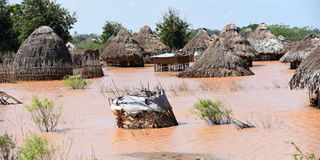
Learning programmes in some counties remain disrupted due to damaged physical infrastructure such as classrooms that need to be fixed fast to ensure students in such schools are not left behind. Agencies such as the Unicef and Kenya Red Cross are on a funds drive to mop up the mess the colossal flooding caused.
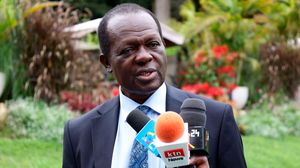
Unicef Kenya chief, field operations and emergency, Patrick Lavandhomme told the Business Daily on the phone that Sh3.4 billion ($34.2 million) is required in the aftermath of the floods to respond to the humanitarian needs of children, inter-communal conflict and disease outbreaks.
Mr Lavandhomme, who spoke in Nyakach, Nyando Constituency in Kisumu where he is on a field mission in one of the worst-hit areas, confirmed that the UN agency has a funding gap of 70 per cent, and has only received Sh280 million ($2.8 million) from the Central Emergency Response Fund to assist flood-affected communities in Kenya.
“Here the situation is serious as people have lost most of their livelihoods including animals and crops. Locusts and armyworms have invaded farms and destroyed most of their crops, meaning looming hunger,” he says.
“Health centres and schools have also been hit hard too. In the coming two months, we will have an increase in waterborne diseases and vector mosquitoes causing malaria. There is need to control the situation now.”
The situation is widespread across the country. According to Red Cross report on floods update posted on the Unicef portal, 186 people died due to the floods and 291,171 others displaced since the beginning of the long rains and many have now started to return home despite their houses being waterlogged and at the risk of disease outbreaks.
About 108 camps still exist in Tana River County. The Meteorological Department continues to issue high alerts for heavy rainfall in Turkana, Marsabit, Samburu, West Pokot, Elgeyo Marakwet, Trans Nzoia, Uasin Gichu, Bungoma, and Baringo. Others are Nakuru, Laikipia, Isiolo, Nyandarua, Kirinyaga, Meru, Tharaka Nithi, Embu, Kiambu, Murang’a and Nyeri.
Even though long rains improved the food security outlook in some parts of the country new threats of locust and fall armyworm infestations compromise the situation. For instance, Marsabit, Isiolo and Turkana are the worst hit with more than 494,210 acres covered by locusts.
“The repair of school infrastructure that was damaged during the floods is very slow. Local partners in flood-affected counties are reporting that pupils are having difficulty accessing adequate sanitation facilities,” the report states.
Seventeen counties in Kenya have been placed on high alert for Rift Valley Fever(RVF) which broke out in Wajir with 19 cases and six people reported dead. This outbreak is one of the consequences of heavy rainfall and floods in the arid and semi-arid lands.
“Medical and veterinary workers are working to determine the extent of the epidemic and institute localised control measures.
“Laboratory testing material, isolation and protective material have been sent in Wajir for the response by the government,” the report states.
Kitui, Wajir, Kajiado and Marsabit counties are reporting a high death rate and miscarriages among animals. Logistics constraints such as poor road access to the affected areas hampered reporting and investigations.
Ten counties countrywide including Nairobi, Machakos, Kiambu, Garissa, Tana River, Isiolo, Turkana, West Pokot, and Elgeyo Marakwet are reporting active cholera outbreaks.
In Tana River, Water Department shared preliminary findings of 13 water samples taken from surface water— hand dug along the shores of seasonal tributaries of River Tana. All sites tested showed a positive result for coliform — a group of rod-shaped bacteria that cause diseases.
Cholera is also present in Dadaab and Kakuma/Kalobeyei refugee camps and settlement.
As part of hygiene promotion activities, Unicef developed key messages to sensitise riverine communities.
The UN agency also participated in a school health talk at Adele Primary School that comprises 450 pupils and 12 teachers where they received key messages on cholera prevention, hand washing demonstration and 345 assorted educational materials, according to the report.
With Unicef’s support, 7,500 internally displaced persons (IDPs) in Madogo, Tana River benefited from safe water following the provision of storage tanks to the camps.
In addition, the UN agency also supports local partners in the supply of clean water. A generator was sent to Elmarba borehole, Kajiado, to enable 2,000 people to access safe water for drinking and domestic use.
Malnutrition screening was conducted in 15 IDP camps in Galole, Tana River. A total of 431 children under five were screened for malnutrition. The screening identified four children as severely malnourished, 12 as moderately acute malnourished and 32 at risk.
Eighty-seven pregnant and lactating mothers were screened for malnutrition — four were identified as malnourished.
The identified cases were referred for treatment.
The Unicef distributed family relief kits to 2,500 displaced households in Mandera while 3,600 children (40 per cent girls) in 20 flood-affected schools benefited from 40 recreational kits in Tana River. The schools also received 20 tents for temporary learning spaces.
Unlock a world of exclusive content today!Unlock a world of exclusive content today!