How smartphones are driving Kenya’s digital economy

Photo credit: Compiled by Dennis Musau | Designed by Stanslaus Manthi

An overwhelming 98.2 percent of Kenyan internet users accessed the net through a smartphone between January and March 2026, as the devices cement their position at the centre of the country’s expanding digital economy.

This was up from 97.9 percent in the previous quarter and 97.6 percent in the three months to September 2025, according to the latest audience data by the Communications Authority of Kenya (CA).
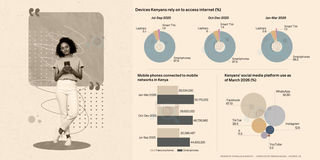
Smartphones have become the primary gateway to the internet for millions of Kenyans. In contrast, the use of other devices like desktop computers and feature phones continues to decline.

Laptop usage fell to 5.8 percent in March from six percent in December, while smart TV usage dropped from 1.4 percent to 1.2 percent over the same period.

CA data also shows smartphone connections rose to 50.2 million in the three months to March, up from 48.7 million in December, marking the first time Kenya has crossed the 50 million smartphone threshold.

“It is noteworthy that the number of smartphones connected to the network increased during the quarter, while the number of feature phones, which primarily support basic voice calls, text messaging and low-speed data services, declined,” the regulator says.

The CA expects the trend to continue, citing falling device costs, expanded high-speed mobile network infrastructure and the growing importance of mobile-based economic and social services.

Heavy investments by Safaricom, Airtel Kenya and other operators in the faster 4G and 5G networks are accelerating the shift.

This has sparked economic activity powered by smartphones and mobile internet, from e-commerce and fintech to digital banking, ride-hailing services, and online content creation.

In the digital creator economy alone, recent data from the research firm OdipoDev estimates that Kenya’s top content creators earned a combined Sh296 million from brand-sponsored posts in 2025, helping push total creator economy payouts beyond the Sh1 billion mark.

Sectors spending the most on digital advertising include beauty and personal care, food and beverage, telecommunications, financial services, consumer electronics and fashion.

Similarly, another Ipsos report commissioned by ride-hailing firm Bolt estimates that Kenya had 1.54 million gig workers as of June 2025, with e-commerce contributing 42 percent of the activity, and ride-hailing 20 percent.

It said widespread smartphone access has pushed Kenya’s gig economy to grow into a billion-dollar market.

Follow our WhatsApp channel for the latest business and markets updates.

PAYE Tax Calculator

Note: The results are not exact but very close to the actual.