Ndovu cement maker joins clinker race amid rising import costs

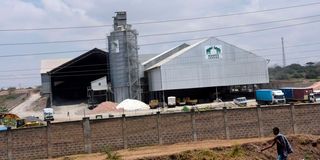
Ndovu Cement Factory along Mombasa Road in a picture taken on August 29, 2019.

Photo credit: File | Nation Media Group

The makers of Ndovu Cement are the latest to venture into clinker production after receiving regulatory approval, as local manufacturers adapt to a new reality marked by punitive taxes on imported inputs.

The Kitengela-based Karsan Ramji & Sons Limited, the firm behind Ndovu Cement, plans to set up a 600 tonnes per day (TPD) greenfield clinker plant and an associated limestone quarry in the Mukawa area of Kajiado County, according to regulatory filings dated June 2025.
TPD is a unit measuring the daily processing capacity of a plant.

The project, which has already received a green light from the National Environment Management Authority (Nema), will include site offices, a canteen, a first-aid centre, power and water supply systems, a boundary wall and sanitation facilities.

The company says the limestone quarry will ensure a reliable supply of 900 TPD of limestone—an essential raw material in clinker production.

In this case, the proposed facility will crush 900 tonnes of limestone per day to feed a kiln that will produce 600 tonnes of clinker daily.

Clinker is a critical input in cement manufacturing, and local producers are increasingly investing in domestic capacity to cut overreliance on expensive imports after the government introduced a 17.5 percent Export and Investment Promotion Levy on shipments of the raw material.

The levy, introduced in July 2023, was aimed at boosting local production, creating jobs and saving foreign exchange. However, it also led to a drop in cement consumption as retail prices surged.

Imports of clinker have dropped sharply since the country started applying the levy. Meanwhile, the cost of cement has also decreased as cement grinders struggle to secure the input from the few firms with clinker plants.

Cement manufacturers —particularly the smaller ones— have decried the shortage of clinker, despite earlier government assurances of sufficient supply when the levy was introduced in the Finance Act 2023.

Devki Group, which owns National Cement, is currently the largest producer of clinker in Kenya. National Cement is owned by industrialist Narendra Raval.

Karsan, Rai Cement, Bamburi Cement, Savannah Cement, and Riftcot are some of the manufacturers that had mounted a spirited fight against the introduction of the levy, many fearing it was a ploy by Raval to dominate the lucrative clinker market.

Previously, most of these cement makers had opposed an attempt to increase import duty on clinker, instead requesting a grace period of four years, lapsing in 2026, to allow them time to build their own clinker production facilities.

The five players are expected to invest a combined total of $1 billion (Sh129 billion) in individual clinker projects.

If successful, Karsan Ramji & Sons Limited will join the ranks of major cement producers in Kenya such as Bamburi Cement, East African Portland Cement, National Cement, and Mombasa Cement—all of which operate clinker plants.

The decision by Karsan to build its own clinker plant underscores a growing industry trend aimed at achieving self-sufficiency and controlling production costs.

According to estimates from cement plant equipment suppliers, setting up a 600 TPD greenfield clinker facility like this one would cost between Sh6 billion and Sh15 billion, depending on technology and supporting infrastructure.

Karsan began as a quarry operator in Kitengela, Kilifi, and Nakuru before venturing into cement production in 2015. It started selling Ndovu Cement in June 2015.

PAYE Tax Calculator

Note: The results are not exact but very close to the actual.