Kenya imported a record amount of electricity in the first three months of 2026 as rising demand from households and businesses outpaced growth in domestic power generation, exposing rising pressure on the energy supply system, and highlighting challenges posed by intermittent renewable power sources.
Data from the Kenya National Bureau of Statistics (KNBS) shows electricity imports rose to 494.08 million kilowatt-hours (kWh) in the January-March period, the highest level ever recorded for a first quarter and a 26.4 percent increase from 390.9 million kWh, or units, in the corresponding period last year.
The surge came despite local electricity generation reaching an all-time high of 3.45 billion kWh during the quarter, up 7.4 percent from 3.21 billion kWh a year earlier.
Electricity consumption, however, grew faster, rising by nine percent to 3.04 billion kWh from 2.79 billion kWh, or units, over the same period, highlighting a widening gap between demand growth and additions to local supply.
The figures point to an economy whose demand for electricity is expanding faster than domestic generation capacity, forcing Kenya to increasingly rely on power imports from neighbouring countries, largely Ethiopia, to meet rising demand.
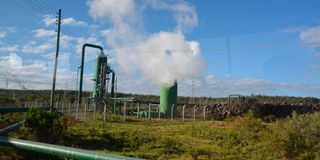
A breakdown of generation data shows geothermal energy was the main driver of growth in domestic electricity supply during the quarter. Output from geothermal plants rose by 21.1 percent to 1.66 billion kWh from 1.37 billion kWh a year earlier, accounting for virtually all the increase in total generation.
Geothermal's share of Kenya's electricity mix climbed to 48.3 percent from 42.8 percent a year earlier, further cementing its position as the country's most important source of power.
Hydropower generation also increased by seven percent to 852.63 million kWh from 797.01 million kWh.
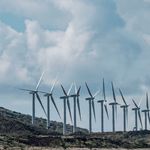
However, output from other renewable sources weakened, the provisional data shows. Wind power generation fell 14.1 percent to 448.52 million units, while solar generation dropped 7.5 percent to 123.1 million kWh. Costly diesel-powered thermal generation also declined 6.4 percent to 358.1 million kWh.
The drop in wind generation is particularly critical given its role in supporting the national grid during periods of high demand.
Kenya Power Managing Director Joseph Siror has previously acknowledged that the utility is sometimes forced to ration electricity when output from wind and solar plants decline, creating supply deficits that cannot be fully compensated for by geothermal, hydroelectric plants and imported electricity.
Dr Siror said the challenge is most acute when wind generation collapses during peak evening demand periods, forcing the utility to implement load shedding to protect the stability of the national grid.
“I can confirm that there are many instances when we have been forced to load-shed the country when the wind generation is low, and this is because when you sum up all the other generation sources without wind, they cannot serve the peak demand,” he said earlier this year.
The Kenya Power chief noted that while installed wind capacity is expected to contribute about 435 megawatts, the technology's intermittent nature means output can occasionally slump close to zero.
The latest generation figures appear to reinforce those concerns, with wind power production declining by more than 73 million kWh compared to the first quarter of 2025, increasing pressure on other sources and imported electricity to fill the gap.
Despite record geothermal production, overall supply growth in the review period remained insufficient to keep pace with demand.
The latest figures show Kenya consumed 623.4 million more units of electricity in the first quarter of 2026 than it did during the same period in 2022, representing growth of nearly 26 percent.
By contrast, domestic generation increased by about 433.4 million kWh over the four years going back to 2023, equivalent to growth of about 14 percent, leaving imports to bridge much of the supply-demand gap.
Electricity imports have consequently increased more than fivefold over the past four years, climbing from 97.03 million kWh in the first quarter of 2022 to nearly half a billion units in the opening three months of 2026.
The growing dependence on imported electricity is emerging as a key challenge for policymakers seeking to sustain economic growth, while maintaining energy security.
Recognising the mounting pressure on the power sector, the Treasury said in the 2026 Budget Policy Statement (BPS) that the government plans to add 10,000 megawatts (MW) of generation capacity over the next seven years through geothermal, wind, solar, hydroelectric and nuclear energy projects.
The Treasury said the expansion is intended to support domestic electrification, industrial manufacturing, agro-processing, e-mobility, green industrialisation and the digital economy while meeting the increasing energy requirements of data centres, artificial intelligence and advanced manufacturing.
"Reliable and affordable energy supply remains central to powering manufacturing, promoting agricultural value addition, and enabling digital transformation across all sectors of the economy," the Treasury said.
The government argues that Kenya's vast geothermal, hydro, solar and wind resources provide a strong foundation for expanding affordable electricity supply and reducing dependence on imports.
President William Ruto has also signaled plans for a major expansion of the country's electricity infrastructure.
Speaking during a Private Sector Roundtable in August 2025, Dr Ruto said the government was reorganising the energy sector with the aim of substantially expanding generation and transmission capacity before the end of the decade.
"By God's grace, before 2030, we should have doubled the grid that we have. And we should try and do it with renewable energy," the President said, adding that the government was also exploring nuclear energy and other alternative power sources.
The latest import figures are likely to strengthen the case for accelerated investment in new generation projects, grid expansion and energy storage solutions as Kenya seeks to keep pace with rapidly rising electricity demand.
While regional power trade has helped stabilise supplies and reduce the risk of widespread shortages, the record import volumes in the opening quarter of the year reveal a growing reality for Kenya's power sector: demand is rising faster than domestic generation, and fluctuations in wind and solar output are making the challenge even more acute.
The result is that Kenya is increasingly turning to imported electricity to bridge supply gaps at a time when the government is betting on a massive expansion of generation capacity to support industrialisation, digital transformation and long-term economic growth.