Time flies with great content! Renew in to keep enjoying all our premium content.
Prime
Costly fuel looms amid renewed Middle East hostilities
Local industry executives say that prices of diesel and petrol have, in the past nine days, increased by $87 (Sh11,258.7) and $52 (Sh6,729.3) per cubic metre of petrol and diesel, respectively, based on the Platts pricing.
Global Brent crude prices have crossed the $100 (Sh12,941) mark for the first time since July 2026, signalling higher pump prices in Kenya for the new monthly pricing cycle from October 15.
Market data shows that oil prices rose around one percent on Thursday, extending gains that kept Brent crude above $100 a barrel for a second running day even as traders braced for further supply disruptions following the largest attacks on shipping since their six-month-old US-Israel conflict with Iran began. Brent crude is the primary international benchmark used to price roughly two-thirds of the world's traded crude oil, underscoring why the current price rally will hit Kenya and other countries that are net importers of refined fuel.
In the latest flare-up, the US military attacked five Iranian crude oil carriers overnight on Wednesday, with Iran retaliating with missile attacks on US forces in Jordan and attacks on shipping.
Local industry executives say that prices of diesel and petrol have, in the past nine days, increased by $87 (Sh11,258.7) and $52 (Sh6,729.3) per cubic metre of petrol and diesel, respectively, based on the Platts pricing. A cubic metre is equivalent of 1,000 litres.
Platts prices refer to the daily benchmark price assessments used in the global commodity markets for products including refined petroleum products.
Executives say pump prices are likely to be impacted in the new pricing cycle from Tuesday 15, 2026.
“The recent escalation of the war has an impact on the refined products and already, in the past few days, the Platts prices for super have gone up by an average of $87 per cubic metre and $57 for the same quantity of diesel,” said an executive who declined to be named.
“Based on the information that we currently have on the daily Platts for the last nine days, the prices will definitely go up in the monthly cycle from October 14.”
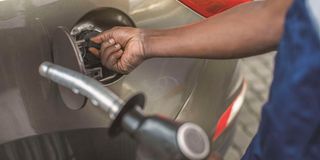
A litre of diesel fell by Sh5 to Sh217.86 in Nairobi in the current cycle ending September 14, while that of petrol and kerosene remained unchanged at Sh214.03 and Sh191.38 respectively after the State used diesel to cross-subsidise the two grades of fuel and prevent their prices from rising.
US President Donald Trump on Thursday said the war with Iran will not end until after the US midterm elections, comments that look set to upset the global energy market further.
"I think the war's going to end immediately after the election because they can't hold out any longer. Right after the election, oil prices are going to be tumbling downward. I think it's going to take a little bit longer than the midterm,” Mr Trump said.
The US will hold the midterm elections on November 3 this year, with Mr Trump’s Republican Party widely tipped to lose control of Congress to the Democrats.
Steep prices of diesel, petrol and kerosene will hit consumers, besides driving inflation locally unless the government subsidises prices to cushion users.
Diesel is the main fuel in Kenya and is used to power farm machinery, industries and public transport. Goods manufacturers and service providers factor in the costs of diesel in the pricing of their goods and services.
Diesel significantly impacts inflation, and the anticipated increase in its prices will drive the measure of the cost of living (inflation), which marginally rose to 6.6 percent last month from 6.5 percent.
A near depletion of the Petroleum Development Levy (PDL) kitty could further constrain the State's ability to subsidise fuel prices in the monthly cycle from October 15, 2026.
The Ministry of Energy and Petroleum in June warned that the PDL kitty was running low due to the steep subsidies applied from April this year when the US-Iran war sent global prices of refined fuel to record highs.
The PDL kitty is funded by collections of Sh5.40 per litre of diesel and petrol and Sh0.40 for every litre of kerosene. The money is used to subsidise fuel prices, besides other critical interventions in the petroleum sector.
In the current cycle that lapses on September 14, the State was forced to use diesel to cross-subsidise users of petrol amid the near-depletion of the PDL kitty.
However, the cross-subsidy denied diesel users bigger price cuts as the State opted to shield petrol consumers from steep price increments.