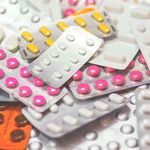
Thousands of patients seeking care in public hospitals across the country may have been exposed to untested medical drugs due to a breach of national health and safety protocols.
Auditor-General Nancy Gathungu revealed that drugs worth over Sh49 million were issued to hospitals without undergoing mandatory quality testing in the financial year 2023/24, thereby increasing the risk of patients receiving substandard or unsafe medication.

According to the report, the Health Ministry spent Sh5.14 billion on goods and services during the financial year.
Of this amount, Sh49.6 million was used on medical drugs dispatched to hospitals without any documentation confirming that the products had undergone the required safety and efficacy tests.
This irregularity, identified in an audit of the State Department for Public Health and Professional Standards for the year ending June 30, 2024, highlights failures by both the department and the National Quality Control Laboratory (NQCL). The NQCL is legally mandated under Section 35D(1)(c) of the Pharmacy and Poisons Act of 2012 to test all medicinal products before distribution.
“This was contrary to Section 35D(1)(c) of the Pharmacy and Poisons Act 2012, which requires the NQCL to test all locally manufactured and imported drugs or medicinal substances on behalf of the government to ensure compliance with established rules. Therefore, management was in breach of the law,” stated the audit.
In Kenya, the sale and distribution of untested medical products are strictly prohibited and regulated by the Pharmacy and Poisons Board (PPB), which is tasked with ensuring the quality, safety, and efficacy of all medical products and health technologies in the country. Poor-quality, substandard, and falsified or untested medicines pose a significant public health threat.
The Pharmacy and Poisons Act mandates the NQCL with examination and testing of drugs and any material or substance from which drugs may be manufactured, processed, or treated. The laboratory also ensures the quality control of drugs and medicinal substances.
The laboratory issues a certificate of analysis for every sample of drugs tested and approved.
In Kenya, substandard drugs are routinely recalled from the market. For example, in 2023, counterfeit antibiotics and painkillers were seized in Nairobi's informal pharmacies, posing a risk to consumers.
Furthermore, in December 2024, the PPB quarantined cancer injections due to quality concerns.
Most recently, in April, the PPB recalled multiple medications, including paracetamol and Augmentin, due to colour changes, packaging errors, or evidence of counterfeiting, which poses a serious health risk.