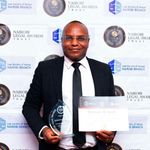
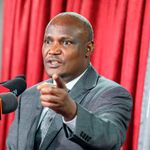
In the world, according to Philip Karanja, cars and golf are not just the way to a man’s heart but to his mind too — and, potentially, his bank account. He is, after all, the money guy; the Finance Director, Samsung Electronics East Africa.
Money gets you anything, which is why it is everything. He knows this to be true. But a raise at work won’t raise your children; it makes it easier, but not easy.
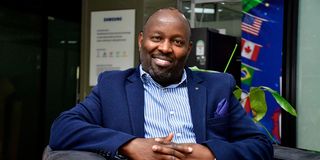
“I am a friend to my children, but not their best friend,” he says. This is important, knowing when to put an arm on their shoulder, or when they need a firm hand, especially in the tumultuous teenage years. In his Parenting 101, he is the chairman of his little chaebol, mediating disputes, keeping his eye on trouble spots, putting down rebellions from within.
This habit has earned him a reputation for aloofness, to which he pleads guilty with an explanation. “It’s just the way I carry myself,” he says. “I’m actually the opposite.” It’s true. Ask around, and they’ll tell you that the coolest thing about the money guy is his warmth.
The charge is that accountants are boring. Are you swimming with that current?
An accountant is a cost-conscious person, and a captain of an industry, several of them. So, I think that thinking has changed a lot. And I find the accountants of today are a lot more fun to be around.
What’s something cool about you?
I’m easy to get along with. I am also pretty adaptable to situations, and I am not straightjacketed in terms of expectations.
Are you an easy father too?
Fatherhood is the loveliest thing, actually. My purpose is to mold my children into something much better than myself.
How are you breaking fatherhood rules in your own life?
I have two sons. One of them is about to be a teen, the other one is 11. Fatherhood, for me, is about guidance. Just being present for the children. And of course, be a friend sometimes.
How are you being a different father than your dad?
The fathers of my time were more of kiboko fathers. Disciplinarians. I am also strict, but we have more conversations rather than just caning them. I try to be a model rather than just teach something I’m not practising.
What do you miss about your own childhood?
A lot. The playing, the ease, not thinking about too many issues, and just living in the moment.
How are you remaining childlike in your life now?
Play for me is still very important. I’m active in the gym, and I have taken up golfing. I also try to be easy on myself.
Philip Karanja says consistency—not shortcuts—has been the foundation of his career and personal life.
Photo credit: Francis Nderitu | Nation Media Group
Is golf the final coronation to ‘becoming CEO’?
It should actually be the first step [chuckles]. Sometimes I feel I should have started earlier. It’s a thing when you’re thinking about a retirement plan or when you’re not able to move as much, and basketball is no longer feasible. There is a lot of walking in golf and hitting the balls. Needless to say, it’s a very good area for networking.
What can you tell me about golf that Tiger Woods can’t?
Tiger Woods started playing golf at the age of two or three. I think he would not understand my challenges of picking up golf when I’m much older and not being able to hit a par, like him.
What is it with executives and golf?
Perhaps the way it was introduced, especially in Kenya, it was largely a game for the elite. That thinking is changing slowly. That said, it is expensive to play. The clubs are few, which means membership is expensive.
What’s the most boring part of playing golf?
Looking for other people’s balls when they hit them far away. Actually, one of the things golf teaches you is being very patient with everyone else making mistakes. The target is never the competitor. The target is always yourself. The game you played yesterday is not the same game you’ll play today. So most of the time, you’re playing to defeat yourself, to do better than yesterday.
Have you introduced your sons to golf?
Oh yes, my second-born. We used to do football, but that was not his thing.
And the firstborn?
He has a few challenges with movement. He’s differently abled.
If you can talk about it, how is that like for you — how different is the parenting?
I wouldn’t say it’s much different, but it is challenging because the milestones and progress are not the same as those of other children. And in our country, we are not very prepared for that kind of setup.
Which part of fatherhood has forced you to grow up the most?
Haha! I would say when the children reached five to seven years. They wanted to learn a lot more, so that phase required a lot more of my presence. When they started asking the whys, the whats, and being rebellious, I realised I needed to be more present. And as boys grow up, beyond a certain age, they start challenging the authority of their mum, and that forces the fathers to step up. I didn’t realise something like a voice makes a big difference.
So you’re bringing the thunder?
[chuckles] Oh, yes. Very necessary. I don’t think they challenge the fathers up to about age 15, or sometimes they become reclusive and quiet as teens.
What habit has best served you in your life?
Consistency. Having good virtues and integrity is also very important, especially in my job.
What will I find when I pop open the hood?
I’m a different person to myself at different times [chuckles]. Sometimes I’m an easy-go guy who just wants to experiment. Sometimes I want to leave a legacy and be proud of myself. It’s different acts at different times.
When was the last time you did something for the first time?
In 2018, when I started going to the gym seriously. I just felt very unhealthy and unfit. Going up the stairs was a bit of a problem. At that time, I thought I could do the evening sessions, then I realised I couldn’t and had to go in the morning.
What is your regimen like at the gym?
I’ll wake up at 5am, and I am in the gym by about 6am, and done by 8am, and then to the office.
Anything you’ve learned about yourself from lifting weights?
I’ve learned that there are limits to what I think I can do, a lot of patience needed to grow, and a lot of consistency required to develop. I’ve also learned that it’s a lifestyle rather than an event.
What are you thinking about when you’re in the gym?
I can’t understand anybody who goes to the gym with earphones. I find them strange people [chuckles]. I’m more of a group guy in the gym. I want the group activities. I’m not interested in individual things.
Why not?
They don’t bring out the best in me. Find me where the people are.
Philip Karanja says the most valuable lessons in life have come from family, not finance.
Photo credit: Francis Nderitu | Nation Media Group
You mentioned something about your wife — how has your interpretation of the word husband changed over the years?
[chuckles] My paternal auntie told me something very interesting when I was getting married. She said I have to be a friend to my wife, but also I have to be her husband. Many times, a husband has to be a leader. You have to make decisions and collaborate. My definition has changed over time. Friend, husband, father, mentor, it keeps evolving.
What does your wife get to brag about you?
She thinks I’m very patient, even in situations I shouldn’t be. I work best under pressure. She also thinks I’m very particular about details.
How has she influenced how you lead?
I actually consult her on many things. She’s my sponge. I don’t necessarily have to tell her the specifics, but there are many things I’ve run through her so that then she can give me perspective. She certainly has intuition. I’m more of a facts guy. She’s changed a lot of things and approaches that I have had to undertake at different times.
Speaking of, what does your buried life look like?
Growing up, I wanted to be an accountant. My father was a teacher, but I knew I didn’t like being a teacher. Cashiers used to impress me at the bank. Accountants, at that time, looked like they had it [chuckles]. So I wanted to be one.
Have you watched the movie [Accountant]? Is it how accountants really are?
Yes. Some portions are realistic—like having the whole picture of what is going on. Initially, when you become an accountant, you think it’s only a small part of accounting for other people. Then you realise it’s the whole perspective of understanding what money does and what decisions contribute to the value creation process.
What’s a lesson about money that has remained true for you over the years?
Cash is king. Successful companies are not always huge. Sometimes they have huge profits, but most of the time it’s because they have good cash flows that allow them to do things more flexibly. And I think that applies to companies as it does to individuals.
What’s a misconception people have about you?
That I am stuck up. I look serious to most people, so they think I’m not easy to approach. That I’m also very stubborn and sticky. It’s the opposite.
What matters less to you now?
Corporate noise.
What question are you hoping to answer with your life?
Did I create something long-lasting, a legacy for others to grow on or build? Did everybody who came next to me get a feeling that they got more for themselves and a legacy to build on?
Is it true that the higher you climb, the lonelier it becomes?
Yes. There is a level of consciousness one needs to have to expand their network. In the last five years, I have been very conscious that at some level, it gets very lonely, so you need to have the right people whom you can speak to, or the kind of expertise you don’t have, access to it through others. It is a conscious decision.
How are you watering your friendships?
Presence. Friendship is maintained by all the small things we do, like calling them, finding out what is happening in their lives, their children’s lives, and being there for them when they need you.
If you could know the truth to one question, what would you ask?
How much more time do I have to live? [chuckles]
Why is that important?
It’s nice to draw a timeline because there are many things I have yet to achieve. I want to map them out.
What’s on your bucket list?
Farming, that is my retirement plan, and I’d be growing fruits. At some point, I want to start my own consultancy because when you retire, you still have a lot to give.
Give us some good advice.
[chuckles] In the long run, time wins. The only thing that matters is what you do every day, at the time that it matters.