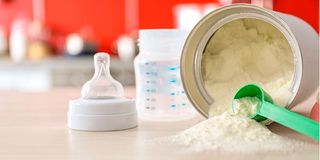
When you pick up a tin of infant formula from a pharmacy or supermarket, you probably do what most parents do: check the price, ensure the seal is intact and confirm the expiry date.
However, there is one more detail on the tin that you may not check, and it could be the most important.
Near the base, stamped in small print, is a batch number. This short combination of letters and numbers is easy to miss and is rarely explained on the label.
Most parents are unaware of it, yet when a batch is found to be contaminated, that number is the only way to determine whether the tin in your home is affected.
The risk lies in the gap between a printed code and a parent who knows what to do with it.
The baby food supply chain
A tin of infant formula passes through many hands before reaching the consumer. Ingredients are sourced from different countries, combined at a foreign facility and then shipped to retail shelves.
In Kenya, a single 900-gram tin can cost upwards of Sh2,000, depending on the brand. Parents place trust in these products without full visibility into their sourcing.
Manufacturers have added ingredients such as arachidonic acid (ARA), a fatty acid linked to infant brain development, in an effort to make formula closer to breast milk.
However, adding ARA introduces a new supplier, and a new potential point of failure.
There has been an increase in infant formula recalls, with long-trusted brands withdrawn from shelves due to contamination concerns.
There are even fears that contaminated formula may be circulating on online platforms used by Kenyan parents.
Last year, a contamination issue was traced to ARA oil supplied by Chinese firm Cabio Biotech. The oil was found to contain cereulide, a toxin produced by a bacterium, Bacillus cereus, which can cause severe vomiting and diarrhoea and may be fatal in infants.
Cereulide does not break down during manufacturing, meaning contamination persists in the final product.
Because Cabio’s oil was distributed globally, including to manufacturers such as Nestlé and Danone, the contamination spread to an estimated 60 countries, with infant hospitalisations reported in some cases.
The recalls
In January, Nestlé initiated a global recall of specific SMA batches, describing it as a “precautionary measure due to the potential presence of Bacillus cereus toxin” and stating that consumer safety was its “highest priority”.
Affected products included SMA Advanced First Infant Milk, SMA Follow-on Milk, SMA Comfort, SMA Lactose Free and Alfamino.
Three days later, the Common Market for Eastern and Southern Africa (Comesa) Competition Commission issued a regional alert.
It warned that “specific batches of Nestlé SMA infant formula and follow-on formula have been identified on online marketplaces accessible within the Comesa region, including Jumia Kenya”, and urged consumers and retailers to check batch numbers.
A review of import data by the Kenya Bureau of Standards (Kebs), however, found that none of the affected batches had been officially imported into the country.
While this provided some reassurance, the possibility remains that affected products could still reach consumers through informal channels.
In March, Comesa issued a second, broader warning covering multiple infant formula brands across the region. The two regional alerts within three months suggest that parents can no longer assume that products on shelves are automatically safe.
Expiry limits
Most parents routinely check expiry dates, but batch numbers, which determine whether a product is part of a recall, are rarely understood.
“An expiry date tells you how long a product can be stored under normal conditions,” says Peterson Mwangi, a consultant paediatrician. “A batch number tells you whether a specific production run had a problem. In a recall scenario, the expiry date is almost irrelevant. The product can be well within its shelf life and still be unsafe.”
There is also a gap in Kenya’s recall system.
The country does not have a mechanism to notify consumers directly through their mobile phones when products are recalled. Instead, notices are issued through various media channels and only reach those actively monitoring them.
“When we receive notice of a recall, we work with importers and distributors to pull affected stock,” a Kebs spokesperson said.
“But we cannot guarantee that every unit in circulation is retrieved, especially if a product has already reached retail shelves or households. Controlling that last mile is very difficult.”
“The batch number is what links a product in someone’s home to a specific recall notice. Without that connection, the system is incomplete.”
“Expecting a mother who is juggling work, a baby and a household to monitor global recall databases is an unreasonable burden,” Dr Mwangi added. “But right now, that burden falls on parents by default.”
What you need to do
According to Dr Mwangi, checking a batch number takes less than 30 seconds.
“Turn the tin over before you leave the shop. At the base, you will find a stamped alphanumeric code. Take a photo of it and check that code against recall lists on the Kebs website, the manufacturer’s website, or free databases from the US Food and Drug Administration or the European Food Safety Authority once a month.”
If the batch number matches that of a recalled product, stop using it immediately and seek medical advice, especially if the baby has experienced vomiting or diarrhoea without a clear cause.
Parents should inform the doctor of the brand, batch number and duration of use.
“These are small steps,” Dr Mwangi said, “but they significantly improve your child’s safety.”