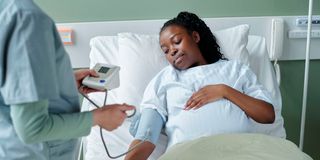
The share of caesarean section deliveries in Kenya has exceeded the upper limit recommended by the World Health Organisation (WHO), with surgical births now accounting for one in every five facility-based deliveries.
Latest official data published by the Kenya National Bureau of Statistics (KNBS) shows that C-sections accounted for 20.1 percent of total facility-based deliveries in 2025. This is well above the WHO’s recommended upper limit of 15 percent and significantly higher than the sub-Saharan Africa average of about 12 percent.
A caesarean section is a major surgical procedure performed to deliver a baby when vaginal delivery would put the mother or child at risk due to pregnancy, labour or delivery complications.
The WHO threshold was established at a meeting of reproductive health experts in Brazil in 1985, which concluded that there was no justification for any region to exceed it.
Rising trend
The survey shows that C-sections rose to 242,356 in 2025, up from 220,480 in 2024 and 201,493 in 2021 – an increase of 9.9 percent in one year and a cumulative rise of more than 40,000 procedures over four years.
During the same period, normal deliveries declined from 1,024,798 to 948,704 – a drop of 76,094 births (7.4 percent).
Meanwhile, the total number of facility-based deliveries has remained relatively stable at about 1.2 million per year. This suggests a substitution effect, where surgical delivery is steadily replacing vaginal birth rather than reflecting an increase in the number of women giving birth in health facilities.
“Facility-based deliveries declined by 0.4 percent to 1.2 million in 2025, whereas caesarean section deliveries increased by 9.9 percent to 242,356, indicating a shift towards medical interventions. Normal deliveries and breech deliveries declined by 2.8 percent and 2.6 percent, respectively, in 2025,” read the survey.
Experts attribute the rise in caesarean sections to greater access to surgical capacity in urban and private hospitals, as well as medico-legal pressures that encourage clinicians to intervene earlier.
Studies indicate that the likelihood of a vaginal delivery is about 20 percent lower in private hospitals than in public ones, with only 15 percent of first-time mothers delivering without intervention in private facilities.
Repeat procedures are accelerating the trend, with a previous C-section now the leading indication for subsequent operations. It is estimated that up to 80 percent of women who undergo the procedure will have a repeat C-section, creating a self-reinforcing cycle that steadily drives national rates higher.
Cost burden
Caesarean deliveries in private hospitals cost between Sh220,900 and Sh360,000, compared with Sh80,000 to Sh100,000 for normal deliveries. Under the Social Health Insurance Fund (SHIF), reimbursements are Sh32,600 for caesarean sections and Sh11,200 for normal deliveries, with hospital stays capped at 72 and 48 hours, respectively.
The WHO warns that caesarean sections performed without medical indication increase the risk of infection, haemorrhage and prolonged recovery for mothers. Newborns also face a higher likelihood of admission to neonatal units due to breathing complications.
A 2025 study by Karolinska Institutet, Sweden’s leading medical research university, also found a slightly elevated risk of certain childhood cancers, including acute lymphoblastic leukaemia, among children born via caesarean section.
“Caesarean sections are absolutely critical in saving lives in situations where vaginal deliveries would pose risks, so all health systems must ensure timely access for all women when needed,” said the WHO.