Time flies with great content! Renew in to keep enjoying all our premium content.
Prime
School heads face heat as watchdog probes uniform tenders
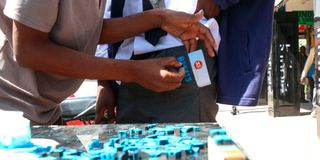
A painter labels a school uniform for a student outside a uniforms shop in Nakuru on January 8, 2026. The procurement watchdog has launched a crackdown on uniform cartels in secondary schools, ordering principals to disclose suppliers and actual prices.
The procurement watchdog has launched a crackdown on uniform cartels in secondary schools, ordering principals to disclose suppliers and actual prices.
Heads of national and extra-county schools have been directed to provide details of uniform suppliers, their qualifications and the tendering process that led to contract awards. They must also submit invoices and payment records.
Required disclosures include suppliers’ names, quantities supplied, prices charged to schools and prices passed on to parents.
The information must be uploaded to the Public Procurement Information Portal (PPIP) by February 27, 2026. The data is expected to expose beneficiaries of the alleged uniform racket, which has triggered public anger over high prices.
The PPIP publishes tender notices, contract awards, supplier identities and a market price index for commonly procured items.
In a February 5 letter to principals, the Public Procurement Regulatory Authority (PPRA) warned that non-compliant schools would be referred to investigative agencies, including the Directorate of Criminal Investigations (DCI) and the Ethics and Anti-Corruption Commission (EACC).
“To facilitate the audit, you are required to provide the list of all suppliers that supplied school uniforms in the financial year 2025/2026 in the attached format and ensure that all the contracts and relevant supporting documents for each contract have been uploaded in the PPIP,” PPRA Director-General Patrick Wanjuki said.
PPRA has initiated a performance audit of school uniform procurement amid complaints that some schools compel parents to buy uniforms from designated suppliers at inflated prices.
Compliance officers will be deployed to inspect procurement records, interview suppliers and question officials involved in the contracts.
Schools must submit procurement plans for the 2025/26 financial year, practising licences for heads of supply chain, signed contracts, delivery notes, invoices and payment records.

“Kindly note that failure to upload the documents as per the date indicated, the Authority shall forward the matter to other relevant government investigative and oversight agencies,” Mr Wanjuki said.
The crackdown follows persistent failure by public schools to report procurement spending, amid allegations that some principals collude with suppliers to overcharge parents.
PPRA estimates that about 33,000 public primary and secondary schools qualify as procuring entities, serving roughly 14.5 million learners and managing more than Sh100 billion annually in capitation funds.
In a November 2023 circular, PPRA said only two primary and secondary schools had registered on the PPIP, representing 0.006 percent of basic learning institutions.
Schools are required to disclose public procurement information, including the beneficial ownership of companies supplying goods and services.
“The disclosure of beneficial ownership information will enhance transparency, openness, and accountability in public procurement and asset disposal systems; through seamless disclosure of beneficial owners' information for companies/tenderers that have been awarded contracts as part of contract details to be published,” PPRA said in a 2022 circular.
The crackdown comes days after the Ministry of Education intensified enforcement against principals accused of the practice.
Basic Education Principal Secretary Julius Bitok directed regional and county directors to enforce laws governing uniform supply and purchase.
“The Basic Education Act prohibits schools from restricting parents from purchasing uniforms exclusively from the institution or designated stockists. The Ministry is concerned that some schools’ requirements undermine these legal provisions, causing frustration among parents,” Mr Bitok said.
The school uniform scandal has persisted for more than a decade, despite repeated interventions.