KMTC now rolls out new languages training course

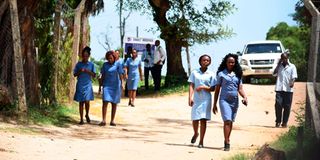
Trainee nurses at Kenya Medical Training College (KMTC), Mombasa Campus outside their institution in this photo taken on December 19, 2017. 

Photo credit: File | Nation Media Group

The Kenya Medical Training College (KMTC) has rolled out a new language training programme targeting French, German, Arabic and Amharic—an initiative designed to prepare Kenya's health workforce for both regional and global labour markets.

According to Kelly Oluoch, the institution's chief executive, the move is driven by clear and growing international demand for health workers, particularly in countries such as Germany, which are facing acute staffing shortages.
Although KMTC's training is conducted in English and its graduates are generally proficient, Dr Oluoch said language remains a significant barrier to accessing these foreign opportunities.

“We train in English, but many of our graduates are not very good at German. Yet that is often the only barrier to entry,” he said.

To address this issue, the institution has collaborated with the German Chamber of Commerce and the Africa Business Community to create pathways into international labour markets, particularly in Germany, where there is a growing demand for physiotherapists and occupational therapists.

Each language programme targets a distinct market. German opens doors to Europe's largest economy, while Arabic is aimed at graduates looking for opportunities in Saudi Arabia, the United Arab Emirates, and Qatar. Amharic, which is delivered largely in person due to its technical complexity, facilitates mobility into Ethiopia and the wider Horn of Africa. Meanwhile, French targets Francophone Africa and parts of Europe.

Dr Oluoch noted that all courses are optional and run in the evenings to avoid disrupting core medical training.

“In today's global arena, being multilingual is a competitive advantage. It allows our graduates to access markets that would otherwise be unavailable to them,” he said.

The programme aligns with Kenya's broader focus on labour export as an economic strategy.

Remittances from Kenyans living abroad have become one of the country's largest sources of foreign exchange, and the government has been increasingly supportive of structured migration pathways for skilled workers, including healthcare professionals.

However, the initiative comes amid concerns that aligning training with foreign labour markets could worsen Kenya's domestic health workforce shortages.

The Kenya National Union of Nurses estimates that over 800 nurses leave the country each year, primarily to work in the United States, the United Kingdom and Canada.

Similarly, a 2023 report by the Ministry of Health found that nearly two-thirds of health professionals had expressed a desire to emigrate, establishing Kenya as the leading African source of nurses seeking the VisaScreen certification required to practise in the United States.

According to the 2024 TruMerit Nurse Migration Report, Kenya accounts for 6.5 percent of all applicants globally.

Meanwhile, more than 22,700 students graduated from KMTC last year and over 22,600 the year before, with around 34,000 students being admitted annually.

"We are producing large numbers, and sometimes the local market cannot absorb all of them. We must ensure they find meaningful employment," said Dr Oluoch.

Follow our WhatsApp channelfor the latest business and markets updates.

PAYE Tax Calculator

Note: The results are not exact but very close to the actual.