Tanzania tycoon faces scrutiny over Portland Cement deal

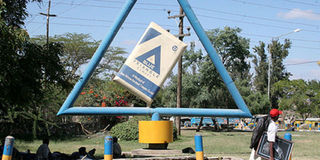
Entrance to the East Africa Portland Cement factory in Athi River. 

Photo credit: File| Nation Media Group

Tanzanian tycoon Edhah Abdallah Munif’s bid to purchase an extra 29.2 percent stake in East Africa Portland Cement Company (EAPC) is set to test the competition laws that forbid the sharing of trade secrets among rival firms in the wake of his recent acquisition of Bamburi Cement.

Antitrust law requires scrutiny on deals leading to cross-ownership of firms in the same sectors that could lead to sharing of strategic information such as marketing, sales and pricing plans, which could prevent, distort, or lessen competition and hurt consumers.
Mr Munif is buying 26.32 million EAPC shares from Swiss multinational Holcim using an investment firm known as Kalahari Cement at Sh27.30 each, valuing the deal at Sh718.7 million.

The deal comes months after his firm, Amsons Group, completed the full acquisition of Bamburi in December for Sh23.6 billion, cementing its hold on Kenya’s cement market.

With Bamburi already owning 12.5 percent of EAPC, Mr Munif will emerge as the single-largest shareholder of the Athi River-based company with a 41.75 percent stake.

The ownership will effectively give companies controlled by Mr Munif board-level influence and muscle to access strategic information in two of Kenya’s top cement firms that have a combined share of 31 percent of the country’s production capacity of 14.5 million tonnes per annum.

This position places Amsons Group and Kalahari Cement at risk of sharing strategic information on the operations of the two cement makers.

“Whereas the proposed transaction has not been formally notified to the Authority, as per the requirement of the Competition Act, we are aware of it from media reports. When notified we shall assess the matter and issue a determination,” Competition Authority of Kenya (CAK) director-general David Kemei told the Business Daily in an e-mail response.

“Cross-directorship, while common in Kenyan corporate practice, is not in itself an anti-competitive practice under the Competition Act. However, this relationship may facilitate outlawed conduct such as the exchange of commercially sensitive information or market coordination.”

Sub-section one of Section 21 of the Competition Act, 2010 says that restrictive trade practices may include fixing of purchase and sale prices, collusive tendering, division of market by allocation of customers, suppliers and trade areas, and misuse of intellectual property rights.

Other unfair trade practices are limits or controls on production, market outlets or access, technical development or investment, and the extraction of unfair competitive advantage by applying differing conditions on equivalent transactions with other trading parties.

The CAK has the option of giving conditional approval or denying approval if it considers that there is a risk of restrictive trade practices from a merger or investment deal.

The competition watchdog’s rules allow it to prescribe “structural or behavioural remedies” to address the risk that comes with cross-ownership, such as limitations of directorships and curbs on information sharing, with periodic checks.

With its 41.75 percent stake in EAPC, Kalahari Cement will have powers in appointing the company’s directors together with the National Social Security Fund (NSSF) and the Treasury, which have 27 percent and 25 percent stakes respectively.

In Bamburi, Amsons Group has full control over board appointments after its complete buyout and delisting from the Nairobi Securities Exchange (NSE).

Kalahari Cement is controlled by Mr Munif through his wholly owned Mauritius-based investment companies Pacific Cement (90 percent) and Comercio Et Consiel (10 percent).

In Bamburi, his stake is held through an investment vehicle known as Amsons Industries Kenya, which is part of the Amsons Group stable.

In Tanzania, Mr Munif, through his holding company Pan African Cement, is a majority owner of Mbeya Cement Company. He is also a player in the regional fuel sector through the Camel Oil brand, which operates in Tanzania, Kenya, and Mozambique.

He also runs a freight and cargo handling operation through East Africa Warehousing in Tanzania and Kalahari Trans Zambia in Zambia.

He is now deepening his presence in Kenya, with the EAPC deal strengthening his hand in the control of the local cement market at a discount.

The EAPC stock traded at Sh47.65 per share yesterday, representing a premium of 74.5 percent on the negotiated selling price of Sh27.30 in the proposed Kalahari deal.

At the prevailing price, the company has a market capitalisation (valuation) of Sh4.29 billion, while Kalahari Cement’s purchase price values it at Sh2.46 billion.

Both valuations are also well below EAPC’s net asset or book value of Sh20.4 billion, as per the company’s latest audited financial results dated June 2024.

The company’s total assets stood at Sh35.19 billion and total liabilities at Sh14.79 billion.

At the close of the deal, Mr Munif will directly and indirectly control the equivalent of 31 percent of the Kenyan cement sector’s production capacity, setting the stage for a billionaires’ fight for the industry.

The billionaire Rai family, through Sarbjit Singh Rai, controls Rai Cement located on the border of Kisumu and Kericho counties.

Tyccon Narendra Raval, popularly known as Guru due to his priestly background, is also a dominant player in Kenya’s cement market through his three firms—National Cement, Athi River Mining and Cemtech.

An independent advisory report prepared by Standard Investment Bank in October 2024, ahead of the Bamburi takeover, showed that Mombasa Cement was the market leader with a production capacity of 3.9 million tonnes per annum (mtpa) (26.9 percent) ahead of National Cement/Simba at 3.6 mtpa (24.8 percent).

Bamburi was third with a capacity of 3.2 mtpa or 22 percent of the total installed capacity, followed by Savannah Cement at 1.5 mtpa (10.3 percent) and EAPC at 1.3 mtpa (8.96 percent). Other players are Rai Cement, with a share of 4.83 percent, and Ndovu, at 2.06 percent.

PAYE Tax Calculator

Note: The results are not exact but very close to the actual.