A new electric vehicle start-up has entered Kenya’s fast-growing e-mobility market with a Sh1.8 million compact electric car targeting ride-hailing drivers.
Bingo EV Kenya, which is owned by US-based mobility technology company Bingo Technologies, plans to launch the four-seater Bingo E2 in September.
The first batch of 20 fully built units will arrive from China before the company shifts to local assembly next year to benefit from lower taxation.
“We target to sell at least 100 units by the end of the year as we plan local assembly from January at the Associated Vehicle Assemblers (AVA) plant in Mombasa,” Bingo Technologies co-founder and Chief Operating Officer Christian Scheder-Bieschin told Business Daily.
The car will be competing against Beijing Henrey’s Xiaohu hatchback, which goes for Sh2.5 million and Sh2.8 million, with 200 and 285 kilometre ranges, respectively, and Dongfeng’s ePureCitie, worth Sh4 million and Sh4.5 million, with ranges of 330 and 430 km, respectively.
The car will compete against Beijing Henrey’s Xiaohu hatchback, which goes for Sh2.5 million and Sh2.8 million, with 200-kilometre and 285-kilometre ranges, respectively, and Dongfeng’s ePureCitie, worth Sh4 million and Sh4.5 million, with ranges of 330 kilometres and 430 kilometres, respectively.
The company has secured a vehicle financing partnership with NCBA Bank Kenya and is in talks with Watu Credit, M-Kopa and SBM Bank Kenya to expand financing options.
Drivers will be able to purchase the vehicle outright, access lease-to-own financing or rent it on a short-term basis. Under the lease option, drivers will pay a deposit of up to Sh125,000 and daily charges of about Sh1,800, inclusive of maintenance and insurance, to operate the vehicle as a taxi.
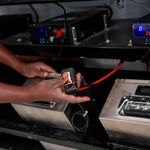
The Bingo E2 is designed to carry three passengers and has a top speed of 90 kilometres per hour. The company says it is the world’s first electric car with a dual-battery system, combining a built-in 31kWh battery with four removable battery modules.
The vehicle has a driving range of 440 kilometres, comprising 310 kilometres from the built-in battery pack and a further 130 kilometres from the four swappable battery units located beneath the rear passenger seat.
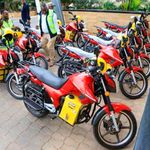
Bingo is introducing a battery-swapping model in which the company retains ownership of the removable battery packs to reduce the vehicle’s purchase price, similar to the leasing model electric motorcycle firms have used in Kenya to drive uptake.
“The company will retain ownership of the removable batteries to keep the car costs down,” Mr Scheder-Bieschin said.
“If drivers need extra range, they will swap batteries at stations we plan to establish at Naivas and Quickmart supermarket parking lots.”
Mr Scheder-Bieschin said the model is intended to reduce downtime for ride-hailing drivers while opening up new income opportunities through grocery deliveries.
“We see it as an added opportunity for these ride-hailing drivers, who can lose up to 10 hours a day to downtime. Our partnership with these supermarkets is such that drivers will also be able to do grocery deliveries for their online shoppers,” he said.
Bingo is yet to announce battery-swapping charges.
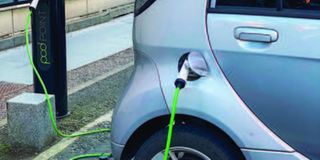
The car supports DC fast charging, allowing the battery to charge from 20 percent to 80 percent in less than an hour, while AC home charging takes about six hours to reach the same level.
It is also compatible with public charging stations and supports vehicle-to-vehicle charging between Bingo E2 cars.
Bingo becomes the latest electric vehicle company to target Kenya’s ride-hailing market as manufacturers increasingly bet on local assembly and tax incentives to make battery-powered cars more competitive against imported used petrol and diesel vehicles.