KPA boss fights graft claim in Sh31.2bn procurement

Kenya Ports Authority MD Capt William Ruto speaks during a past event at Mombasa Port.

Photo credit: File | Nation Media Group

An activist has sued Kenya Ports Authority (KPA) Managing Director Capt William Ruto, accusing him of violating the Constitution in running the affairs of the State agency.

Francis Awino, who is also the president of the Bunge la Mwananchi, claims that under the leadership of Mr Ruto, the agency has been mired in allegations of corruption, procurement irregularities, and abuse of office.
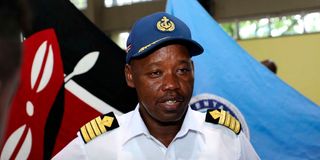
The KPA boss, through his lawyer Augustus Wafula, however, opposed the claims.

Whistleblower account

In his July 3 petition at the High Court in Mombasa, Mr Awino claims that an exposé cited a whistleblower's account and alleged procurement documentation manipulation implicating the respondent directly for failing to uphold transparency.

The petitioner seeks a declaration that the respondent has breached Chapter Six of the Constitution and is unfit to hold public office.

Mr Awino has named the Ethics and Anti-Corruption Commission, the Directorate of Criminal Investigations, the Director of Public Prosecutions, the Auditor General, the Public Procurement Regulatory Authority, and the Treasury as interested parties.

He claims that in 2024, KPA awarded a Sh31.2 billion contract to a Japanese construction firm (Toa Corporation) to undertake work on the Mombasa Special Economic Zone (development project.

He claims that the project was financed under the Japan International Cooperation Agency (JICA) Official Development Assistance loan scheme through the Special Terms for Economic Partnership framework.

Mr Awino claims that the procurement was tainted by collusion, abuse of discretion, concealment of procurement details, and undue exclusion of local expertise and oversight.

On Monday, Justice Jairus Ngaah directed the petitioner to serve case documents to the parties to the case.

The case will be mentioned on October 6 for further directions.

The petitioner also claims that while STEP allows preferential procurement to Japanese firms, it requires adherence to the constitution, the Public Procurement and Asset Disposal Act, and inclusion of transparency, accountability, local content participation, and competitive fairness.

“Investigations reveal that this project was executed under secrecy and without adequate stakeholder disclosure or competitive input,” argues the petitioner.

The petitioner says that the evaluation reports, feasibility studies, local contractor opportunities, and the environmental impact assessment were never subjected to public participation.

According to the petitioner, the respondent failed to disclose critical information about repayment terms, procurement structure, sub-contractor arrangements, and possible conflict of interest on whether local firms were unfairly excluded or technically incapacitated through restrictive tendering.

The petitioner also wants an order issued directing PPRA to conduct a procurement compliance audit at KPA and present a report to court.

He also wants an order directing the National Treasury to disclose and table all financial agreements, counterpart obligations, and loan terms relating to the Jica-financed project.

In the meantime, Mr Awino in an application seeks several interim orders and a mandatory order compelling the respondent to publicly disclose all procurement documents, evaluation reports, and correspondence relating to the Toa Corporation project and Transglobal Cargo Centre Ltd tender.

However, Mr Ruto through his lawyer said that the application did not meet the threshold for granting interlocutory reliefs as it is based on speculation or inadmissible hearsay.

“There are no special circumstances in this matter to warrant the grant of mandatory injunction orders as sought in the application,” he stated.

PAYE Tax Calculator

Note: The results are not exact but very close to the actual.