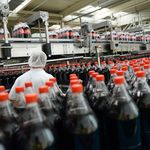
Tanzanian conglomerate MeTL Group is planning a Sh6.5 billion ($50 million) soft drinks plant in Mombasa, setting up a rare regional challenge to Coca-Cola and Pepsi in Kenya’s highly concentrated beverages market.
Construction of the multi-billion shilling plant is expected to start within the next year, and marks the company’s first major investment in Kenya, as Tanzanian investors flock to the neighbouring country in expansion bids.

It will produce MeTL’s signature beverages, including Mo Cola, Mo Xtra and Mo Malto, which have gained popularity in Tanzania with cut-price drinks that have challenged established market leader Coca-Cola.
Mo Cola is named after Mohammed Dewji, the chief executive of MeTL, who Forbes ranked as East Africa’s richest person with a net worth of $2.1 billion (Sh271 billion).
Like in Tanzania, Mr Dewji hopes to undercut Coca-Cola prices in the quest for market share.
He will follow in the footsteps of Softa Bottling Company, the only Kenyan firm that took global giant Coca-Cola head-on and almost succeeded. Softa was started in 1997 by business tycoon Peter Kuguru.
“I’m setting up a plant in Uganda, and I have land in Mombasa now, and I’m looking into setting up a carbonated soft drink plant,” Mr Dewji said in an interview with the Business Daily on Wednesday.
“We are right now at the drawing table, but we think that it is very possible that within 12 months, we may be able to break ground,” added the tycoon who was in Nairobi to attend the Africa Forward Summit.
More than 30 African government leaders, as well as heads of multilateral financial institutions and business executives from across Africa and France, attended the Nairobi summit.
Mr Dewji owns Mohammed Enterprises Tanzania Limited (MeTL) Group, one of Tanzania’s largest conglomerates, serving the needs of Tanzania’s largely poor population with everything from sugar and spaghetti to fuel and pens.
The investment adds to a wave of big-ticket investments by Tanzanian tycoons in Kenya over the past five years, underlining the growing influence of regional capital in East Africa’s largest economy.
Having reportedly overtaken Coca-Cola sales in Tanzania within a decade of launch, MeTL’s entry into Kenya’s soft drinks market is expected to intensify competition in a sector long dominated by multinational brands.
In Tanzania, MeTL’s beverages have carved out market share, partly by positioning themselves as more affordable alternatives in a price-sensitive market.
Its signature drink, Mo Cola, would retail at about Sh15 in Kenya for the 300 ml bottle, against the industry average of Sh40, giving it a competitive edge which has helped it grow its market share in Tanzania fast.
Mr Dewji said the company intends to pursue a similar strategy in Kenya, targeting low-income consumers who remain underserved by mainstream beverage brands.
However, analysts say challenging Coca-Cola’s dominance in Kenya will require deep distribution networks, sustained marketing investment and regulatory fairness in a market where several smaller brands have previously struggled to survive.
Some lower-cost brands that once sought to penetrate the Kenyan market, including Softa, eventually collapsed under intense competition from larger players.
“In Kenya, I think what is needed is a beverage product that focuses on poor consumers. Most of the brands available do not carter for that consumer group. But also, fair trade practices will help a newcomer survive,” argued Stephen Mutoro, the head of the Consumers Federation of Kenya, a lobby.
Currently, Coca-Cola’s closest rival in Kenya is Kevian Kenya, the maker of Pick and Peel, with about 4.8 percent market share, followed by Excel Chemicals (2.3 percent), Highlands (1.6 percent), Del Monte (1.4 percent), and Suntory (0.48 percent). The rest share the remaining 19.5 percent.
Mr Dewji said his company was leaning towards a complete greenfield entry into to Kenya, but is also considering the possibility of buying out a player or merging with another one.
“We cannot afford to ignore Kenya because it is the largest economy in our region. Yes, Kenya is more advanced, more competitive, but if you’re taking a long-term tenure, then it is definitely a country that you cannot ignore,” he said.
Outside the fast-moving consumer goods industry, Mr Dewji is also eyeing the Kenyan energy and hospitality industries as the company’s next expansion frontier, as the sectors record sustained growth.
In energy, Mr Dewji is considering investing in power production as an independent power producer, as well as in transmission, following the liberalisation of the energy sector by the government.
He is also looking to construct hotels in Kenya, but has yet to settle on a location. This follows President William Ruto’s announcement during the Africa-Forward Summit that the government is leasing out land on which investors can construct hotels.
The planned expansion would make Mr Dewji one of several Tanzanian tycoons to make major investments in Kenya in recent years, highlighting Nairobi’s increased attractiveness to regional investors.
Among the latest deals was the acquisition of Bamburi Cement by Tanzania’s Amsons Group, owned by businessman Edha Abdallah Munif, while energy investors Ally Edha Awadh and Rostam Azizi have also expanded their liquefied petroleum gas operations into Kenya.