Time flies with great content! Renew in to keep enjoying all our premium content.
Prime
Coca-Cola to build 3.98MW solar plants in Nairobi, Kisumu
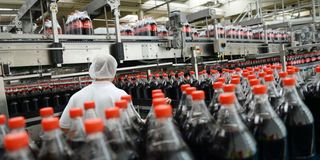
An employee is pictured next to the production line in the bottling plant of the Coca-Cola Erfrischungsgetränke AG production facility in Genshagen, Germany.
Beverages firm, Coca Cola, will install solar power plants at its manufacturing sites in Kisumu and Embakasi, Nairobi, with a combined capacity of 3.98 Megawatts for their own consumption.
According to the Energy and Petroleum Regulatory Authority (Epra), a total of 24 permits were issued for either generation or supply of own power (captive power) between July and December 2025.
Upset by expensive electricity, many customers in Kenya – including corporates and households– are increasingly resorting to alternative sources of power, particularly solar photovoltaic (PV) to take advantage of the falling prices of components like panels, inverters and batteries.
The authority added that it cleared Coca-Cola to set up 2.076MW at its bottling plant in Embakasi and another one with a capacity of 1.907MW at the manufacturing site in Kisumu.
It is not clear if the company had completed setting up the plants as of the end of the year when the report was prepared.
The fresh 24 permits for own power production came when 26.2MW of captive power was added to the grid, pushing the total power from these plants to 630.1MW in December 2025, compared to 603.8MW six months earlier.
“Solar photovoltaic systems make the highest contribution to the country’s captive generation capacity at 326.7 MW, which accounts for 51.86 percent of the total captive capacity,” Epra says in the report.
Captive power capacity refers to power generation plants that are privately established for self-consumption. The main form of this in Kenya is solar.
Coca-Cola joins a growing list of manufacturers, including Bio Food Products, Total Energies Kenya, Maisha Mabati Mills, Simba Cement, Unilever Tea Kenya, British American Tobacco, Africa Logistics Properties, Bidco, Mabati Rolling Mills, Centum Real Estate, and Devyani Food Industries, who have shifted to their own solar power generation to cut operational costs and lower carbon emissions.