Zul Abdul: Following a giant without living in their shadow

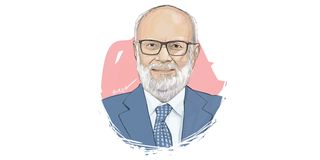
The new chairman of Jubilee Holdings, Zul Abdul.

Photo credit: Joseph Barasa | Nation Media Group

In July 2024, Zul Abdul became the new chairman of Jubilee Holdings, taking over from Nizar Juma who had chaired the insurer’s board for over two decades.

Mr Abdul reflects on the challenge of balancing continuity with the need to assert his own strategic direction. He also discusses the group’s decision to exit the general insurance business in five markets, the growing use of technology in running the company, and what lies ahead.
You stepped into the role after a long-serving chairman who shaped Jubilee for years. How do you balance continuity with the need to assert your own strategic direction?

I stepped into the role during not so exciting times. I still remember hearing the commotion and seeing tear gas in the air from the Gen Z protests as we were wrapping up our annual general meeting, where I had just been elected chairman.

I remember thinking to myself: what a time to step in. In many ways, it was a reminder of the uncertain environment businesses operate in and the constant need for leaders to stay alert, adaptable and focused on long-term sustainability.

Following in the footsteps of a giant like Nizar Juma is both an honour and a responsibility. He helped build a very strong foundation for Jubilee and continuity is important. To see further and strengthen the company even more, I have to stand on the shoulders of giants like him.

At the same time, every leader must bring their own style. My background is in marketing, which naturally makes me very customer-centric. I tend to view business through the lens of people. I believe that getting maximum potential from people means bringing out the human side of business every day.

I also believe a good leader is one who creates other leaders. That is why I am a firm believer in staying hungry and curious to learn; from those below me and above me I believe a curious mind can learn the complex of all things from the most unexpected places.

What parts of your predecessor’s legacy do you consider non-negotiable?

Ethics. He believed with conviction that it is possible to run an ethical and corruption-free company. That for me is one legacy I consider non-negotiable. That conviction has shaped the culture of Jubilee, and it is something I am so committed to preserving.

When you are ethical, you always think about fairness in your dealings and that gives you a focus on the present and the future. It influences how you deal with customers, employees, partners and regulators. It also forces leaders to think beyond short-term gains and focus on building a business that will still be trusted years from now.

In September, Jubilee announced it was going to offload general insurance stakes in Kenya, Uganda, Tanzania and Mauritius to Sanlam Allianz Africa. Any update on this?

Just to make it clear, there was no animosity between us and Allianz. The developments in the market meant our priorities and theirs no longer matched.

The principal agreement (for offloading our stakes) is there but we need approvals across the markets. We expect this to come to a close by the end of the year. We plan to use part of the money in declaring a special dividend for our shareholders and then reinvesting in business.

Can the market expect Jubilee to re-enter the general insurance businesses in the said markets?

Our priority now is in health insurance, life insurance and asset management. We see general insurance as a commoditised insurance. We want to play big in specialised covers where the game is more than just collecting premiums and paying claims. We want to create value and impact.

Despite not being in the general insurance business, the company has grown organically and become bigger than we were when with those businesses. We are very comfortable with the pace of growth, and there are opportunities that we are yet to explore.

Looking ahead, one of the biggest forces shaping the future is technology. Technology can quickly become a threat if organisations fail to understand and harness it. But if they embrace it and learn how to use it, it becomes an opportunity. The plan is to disrupt insurance industry and technology offers multiple ways to do it.

I believe those in leadership positions like myself have the responsibility to guide that journey, helping both employees and clients to adapt, learn and move forward with confidence.

What was the thinking behind the merger of the life and health subsidiaries in Uganda?

The decision was strategic and practical. Uganda is a market with huge growth potential for us, and simplifying the structure allows us to serve customers better while positioning the business to expand more. Unlike Kenya and Tanzania, Uganda does not legally require life and general insurance businesses to operate as separate entities, so we had the flexibility to consolidate.

Bringing the businesses together allows us to operate as one Jubilee. Instead of having different teams approaching the same client with separate products, a single relationship manager can now offer a more integrated solution.

In 2022, Jubilee rolled out Changamk@ project for digital transformation over a four-year period. What has been the impact and what next in this space?

The impact has been huge. Turnaround times have improved significantly, and we have also been able to reduce fraud, which is a persistent challenge in the medical insurance industry. When you look at our health insurance operations as an example, processing a medical claim could take up to two weeks.

The claim would have to be verified manually, including checking with the hospital, the doctor and the pharmacy to confirm the authenticity of every detail. Today, that process can happen in seconds because we have automated much of it.

Artificial intelligence now helps us analyse claims instantly. For example, if someone goes to the doctor for a common cold, there is a known set of medications that would normally be prescribed. If a claim suddenly includes drugs that are unrelated to that condition, say blood pressure medication, the system flags it immediately. That allows us to detect fraud almost instantly.

Technology is also shaping how we engage with customers. We are placing greater emphasis on wellness and preventive healthcare. The idea here is that healthier customers live better lives and, over time, preventive care can reduce claims costs. Ultimately, this keeps insurance premiums more affordable.

We now have real-time dashboards that track service performance— things like response times, dropped calls, and customer feedback. If a customer contacts Jubilee and doesn’t get a response, leadership can see that immediately and address it. Five years ago, that level of visibility simply did not exist.

Insurers have been accused of not being relevant to the young generation. What should be done differently?

I believe this is the moment when businesses need to bring younger people into the conversation when it comes to staying relevant in the market.

One way of doing that is through structured engagement. For example, hackathons where you invite young innovators into a room, give them the space to think creatively, and challenge them to design products that their generation will need in the future. Sometimes all it takes is a room, a problem to solve, and the right environment for ideas to emerge.

For us the goal is to ensure we stay ahead of that shift and remain a company that future generations want to engage with.

PAYE Tax Calculator

Note: The results are not exact but very close to the actual.