Africa is sitting on vast deposits of critical minerals powering electric vehicles, data centres and clean energy, but risks losing out again as value concentrates in processing and global supply chains rather than extraction.
Governments are now under pressure to rethink policy, investment and partnerships to avoid exporting raw ore while others capture the profits.
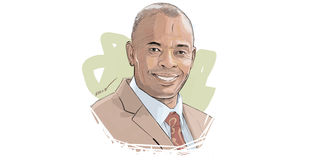
Stephen Kuria, a mining consultant with experience across Australia and Africa, explains where the real value lies, why global powers are scrambling to secure supply and what Kenya must fix to compete.
What does it take, technically and financially, for a country like Kenya to move from exporting raw ore to producing battery-grade material?
The primary requirement is policy direction, with government mandating gradual in-country processing rather than attempting immediate full-scale industrialisation, which can strain capacity and capital. Kenya already has technical skills locally and in the diaspora, meaning the constraint is not expertise but coordinated industrial policy and execution discipline.
A phased approach, starting with simpler processing before scaling into complex refining, would allow the country to build capacity without overwhelming existing systems.
Where should the investment come from?
Investment must come from a mix of local and international players, combining domestic capital with experienced global mining firms that understand project structuring and risk management.
Local financing alone is insufficient for large-scale processing, while foreign investors bring both capital and technical depth needed to develop bankable projects.
Global market integration is also critical, including listing assets on international exchanges to unlock valuation, liquidity and long-term investor confidence.
Investors often say African deposits are known but underdeveloped. What is the single biggest bottleneck today?
Exploration remains limited, meaning large parts of Kenya’s mineral potential are still unverified, reducing investor confidence and delaying project development timelines.
The regulatory framework also requires reform, particularly reducing concentration of decision-making power and improving predictability for long-term investments.
Above all, political stability and policy consistency are essential, as mining investments are long-term and highly sensitive to governance risks.
Kenya is positioning itself in rare earths and niobium. What specific minerals here could actually plug into global EV and battery supply chains?
Kenya is not positioning itself in rare earths it already has them, alongside niobium, phosphates and uranium, meaning the resource base exists without requiring new discoveries.
The real opportunity lies in structuring Kenya as a regional mining and processing hub that aggregates minerals from across East Africa rather than competing as a standalone producer. If exploited and processed strategically, these minerals can feed into electric vehicles, battery storage, fertiliser production and advanced manufacturing.
When you say critical minerals are the ‘new oil,’ where exactly is the value today? Is it in extraction, processing, or control of supply chains?
Extraction does not deliver meaningful value, which is why many African countries remain resource-rich but income-poor despite decades of mining activity. The bulk of economic gains lies beyond the pit. Processing is where value is created, and currently about 90 percent of global processing capacity is controlled by China.
That control means countries with raw materials but no processing capacity remain price takers, while those refining and manufacturing capture benefits like industrial value, technology transfer and geopolitical leverage in global markets.
With China dominating the refining of lithium, cobalt and rare earths, does Africa realistically have a window to break into processing?
Africa has both the capital and partners required to enter processing, and recent investments across oil and mining sectors show that large-scale industrial financing is already available on the continent.
The key shift is to stop exporting raw minerals and instead build domestic or regional processing capacity, riding on both African capital and international technical expertise.
Failure to do so will entrench the current model where Africa exports low-value ore while importing high-value finished products, which is basically outsourcing industrialisation.
Global demand projections for lithium, graphite and cobalt are rising sharply. Are we heading into a structural shortage or will new discoveries flatten prices before Africa benefits?
Current trends point to supply shortages, particularly for copper and other transition metals, as demand accelerates due to electrification, energy storage and digital infrastructure expansion. However, high prices can trigger substitution, as seen with alternative materials developed when nickel prices spiked, meaning sustained shortages are not guaranteed if markets adapt.
The risk for producers is that delayed investment could see Africa miss peak pricing cycles, while oversupply or substitution later reduces long-term profitability.
Recycling and alternative battery technologies are advancing. Could they reduce long-term demand for newly mined critical minerals and undercut Africa’s opportunity?
Recycling and alternative technologies will support the energy transition but will not replace the need for primary mineral extraction, especially as demand continues to expand globally.
Clean energy systems, including electric vehicles and data infrastructure, still depend fundamentally on mined inputs, making mining the foundation of the transition. Rather than reducing demand, these technologies are likely to complement mining and reinforce the long-term relevance of critical minerals.
How big is the risk that Africa repeats the oil ‘curse’ in the sense of exporting raw critical minerals cheaply while others capture the trillion-dollar clean energy value chain?
The risk is real if governance structures remain weak. Strong legal frameworks, transparent revenue management and institutional checks are necessary to ensure mineral wealth translates into broad-based economic gains. Without these safeguards, Africa could again export raw resources cheaply while importing finished goods at a premium, missing the full value chain benefits.