Time flies with great content! Renew in to keep enjoying all our premium content.
Why businesses that fail to professionalise governance and reporting risk being locked out of capital
Sponsored by PKF Kenya
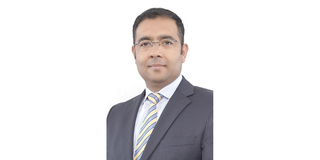
Asif Chaudhry is a partner, PKF in Eastern Africa.
BY PAULINE ONGAJI
For decades, many businesses across Kenya and the broader East African region viewed financial statements primarily through the lens of taxation and statutory obligations. But according to Asif Chaudhry, Partner at PKF in Eastern Africa, the economic shocks of the last five years have fundamentally altered that mind-set.
“Covid-19 was a wake-up call for many businesses,” says Chaudhry, a Fellow Certified Public Accountant (FCPA), Fellow of the Association of Chartered Certified Accountants (FCCA), Chartered Accountant (ACA UK), and member of the ICPAK Professional Standards Committee.
“Businesses realised financial reporting was not just about numbers and taxation anymore, but all to do with understanding the real health of your business, understanding risks, planning ahead, and convincing investors and lenders that you are sustainable.”
Chaudhry, who has more than 25 years’ experience in professional services, including eight years in London, believes East Africa has made remarkable progress in adopting international financial governance standards, even outperforming some developed economies in speed of adoption.
“Kenya embraced International Financial Reporting Standards very early, even before several European jurisdictions fully adopted them. The region has generally been proactive and forward-thinking when it comes to financial governance and reporting standards,” he says.
But despite the regulatory progress, the realities of East Africa’s business landscape present unique challenges.
Unlike Western economies where listed companies dominate economic activity, East Africa remains heavily driven by private and family-owned enterprises. These businesses often operate informally, with governance structures that are still evolving.
“In our market, the majority of businesses are owner-managed private enterprises. That creates a very different reporting culture compared to developed economies where listed entities dominate,” says Chaudhry.
That challenge is emerging as a pressing issue as economic uncertainty intensifies.
Over the last five years, businesses throughout East Africa have endured repeated economic shocks, ranging from the Covid-19 pandemic to inflation spikes, foreign exchange volatility, global conflicts to supply chain disruptions.
According to Chaudhry, liquidity pressures remain among the biggest concerns facing businesses today. “Access to capital becomes tighter whenever there is volatility. Investors become cautious, banks become conservative, and competition for financing increases significantly,” he says.
Foreign exchange exposure has become another key challenge, especially for economies like Kenya that remain heavily reliant on imports.
“A large percentage of businesses in East Africa depend directly or indirectly on imported commodities, packaging materials or consumables. So when exchange rates fluctuate sharply, businesses immediately feel the impact,” he explains.
The Russia-Ukraine war and ongoing instability in the Middle East have further complicated supply chains and commodity costs, forcing businesses to rethink how they plan, forecast and manage risks.
As a result, financial reporting is steadily shifting from historical bookkeeping towards forward-looking business intelligence.
“Businesses now need to understand not just where they are, but where they are headed. They need to model downside scenarios, stress-test assumptions and demonstrate resilience,” says Chaudhry.
He argues that strong governance becomes even more critical during difficult economic periods. “The most successful businesses during turbulent times are usually those with robust financial reporting and strong internal controls,” he says.
One of the biggest transitions currently underway is the evolution of lending practices across the banking sector.
Historically, many banks in the region prioritised physical collateral such as land and buildings when extending credit facilities. But according to Chaudhry, lenders are increasingly moving towards cashflow-based lending models.
“Banks are realising that holding security is one thing; converting that security into cash is another challenge entirely,” he says, and adds: “The future of lending will depend more on a business’s ability to generate sustainable cashflows and less on physical collateral.”
That shift is placing fresh pressure on businesses to strengthen forecasting, governance and reporting systems. “Lenders now want projections, forecasts and evidence of strategic planning. Businesses with weak reporting systems may struggle to access financing in future,” Chaudhry warns.
He therefore believes one of the greatest opportunities for East African businesses lies in professionalising financial reporting functions. That includes hiring skilled finance professionals, strengthening internal controls, investing in governance frameworks and working closely with trusted external advisors. “Financial reporting should not be treated as a back-office compliance function, but should be embedded into strategic decision-making,” he stresses.
He also sees significant room for improvement at board level, particularly around governance and oversight.
“There is still a tendency among some owner-managed businesses to view controls as unnecessary because the owner is actively involved in daily operations, failing to understand that sustainable businesses require institutional structures that outlive individuals,” he notes.
At the same time, technology is rapidly reshaping the accounting and audit profession itself.
Digital transformation, artificial intelligence and data analytics are becoming central to financial reporting and assurance services, changing both client expectations and operational processes.
“Even traditional audit services are now highly technology-driven. Artificial intelligence, automation and data analytics are transforming how professional services are delivered,” says Chaudhry.
However, he cautions businesses against rushing blindly into expensive technology investments without clear implementation strategies.
“There is no magic switch for digital transformation. Businesses must understand both the opportunities and the risks. You cannot simply spend millions on technology without understanding when and how that investment will generate returns,” he says.
PKF itself is currently expanding its technology advisory capabilities to help businesses navigate digital transformation more strategically.
“Clients want more than audit reports or tax computations. They want trusted advisors they can talk to about anything affecting their business. They want conversations around growth opportunities, staffing challenges, expansion plans, financing concerns and operational risks,” he explains.
That demand for “partner face-time,” as he describes it, has become one of the defining shifts in the professional services sector.
As a member of the ICPAK Professional Standards Committee, Chaudhry has also been closely involved in Kenya’s evolving accounting and sustainability reporting landscape.
He believes Kenya has made impressive strides in keeping pace with global accounting developments, including the adoption of IFRS 9 for banking and IFRS 17 for insurance.
Now, attention is turning towards Environmental, Social and Governance (ESG) reporting and the implementation of IFRS Sustainability Disclosure Standards S1 and S2.
“Kenya is actually ahead of many markets in Africa when it comes to sustainability reporting preparedness. We already have a clear roadmap for implementation, and there is growing recognition that sustainability reporting will become a key requirement for investors, lenders and even employees,” he says.
Mandatory sustainability reporting in Kenya is expected to begin rolling out from 2027, initially targeting large regulated entities before gradually expanding across the market.
Against this backdrop, he says, businesses must determine what sustainability data they need to collect, how to verify its reliability, and how to present ESG disclosures in a way that investors and the public can understand.
“There is still a lot of education required around ESG reporting. Businesses that start preparing early will have a significant advantage,” Chaudhry says.
And for businesses hoping to attract capital in the years ahead, Chaudhry says, the quality of their financial reporting may ultimately determine whether they scale or stall.
“Clients want more than audit reports or tax computations. They want trusted advisors they can talk to about anything affecting their business. They want conversations around growth opportunities, staffing challenges, expansion plans, financing concerns and operational risks.”