Time flies with great content! Renew in to keep enjoying all our premium content.
How smartphones are changing financial participation in Africa
Sponsored by HFM
Mobile technology has already transformed payments, savings and lending across the continent. What is becoming clearer now is that its influence is extending further into how individuals interact with financial markets themselves.
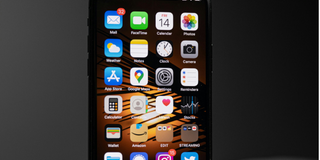
Photo credit: HFM
Not long ago, access to financial markets across much of Africa was limited to institutions, high-net-worth individuals or those with direct ties to banking systems. For many people, investing, trading or even actively managing money beyond a basic account felt out of reach.
That reality has changed very quickly, and much of the change can be traced back to something far more familiar than a bank branch. And that's the smartphone.
Mobile technology has already transformed payments, savings and lending across the continent. What is becoming clearer now is that its influence is extending further into how individuals interact with financial markets themselves.
In countries where traditional infrastructure has struggled to keep pace with demand, mobile-first solutions are filling the gap in ways that feel both practical and scalable.
Access is no longer the main barrier
At the center of this shift is accessibility. A smartphone removes several layers of friction that once defined financial participation.
Opening accounts, verifying identity, tracking market movements and executing transactions can now all happen in a single interface. This matters in regions where physical access to financial institutions may still be uneven, but mobile penetration continues to grow steadily.
Across urban centers and increasingly in smaller towns, younger users in particular are engaging with financial tools in ways that would have been unlikely a decade ago.
This includes exposure to foreign exchange markets, where currency movements are not just abstract economic indicators but something individuals can monitor and, in some cases, respond to directly. The ability to do this through aforex trading app reflects a broader shift toward self-directed financial activity. This is enabled by devices people already carry in their pockets.
A different kind of financial engagement
Still, access alone doesn't guarantee meaningful participation. One of the more interesting developments is how users' behavior is evolving alongside the technology. Many platforms are no longer built solely for experienced traders. Instead, they incorporate educational context, simplified interfaces and real-time insights designed to make complex markets easier to understand.
In that sense, smartphones are not just expanding access. They are also reshaping expectations. Financial engagement is becoming more immediate, more interactive and in some cases, more frequent. Users are checking prices, reading updates and making decisions in real time, rather than relying on delayed information or intermediaries.
Economic pressure meets digital opportunity
There is also a broader economic context at play. Currency volatility, inflation pressures and shifting global conditions have made financial awareness more relevant at the individual level. For some, this has translated into a desire to better understand how currencies behave and how those movements might affect personal finances. Mobile platforms make that learning process even more accessible, even if participation levels vary widely.
At the same time, this shift raises some important questions around risk and responsibility. Greater access to financial tools inevitably brings exposure to complex and sometimes volatile markets. Without a clear understanding of how these systems work, users can interpret short-term movements or underestimate potential losses. This is where platform design, transparency and user education become critical.
Regulation and the road ahead
Regulators across the region are also paying closer attention. As digital financial services expand, ensuring that users are protected without stifling innovation is becoming a delicate balance. The growth of mobile-based trading and investment tools sits within a broader regulatory conversation that includes data protection, financial literacy and market oversight.
Despite these challenges, the direction of travel is clear. Smartphones are not just supporting financial inclusion in the traditional sense; they are broadening the scope of what inclusion actually means. Participation is no longer limited to basic services like payments or savings. It increasingly includes engagement with markets that were once considered out of reach for the average individual.
From transactions to participation
What makes this transformation especially notable is how it builds on existing behavior. Mobile money laid the foundation by familiarizing users with digital transactions. From there, it becomes a smaller step to explore additional financial tools, whether for saving, investing or monitoring economic trends. The transition feels less like a leap and more like a natural progression.
There is still a long way to go. Access remains uneven in some regions and digital literacy cannot be taken for granted. But the underlying trajectory suggests that mobile technology will continue to play a central role in shaping how individuals interact with financial systems.
The smartphone has become more than a communication device. It's now a gateway, one that connects users not just to services, but to opportunities, information and markets that were once distant. As that connection deepens, the definition of financial participation across Africa is likely to continue evolving in ways that are both significant and, in many cases, still unfolding. What happens next will likely depend on how access, education, and regulation continue to develop in parallel.