Poverty fuelling illegal trade in human organs

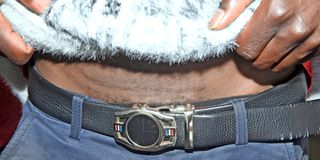
A man shows a scar from an alleged illegal kidney harvesting at a press briefing in Eldoret on August 29, 2025.

Photo credit: File

The human body is not for sale, yet in some parts of Kenya, it is being traded for a pittance.

In a disturbing trend, vulnerable young men, often from impoverished communities in western Kenya, are being lured into a sinister trade: selling their kidneys for as little as $1,000 (Sh130,000), along with the promise of a motorbike or other items. This is not a transaction; it’s a form of modern slavery, and it’s happening right in our backyard.
This illicit business is thriving on a complex web of poverty, exploitation, and a global demand for organs.

The victims are not just the young men who lose an organ; they are also the families and communities left to deal with the long-term physical and psychological trauma.

Many of these donors are left with chronic health issues and little to no follow-up medical care, while the perpetrators profit from a multi-million-dollar industry.

The good news is that we are not alone in this fight. The Kenyan Health Act of 2017 provides a legal framework that prohibits organ harvesting and trafficking.

However, laws are only as good as their enforcement. Recent investigations by the Ministry of Health and the parliamentary Committee on Health into an alleged kidney transplant racket at a hospital in Eldoret are a welcome step, but they also reveal the deep-seated challenges we face.

We’ve seen similar inquiries before, and let’s hope this is not another repeat performance that would be futile because the integrity of our healthcare system and the safety of our citizens are at stake.

The fight against organ trafficking requires a multi-pronged approach and a commitment from all sectors of society. For instance, there is a need to strengthen our legal and regulatory framework and advocate for clearer guidelines and stricter penalties for those involved in this trade.

This includes not only the brokers and recruiters but also the medical professionals and institutions that facilitate these illegal procedures.

The Kenya Renal Association, the International Society of Transplantation, and the International Society of Nephrology have all condemned these practices, and we must heed their call to action.

Their stance, rooted in the declaration of Istanbul, asserts that organs should be freely given without commercial consideration. We must criminalise all forms of organ trafficking and ensure that our laws are aligned with international standards.

We need to protect the vulnerable by providing support and resources to those at risk of exploitation. This means empowering communities with information about the dangers of organ trafficking and providing a safety net for potential victims. It is crucial to offer physical and psychological support for survivors, many of whom suffer from depression and trauma.

Further, we need to raise awareness and must continue to educate communities about the risks and consequences of organ trafficking. This is a battle for hearts and minds. It’s about debunking the dangerous myth that selling a kidney is a quick fix for poverty. Instead, we must promote ethical organ donation and transplantation, a process that is rooted in compassion and saving lives, not profiting from them.

To our young people being targeted: do not be afraid. Your government, leaders, and fellow citizens stand with you. To our health professionals, parents, brothers, and sisters: your efforts are commendable. Keep pushing forward.

Let’s make sure that justice is not just a promise but a reality. Let’s show the world that in Kenya, a life is priceless, and no one’s body is for sale.

The writer is a Consultant Nephrologist and Head of Nephrology Department at Moi Teaching and Referral Hospital.

PAYE Tax Calculator

Note: The results are not exact but very close to the actual.