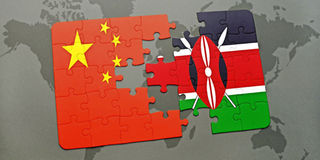
Recent media reports indicated that goods worth approximately Sh629 billion exported from China to Kenya do not appear in Kenya Revenue Authority (KRA) import records thereby understandably generating public concern. At first glance, such figures suggest a massive revenue leakage and raise questions about integrity of Kenya's customs administration.
However, as an experienced practitioner in the customs clearing and freight forwarding industry, I believe the public deserves a more nuanced and technically informed discussion.
While the discrepancy is significant and warrants urgent investigation, it would be premature to conclude that the entire difference represents lost taxes or corruption.
International trade statistics are complex and differences between one country's export records and another country's import records are not uncommon.
The real question is not whether there is a discrepancy. The question is what explains it.
One of the most common causes is the difference in statistical recording methodologies. China's General Administration of Customs (CGAC) records exports based on its own customs declarations, while Kenya records imports only after goods have been entered into its Integrated Customs Management System.
The two systems are administered independently, use different reporting methodologies and may not always capture transactions within the same reporting period.
Timing alone can create significant differences. A consignment exported from Shanghai in late December 2025 may only arrive in Mombasa in January 2026. China records the export in one financial year, while Kenya records the import in the next. When aggregated across thousands of consignments, such timing differences can materially affect annual statistics.
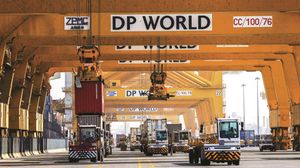
Secondly, not every shipment destined for East Africa enters Kenya as a domestic import. The Port of Mombasa serves as the principal gateway for Uganda, Rwanda, South Sudan, eastern Democratic Republic of Congo and parts of northern Tanzania.
Large volumes of cargo arriving from China are immediately declared as transit cargo, moving under customs bond to neighbouring countries. Such goods may appear in China's export records as destined for Kenya because Mombasa is the port of discharge, yet they are never imported for home use in Kenya and, therefore, do not form part of the country's import data.
Similarly, goods entering bonded warehouses, export processing zones (EPZs), special economic zones (SEZs), duty-free facilities and temporary importation regimes are treated differently for customs and statistical purposes. These customs procedures are recognised globally and may legitimately account for part of the statistical variance.
Another factor is transshipment through third countries. Many goods made in China are consolidated or redistributed through logistics hubs such as Dubai, Singapore, Malaysia or Oman before reaching Kenya. Depending on the reporting methodology adopted by each customs administration, one country may record the original country of manufacture while the other records the country of consignment.
This creates what economists refer to as "mirror statistics discrepancies."
We must also confront the uncomfortable reality that illicit trade remains a genuine concern.
Under-invoicing, misclassification of goods, false declarations, concealment of cargo, diversion of transit goods into the local market, abuse of customs procedures and outright smuggling continue to challenge customs administrations across the world.
If any portion of the reported discrepancy is attributable to these practices, then Kenya loses not only customs revenue but also exposes compliant businesses to unfair competition.
Differences in commodity classification, revisions to customs declarations, cancellations, post-clearance audits and statistical adjustments can all affect the final published figures. Before drawing conclusions, both countries must ensure they compare identical datasets using harmonised definitions.
The temptation whenever such figures emerge is to propose stricter valuation benchmarks or across-the-board increases in customs values. While politically attractive, such measures may prove counterproductive.
Experience has shown that arbitrary benchmark values imposed without regard to actual transaction values undermine the principles of the WTO Customs Valuation Agreement, encourage disputes, increase clearance delays and ultimately discourage voluntary compliance.
Customs valuation should remain evidence-based, transparent and consistent with international law rather than being driven by revenue targets.
Instead of reacting with assumptions, Kenya should seize this opportunity to strengthen customs administration through evidence-based reforms.
First, the Kenya Revenue Authority should initiate a joint customs reconciliation exercise with the General Administration of Customs of China. Such an exercise should compare shipment-by-shipment data using Bills of Lading, Airwaybills, commercial invoices, customs declarations, HS classifications, container numbers and countries of final destination. Only such a forensic comparison can determine where genuine discrepancies exist.
Secondly, Kenya should expand the use of electronic data exchange with major trading partners. Modern customs administrations increasingly exchange advance cargo information directly between customs authorities, enabling discrepancies to be detected before goods arrive.
Thirdly, greater investment should be made in risk management systems rather than blanket enforcement measures. Artificial intelligence, data analytics and post-clearance audit programmes are far more effective at identifying high-risk consignments than imposing general valuation adjustments on compliant traders.
Fourthly, stronger collaboration between KRA, KIFWA, importers, shipping lines, the Kenya Ports Authority and other border agencies is essential. Customs compliance works best where government and the private sector operate as partners rather than adversaries.
Finally, the government should continue strengthening the integrity of transit monitoring systems to ensure that goods declared for neighboring countries are not unlawfully diverted into the Kenyan market. Transit diversion remains one of the most significant sources of potential revenue loss in regional trade corridors.
Kenya's freight forwarding industry supports every legitimate effort to protect government revenue. Customs duties finance essential public services, infrastructure development and national security. However, protecting revenue should never come at the expense of internationally accepted customs principles, trade facilitation or legitimate commerce.
The reported Sh629 billion discrepancy should therefore be viewed neither as proof of massive fraud nor as a statistic to be dismissed. It should instead serve as a catalyst for a comprehensive technical review involving customs administrations, the private sector and international partners.
Ultimately, good customs administration is not measured solely by the amount of revenue collected. It is measured by its ability to collect the correct revenue, facilitate legitimate trade, apply the law fairly and maintain public confidence.
If this issue prompts deeper cooperation, greater transparency and more sophisticated customs controls, Kenya will emerge with a stronger and more credible trade facilitation system.
As a nation whose economic future increasingly depends on international trade, that is the outcome we should all seek.
The writer is a Lawyer and National Chairman, Kenya International Freight and Warehousing Association (KIFWA). Email: [email protected]