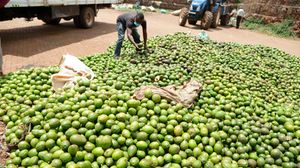
Agriculture plays a key role in Kenya’s economy. It feeds the nation, accounts for slightly over one fifth of the country’s gross domestic product at 22.5 percent and supports millions of jobs, anchoring seven out of every 10 jobs in rural Kenya.
That is why any conversation involving farmers, especially one linked to taxation, must be approached with care, accuracy, and a shared commitment to strengthening the sector.

From the outset, Kenya’s tax laws already recognise the unique place of farming. Many essential farm inputs such as fertiliser, seed, machinery, and some livestock feeds, are either zero-rated or exempt to keep the cost of production manageable.
However, recent public discussions around the electronic tax invoice management system (eTIMS), have raised genuine questions but also introduced misconceptions that fuel needless fear.
It is important to clarify what eTIMS actually does and how it fits into the broader goal of securing a more inclusive and competitive agricultural economy.
To begin with, farmers are not the target of eTIMS. The system’s purpose is far simpler and more progressive: to make it easier for businesses that are already legally required to keep tax records to do so in an efficient, digital way.
It is equally important to understand that most smallholder farmers are not required to use eTIMS at all. It becomes relevant only when farmers supply large buyers such as supermarkets, processors, hotels, or institutions through transactions that require record-keeping.
In a sector where many farmers rely on basic mobile phones and cash-based trade, introducing a heavy or costly system would only deepen exclusion. eTIMS takes the opposite approach. It provides simple digital tools that allow farmers, traders, and aggregators to record sales, issue receipts, and maintain basic records.
For smallholder farmers, this creates a reliable digital footprint, something that was previously out of reach. It is not about taxing subsistence farmers; it is about giving them the documentation necessary to participate more fully in the modern economy.
One of the most important qualities of eTIMS is its capacity to formalise transactions without imposing complexity. Ultimately, what it changes is the method, not the obligation. It replaces paper-based books with digital records that are easier to maintain.
This shift has profound implications for credit access. Financial institutions have historically viewed small-scale agriculture as high-risk because of limited or unverifiable cash flow data.
Digital records provide farmers with a consistent, trustworthy log of transactions, allowing them to build credit histories that can unlock seasonal loans, input credit, and asset financing. What was once invisible to lenders becomes visible, paving the way for affordable and tailored financial services.
Benefits also extend to everyday market interactions. Many disputes between farmers and buyers arise from unclear pricing, unverifiable quantities supplied, or ambiguous payment arrangements.
In an environment where knowledge gaps and information asymmetry often disadvantage producers, such transparency helps level the playing field and supports fairer markets.
Beyond the farm level, data generated through eTIMS contributes to value chain visibility. Buyers now demand traceability, accountability, and documentation at every stage of the value chain.
Whether supplying a supermarket in Nairobi or exporting to a regional market, producers must be able to show what they delivered, when, and at what price. eTIMS helps Kenya’s farmers meet these rising standards, positioning them to compete fairly and confidently.
None of this is to dismiss the concerns raised by those who feel overwhelmed by technological changes. To address concerns about technology, KRA intentionally designed “technology-light” options that include eTIMS Lite and even USSD-based tools that work on basic feature phones.
A farmer does not need a smartphone, expensive software, or specialised equipment to comply. With a simple mobile phone, they can record sales, generate receipts, and build an organised financial history.
At its core, eTIMS is about transparency, efficiency, and economic empowerment. By helping farmers formalise their businesses, access credit, and participate more confidently in modern value chains, it supports not just compliance but access to opportunity.
Kimani Gitau is a former business journalist and communication practitioner.
Unlock a world of exclusive content today!Unlock a world of exclusive content today!