With right policies, the Singapore dream is not far-fetched for Kenya

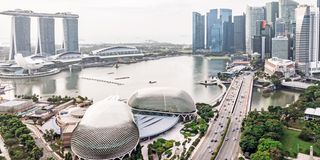
Aerial view of Singapore’s central business district, showcasing the city’s skyline and urban landscape.

Photo credit: Shutterstock

In the early 2000s, kerosene lamps and kerosene stoves were a permanent feature in many Kenyan homes.

They lit our evenings, cooked our meals, and powered small village businesses. They were smoky, unsafe, and inefficient, yet they were accepted as the default energy option for low-income households. Few imagined that within two decades, both the lamps and the stoves would quietly fade from daily life.
That transition did not happen because Kenyans suddenly became wealthier or more environmentally aware. It happened because in 2004, policymakers made a deliberate and forward-looking decision.

Sessional Paper No. 4 of 2004 on Energy recognised that kerosene was not a development solution but a poverty trap. It carried hidden costs in respiratory disease, fire accidents, household air pollution, and black carbon emissions, all of which disproportionately affected women and children.

Instead of imposing bans, the policy chose a smarter path. It invested in alternatives. It expanded electrification, supported LPG adoption, encouraged private sector participation, and strengthened regulatory institutions.

Over time, solar lanterns became affordable, electricity reached rural households, LPG moved into kitchens, and kerosene steadily lost relevance. In 2026, kerosene lamps and stoves are no longer central to how Kenyan households live.

This experience offers an important lesson at a time when the national conversation has shifted to a bigger ambition.

Kenya’s “Singapore dream.” Under President William Ruto, the idea of positioning Kenya on a road to Singapore has moved from elite policy circles into everyday household and street conversations. The ambition is clear. Build a productive, industrialised, efficient, and globally competitive economy.

Kenya already knows how to engineer such transitions. The kerosene phase-out was a just transition before the term became fashionable. It protected livelihoods, avoided economic shocks, and allowed markets and households time to adapt. Most importantly, it was backed by policy consistency across political cycles.

Singapore did not become Singapore through rhetoric. It became Singapore by treating policy as an economic instrument and aligning infrastructure, industry, energy, and human capital behind a long-term vision.

Kenya’s clean energy transition shows that similar discipline is possible here.

As the presidency pushes climate-aligned infrastructure, electric mobility, renewable energy expansion, and green industrialisation, the country needs a new generation of sessional papers that are as deliberate and consequential as Sessional Paper No. 4 of 2004. Policy must once again lead markets, not chase them.

Kenya did not eliminate kerosene by decree. It made better options available, affordable, and inevitable. That same policy mindset can drive the Singapore ambition. Development, like climate action, is not accidental. It is designed.

PAYE Tax Calculator

Note: The results are not exact but very close to the actual.