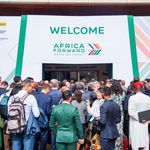
The Africa Forward Summit, co-hosted in Kenya by President William Ruto and French President Emmanuel Macron last month, highlighted a growing recognition among African leaders, investors, and institutions that Africa’s economic transformation will depend on whether Micro, Small, and Medium Enterprises (MSMEs) can scale sustainably.
Africa can no longer afford to remain a supplier of raw materials while importing finished products at a higher value. The continent’s industrial future will depend on building enterprises that are competitive, investment-ready, and capable of scaling across regional and global markets.
This is critical because the treatment of MSMEs in the country reveals a historical paradox. Despite being widely recognised for their significant economic contribution, MSMEs have long faced systemic challenges, including high taxation, regulatory hurdles, and limited access to affordable credit.
They continue to bump into obstacles such as fragmented logistics systems, weak market linkages, compliance burdens, and difficulties meeting international standards, particularly within European markets. At the same time, many entrepreneurs struggle to understand investor expectations and position their businesses for sustainable growth and scale.
The challenge facing MSMEs today is not innovation, but access to the systems that turn readiness into investment. Too often, investors struggle to find businesses with the governance structures, financial documentation, compliance readiness, and operational maturity required for investment.
Despite all these challenges, a report by the State Department MSMEs Development reveals that the sector is the backbone of Kenya's economy, contributing 34 percent to the national GDP and 83.5 percent of total employment.
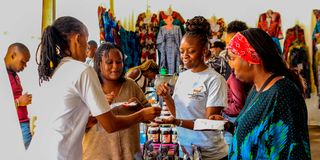
This challenge came into sharp focus during the Investor Matchmaking Session on connecting MSMEs, to access to capital, held at Strathmore Business School, where more than 80 MSMEs engaged directly with investors, innovators, and ecosystem actors.
Unlike traditional networking forums, the session created practical conversations around what African enterprises need to compete globally.
The Curated Investor Matchmaking event was not just about networking or symbolic engagement with business realities. It created a space where entrepreneurs building businesses across agriculture, climate innovation, manufacturing, logistics, fintech, and digital trade could engage directly with pre-screened investors, ecosystem actors, and innovators in practical conversations about what Africa’s economic transformation truly requires on the ground.
It is about the poultry farmer in Makueni County struggling to get products to Nairobi while they are still fresh and safe for consumers. It is about the macadamia farmer trying to access European export markets but facing complex certification requirements.
It is about the raisin producer in Mandera wondering how products can reach international markets through reliable trade and logistics systems. These are the everyday realities that will determine whether African enterprises remain small local businesses or grow into globally competitive industries.
What distinguished the matchmaking session was its focus on investment readiness. Participating enterprises underwent structured preparation processes that included refining pitch decks, strengthening governance systems, organising financial documentation, and improving investor readiness.
Since Africa is entering a new economic era, this calls for all stakeholders, including academia, to start re-thinking on how the continent can establish ecosystem actors who can work together to build systems that support enterprises from idea stage to global competitiveness.
But unlocking its full potential will require African enterprises that are competitive, technologically adaptive, compliant with international standards, and capable of scaling across borders. Africa’s transformation will not be measured only by the size of investment commitments announced at summits.
It will be measured by whether ordinary entrepreneurs, farmers, innovators, and MSMEs are meaningfully integrated into those opportunities.
Because real transformation begins when African enterprises are not only able to survive, but to scale, compete globally, and create jobs across the continent.
By convening investors, innovators, ecosystem actors, and enterprises in one room, Strathmore University Business School demonstrated the increasingly vital role universities must play in shaping Africa’s economic future, not only through research and teaching, but through ecosystem building, enterprise support, innovation leadership, and policy-to-practice engagement.
Jane Daniel is a voice in International Trade at the Africa Economic Development Hub, Strathmore University Business School.