Last week, Nairobi felt like one of those mathematical equations from primary school. The ones that looked simple until you actually tried to solve them, and suddenly everything became chaos.
Floods swallowed roads. Traffic turned philosophical rather than directional. Meetings started late or never happened at all. Between rain and headlines, geopolitics had not taken a holiday. Markets reacted nervously, whispers of mergers floated through Nairobi boardrooms, and founders were negotiating deals while checking weather updates.
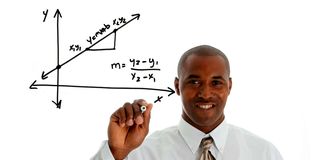
Life was doing a lot of mathematics. Math is still ‘mathing’.
I was forced to watch it more slowly than usual. A minor surgery earlier in the week had quietly imposed something founders are not good at— rest. When your body insists that you slow down, the world looks different. You observe things you would normally rush past. The floods added an unexpected twist.
My parents live barely eight kilometres from my house. Yet in all the years I have lived there, they had never spent a single night under my roof. Somehow, the traditions of family life had always made it unnecessary.
Until the rain arrived. Roads flooded. Traffic froze. And suddenly, the only logical solution was that they stay over. God, it seems, occasionally uses Nairobi weather to enforce family visits.
So there I was. Recovering from surgery, watching floodwater turn streets into temporary rivers, while my parents occupied my house for the first time in history. Outside, the city was chaotic. Inside, things were strangely calm.
And somewhere in that quiet moment, between WhatsApp messages about flooded roads and a Friday night dinner that turned into something rarer, three generations at one table talking about life, health, and things that matter, an old school concept came back to me. BODMAS.
For those who have not revisited primary school mathematics, BODMAS determines the order in which complex equations are solved: Brackets. Orders. Division and Multiplication. Addition and Subtraction. Ignore the order, and the answer becomes nonsense. Follow it, and even complicated expressions eventually make sense.
Watching the chaos unfold, I realised something. Much of the confusion we experience in business, relationships, and life happens because we try to solve the equation left-to-right. But life was never designed that way.
Math is still mathing. We just keep ignoring the formula.
Consider a typical Nairobi founder’s equation: Opportunity + pressure × relationships – politics² + ambition. Solve that randomly, and the result is confusion.
Apply BODMAS and patterns appear. The problem is that Nairobi often behaves like a matatu conductor shouting “twende!” while the driver has not decided the route. Everyone is moving. Very few are solving the equation correctly. When the answer comes out wrong, we blame the market, the weather, anything except the order in which we approached the problem.
Start with brackets. In mathematics, brackets define the container within which everything else operates. In life and business, they are the non-negotiables.
Trust. Shared values. Clear agreements. Purpose.
Without them, everything else becomes unstable. Many business conflicts today are not about money or strategy. They are about brackets that were never defined. Who owns what? Who carries the downside risk? Who decides when things go wrong? These conversations are uncomfortable, so they are postponed.
Until pressure arrives. And pressure always arrives. Sometimes, it’s due to financial stress. Sometimes, as geopolitical shocks. And occasionally, as Nairobi floods, it forces your parents to finally spend the night in your house. Weak brackets collapse quickly. Strong ones quietly hold.
Then come orders. The powers. Forces that grow exponentially. In life, they appear as ambition, ego, fear, or conflict. A small misunderstanding becomes drama². A promising idea becomes ambition³. A single merger rumour multiplies investor attention overnight. Mathematics understands this. Humans pretend they do not. Until the equation explodes.
Next, division and multiplication. The deal table. Division distributes responsibility: who does what, who contributes capital, who carries risk.
Multiplication creates growth: ideas multiplied by execution, networks multiplied by trust, markets multiplied by timing.
Healthy partnerships balance both. When they fall out of sync, the equation breaks. Some founders multiply ambition without dividing responsibility. Some investors divide upside without multiplying support. Eventually, someone leaves the deal table wondering what went wrong. The answer is usually simple. The order was wrong.
Finally, addition and subtraction. The busy arithmetic. Another meeting. Another hire. Another budget cut. Most organisations spend all their time here, adding activity and subtracting costs. But if the brackets are weak and the exponential forces are ignored, these adjustments cannot fix the equation. They only make the wrong answer arrive faster.
Next week in Part 2, we go deeper. Because solving the equation correctly is only the first step. The real question is: who writes the equation in the first place?
The strange gift of the past week was that the floods, the surgery, and the unexpected multi-generational sleepover all did something rare. They slowed the equation down. When things slow down, patterns become visible. You realise life has structure. Chaos often appears when we skip steps. And the formula has not changed.
Whether in business, relationships, or Nairobi traffic during rainy season: Math is still mathing.
Next week in Part 2, we go deeper. Because solving the equation correctly is only the first step. The real question is: who writes the equation in the first place?
Michael Macharia is a serial entrepreneur, founder of Seven Seas Technologies, Ponea Health, and the creator of Founders’ Battlefield.
Unlock a world of exclusive content today!Unlock a world of exclusive content today!