We must get our politics right to lift economy

DNAZIMIOBRIEF2103B

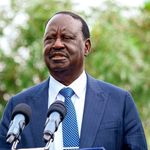
The late Raila Odinga.

My brief in this space is to comment on topical business and economic issues. But I would be burying my head in the sand if I didn’t say something about Mr Raila Odinga, who passed on in India last week — an event already rippling through boardrooms and markets alike.

Indeed, this is one of those rare moments when commentary in the business and economics space isn’t a digression but almost a duty — because this passing will ripple across many sectors.
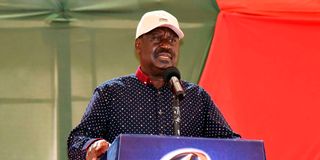
The death of a figure like Raila Odinga is bound to unsettle political alliances, disrupt the internal dynamics of the ODM party, which he led, and shift the balance of influence within government.

For businesses, that means uncertainty: which factions gain more leverage, which policy priorities rise or fade — from regulatory reform and trade incentives to land and devolution policy.

In Kenya, business leaders instinctively respond to major political events. My role, as I see it, is to help the business community interpret this moment — to decide whether it presents an opportunity, risk, or a turning point.

On Wednesday, I was invited to speak to a group of foreign fund managers and senior representatives of private equity funds visiting Kenya to explore investment opportunities.

As we exchanged views, one issue dominated their discussions: the political uncertainty surrounding the transition from an era in which Raila Odinga had remained a central player for decades.

The sense of unease in that room was palpable — exacerbated by the sharp rise in political temperatures following Raila’s death. It did not help that their visit coincided with an outpouring of inflammatory rhetoric by MPs and governors from both sides of the political divide.

Why are we breeding so much unnecessary anger in this country? Watching prime-time television has become a depressing affair. Night after night, bulletins are dominated by politicians spewing strident ethnic rhetoric — reducing national grief to a platform for chauvinism and parochial score-settling.

The passing of an icon like Raila should be a moment for introspection — a time to look in the rear-view mirror and reflect on our journey since the passage of the 2010 Constitution: the progress we have made, the bumps we encountered, and what remains undone in our democratic experiment.

Few remember that in his later years, Raila had turned his attention to unfinished constitutional business — reopening uncomfortable debates about devolution that we have conveniently avoided since 2010.

He questioned why the Kenya Rural Roads Authority (KeRRA) and the Kenya Urban Roads Authority (KURA) still exist, even though their functions were constitutionally devolved to county governments. He argued — against fierce resistance from MPs across the aisle — that the Constituency Development Fund was an anachronism under the 2010 dispensation.

He also challenged the duplication of oversight roles over counties by both the Senate and county assemblies — a structural inefficiency that continues to weigh down governance.

We had hoped that devolution, and the constitutional requirement to allocate at least 15 percent of national revenue to counties, would end the grievances about the marginalisation of certain communities. It has not.

We also expected that devolution would lower the stakes of national elections — that it would make politics less of a “do-or-die” contest, and encourage bargaining, tolerance, and compromise among political rivals. It has not.

As we learned painfully in 2007, high-stakes, zero-sum politics promotes fiscal recklessness. When political heat rises, the Treasury reaches for the chequebook. Politically motivated infrastructure projects get hurriedly funded. Populism trumps prudence.

Beyond politics, Raila’s passing also shines a light on the deeper institutional weaknesses that continue to undermine confidence in Kenya’s governance environment.

We have major issues with the credibility of law enforcement and the Judiciary. Increasingly, courts appear to be circumvented, and businessmen and lawyers are beginning to resort to the protection of organised crime to resolve civil disputes.

The evidence is in the unprecedented rise in murders of businessmen, lawyers, and bankers in execution-style killings — a trend beginning to resemble an emergent, brutal private system of dispute resolution.

When the Judiciary and law enforcement are perceived as corrupt, uncertainty seeps into the business climate. Yes, we have formal laws and institutions for fighting corruption. But experience has taught us that these systems only work when the power of incumbents to weaponise them against opponents is curbed.

Until we get our politics right, this economy will not take off — and no amount of fiscal discipline or foreign investment will change that fact.

PAYE Tax Calculator

Note: The results are not exact but very close to the actual.