It seems that securitisation of statutory levies is the new game in town for our cash-strapped government.
Just the other day, they securitised a fraction of the Roads Maintenance Levy in a transaction that made it possible for the Kenya Roads Board to raise a whopping Sh178 billion in upfront cash to settle pending bills, including contractor claims on projects left behind by the administration of President Uhuru Kenyatta.
The latest transaction is the deal where they have just securitised the Sports Development Levy and raised a massive Sh44.8 billion. As we all know, the main source of income for this fund is proceeds from betting and lottery taxes and fees.
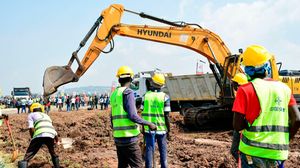
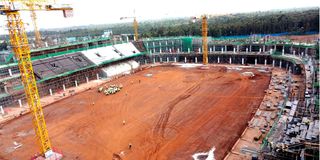
The government intends to use this money to pay the influential Chinese contractor, China Roads and Bridges Corporation (CRBC), currently constructing the 60,000-seater Talanta Stadium on Ngong Road.
We are in the middle of a trend that is beginning to resemble a rapid-fire securitisation binge. What is next in line? Perhaps they will now start thinking about securitising the Railway Development Levy Fund — or the Tourism Promotion Fund, the Housing Levy, or the Universal Service Fund, managed by the Communications Authority.
Under the current trend, and with the seemingly growing appetite for securitisation deals, airport charges and receivables from parastatals such as the Kenya Ports Authority may become tempting prospects for the government.
What does securitisation of receivables mean in simpler terms? It is a simple model: you borrow tomorrow’s money to pay today’s bills and, in the process, hide some of your debts from the debt register.
Put differently, you raise upfront cash to settle arrears and fund the infrastructure budget. This type of deal also allows the government to circumvent debt ceiling thresholds set by Parliament.
There is a flip side. First, any administration that succeeds the current administration of President William Ruto will not have the flexibility to access these revenue sources, because the securitisation deals will have locked in the revenue streams for years.
The transaction on the Roads Maintenance Levy is illuminating in this regard. Out of the Sh25 per litre of petrol and diesel currently collected by the fuel levy, Sh7 has been securitised and sold to an SPV.
The mandated arrangers are the two leading Pan-African development banks — the Cairo-headquartered Afrexim Bank and the Trade and Development Bank, formerly PTA Bank. The money is ring-fenced and can only be used to pay roads contractors. The receivables are locked in for the tenure of the bonds.
In the case of the Sports Fund, the receivables — representing a portion of the cash flows amounting to Sh524 million per month, according to the reporting of the rating agency GCR — will be locked in for fifteen years. The bonds, maturing in 2040, have been listed on the Nairobi Securities Exchange.
Which country in Africa is on an aggressive securitisation binge like Kenya? Ghana. I read somewhere how Accra securitised levies meant to stabilise funding for the power sector and quickly followed with education funds and levies.
But the infamous Agyapa royalties transaction — where the regime in Accra attempted to securitise gold royalties on the London and Ghana Stock Exchanges — was unsuccessful following protests by civil society and the opposition.
Critics charged that the deal was rushed through with limited parliamentary oversight and amounted to mortgaging receivables from gold mining in perpetuity.
Granted, securitisation is not a long-term solution to indebtedness. Tying up revenues undermines long-term fiscal planning. It drains funds from earmarked levies.
Yet, in the Talanta Sports Stadium case, I see a positive side. We in Kenya live in a context where, although we keep borrowing money, we don’t see tangible assets on the ground.
When we asked the government to show us where the billions from the Eurobonds went, the standard refrain was that money is fungible.
I am convinced that the experiment of securitising revenues from what is, in reality, a sin tax — gambling and lotteries — to build a sports stadium we can see, and where ordinary folk and sports lovers can visit to watch games, represents value for money.
Managed well — in a backdrop where corruption is systemic — the unintended consequence is that securitisation will allow you to insulate earmarked money from the “eating chiefs.”
We are building a football and rugby stadium with a seating capacity of 60,000. The design includes a Fifa-compliant natural grass pitch measuring 105 meters by 68 meters and incorporates modern technologies such as irrigation systems, energy-efficient floodlights, and real-time VAR technology.
Let’s see whether those Chinese contractors, working under the supervision of the Department of Defence, will deliver on the designs.
The writer is a former Managing Editor for The EastAfrican
Unlock a world of exclusive content today!Unlock a world of exclusive content today!