Time flies with great content! Renew in to keep enjoying all our premium content.
Prime
Tackling Africa’s e-waste through circular economy
With rising digital penetration, a growing middle class, and the constant upgrading of devices, the country produces thousands of tonnes of e-waste annually.
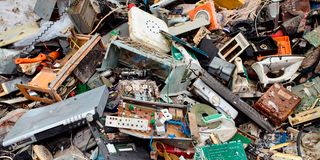
Each year, the world generates over 50 million tonnes of electronic waste (e-waste), making it the fastest-growing solid waste stream globally.
Much of this waste finds its way to developing regions, particularly in Africa, where regulation and infrastructure for safe disposal remain limited.
The consequences are severe: toxic substances seep into soil and water systems, informal recyclers are exposed to hazardous materials, and valuable resources such as metals are lost instead of being recovered.
Kenya is no stranger to this challenge. With rising digital penetration, a growing middle class, and the constant upgrading of devices, the country produces thousands of tonnes of e-waste annually.
Yet only a fraction is properly collected or recycled. The majority is either dumped in landfills or handled by informal recyclers operating without safeguards. This reality has sparked a growing conversation on the need for structured systems that balance environmental protection with economic opportunity.
One of the approaches gaining traction is the circular economy - a model that emphasises keeping products, components, and materials in use for as long as possible. Instead of treating discarded gadgets as waste, the circular economy reimagines them as resources that can be repaired, refurbished, or recycled.
Across Africa, circular practices are beginning to take root in sectors such as plastics, agriculture, and textiles. Now, the spotlight is increasingly turning to electronics.
In Kenya, collaborative partnerships are emerging to address this gap. Companies, recyclers, and community organisations are beginning to align efforts to both reduce the hazards of unmanaged e-waste and unlock opportunities for reuse.
For example, some manufacturers are partnering with licensed recycling facilities to channel obsolete ICT equipment into safe collection and disposal systems.
This reduces the risk of harmful substances entering the environment while also allowing valuable metals and components to be recovered.
At the same time, refurbishment of ICT equipment is creating a bridge toward digital inclusion. Schools, community institutions, and underserved populations often lack access to functional computers and devices because of cost.
Restored equipment offers a pathway to address this digital divide, giving students and communities access to tools essential for education and livelihoods in an increasingly digital economy.
Environmental experts argue that these interventions cannot be left to government regulation alone.
“Circular economy partnerships are critical in Africa because the scale of the challenge is too big for any one actor,” notes an independent sustainability consultant.
“When businesses, recyclers, and community organisations come together, you not only address the environmental risks of e-waste but also create social and economic benefits.”
This shift aligns with Kenya’s green transition agenda, which emphasises sustainable industrial practices and responsible waste management as part of the country’s Vision 2030 goals. It also connects with global efforts under the UN Sustainable Development Goals, particularly SDG 12 (Responsible Consumption and Production) and SDG 13 (Climate Action).
Still, challenges remain. Public awareness about safe disposal options is low, and incentives for returning old devices are limited.
Infrastructure for collection and recycling is concentrated in a few urban centres, leaving much of rural Kenya underserved.
Addressing these gaps will require not only corporate action but also policy innovation, consumer education, and stronger enforcement of extended producer responsibility guidelines.
Despite these hurdles, the momentum is encouraging. Partnerships between industry players and recycling organisations in Kenya demonstrate that circular approaches are not abstract concepts as they can be operationalized.
When obsolete devices are collected, hazardous materials are neutralized, and refurbished equipment is redirected to schools, the ripple effects are clear: healthier environments, empowered communities, and a more resilient economy.
As Africa continues to grapple with the twin challenges of rapid digital growth and mounting waste, the lessons from the HACO - WEEE initiatives point to a broader truth: sustainability is most effective when it is collaborative.
The task ahead is to scale these efforts, embed circular practices into policy and business culture, and ensure that the story of technology in Africa is not just about innovation, but also about responsibility.
The writer is Managing Director of HACO Industries
Unlock a world of exclusive content today!Unlock a world of exclusive content today!