Why securitisation of construction projects is a road worth taking

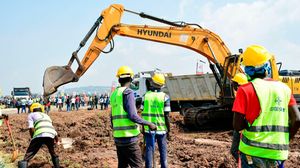
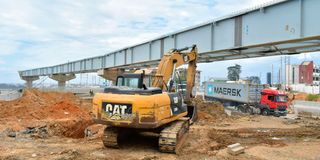
An earthmover is on standby at a construction site at the Changamwe roundabout on July 28, 2021. 

Photo credit: Wachira Mwangi | Nation Media Group

When Kenya’s President William Ruto announced a shift towards innovative funding of infrastructure — specifically securitising road projects — the policy sparked criticisms.

Critics accused the government of mortgaging the nation’s future, raising debt behind closed doors, and prioritising asphalt over social welfare. But this cynical lens misses the broader symbolism of the move: a deliberate act of national revival.

At its core, securitisation is a financial tool that converts future road tolls or revenues into upfront capital.

In Kenya’s case, it is a pivot away from donor dependency and debt-heavy bilateral deals toward unlocking domestic capital markets.

Instead of waiting for cash that may never come, Ruto’s administration is betting on Kenya’s future — quite literally.

This model is not without precedent. Emerging economies from Colombia to India have used securitisation to transform infrastructure development.

But in Kenya, it carries a deeper message: a defiant assertion that the country will no longer stall its ambitions because of broken financing pipelines.

Critics who reduce the strategy to financial jargon ignore the human element. Every road restarted — whether in Isiolo, Migori or the sprawling arteries of Nairobi — is a lifeline.

Construction means direct employment for thousands of young Kenyans. It means welders in Gikomba, engineers from Kisii, and truck drivers from Mombasa all have work.

For a country battling youth unemployment and a cost-of-living crisis, this is not just macroeconomics — it is urgent livelihood restoration.

What’s more, roads are not mere ribbons of tarmac; they are enablers.

When farm produce from Meru gets to Nairobi in hours instead of days, prices drop and incomes rise. When traders in Turkana can access markets in Eldoret more easily, an entire local economy is activated. Roads create visibility, value, and voice for previously disconnected communities.

Yet the opposition’s framing of securitisation as a “mortgaging” of Kenya is politically convenient but intellectually lazy.

What alternative are they offering? Return to slow procurement cycles, delayed disbursements, and half-finished highways choking with dust? The symbolism of stalled roads is not lost on Kenyans — it represents broken promises, elite paralysis, and deferred dreams.

Securitisation flips that narrative. It signals urgency, confidence, and long-term vision. It tells the informal sector, which makes up 80 percent of the workforce, that government policy is not a trickle-down monologue — it is targeted action. Contractors get paid.

Suppliers revive their dormant shops. Casual labourers earn a wage. And crucially, a sense of economic motion is restored.

The political elite may debate debt ceilings in posh conference rooms, but in Githurai or Kitale, what matters is whether someone got a job this month, whether their child’s school fees are now within reach because cement orders resumed.

President Ruto’s strategy is not just about kilometres of road; it’s about reanimating economic pulse points across the republic.

Of course, transparency must be non-negotiable. The Kenya Roads Board, National Treasury, and Parliament must scrutinise securitisation structures to guard against abuse. But to reject the model outright is to surrender to inertia.

President Ruto is not just building roads — he is trying to build belief: that Kenya can finance its development, that jobs can return, that hope can be engineered as deliberately as any bypass or flyover.

Critics may scoff at the financial creativity, but for the jobless graduate in Nakuru or the stalled mechanic in Kisumu, the return of construction means something else entirely.

It means the country is finally moving forward again. And that is a road worth taking.

The writer is a public policy analyst. [email protected]

PAYE Tax Calculator

Note: The results are not exact but very close to the actual.