The battlefields of 2020s and beyond are currency corridors, energy chokepoints and strategic resource chains. The economy is not a parallel theatre; it is the theatre.
The most serious threats to Kenya today do not just wear boots, suicide vests or carry rocket-propelled grenades, cross borders, or announce themselves on intelligence advisories.

They arrive quietly - through markets, cables, grids and pin-stripe suits wielding contracts and commercial agreements we clap for without reading the fine print.
Modern power doesn’t storm the gates; it buys the land around the fortress until the fortress is an island. It builds a moat around the resource, not to protect but to exploit it. We have already been warned by reality, more than once.
When our Eurobond yields shot up and rolled us into an expensive corner, it wasn’t simply a “market reaction.” It was a lesson: sovereignty can be squeezed through interest rates and access to capital. Financial pressure is a form of state pressure.
We negotiated, refinanced, extended, repackaged - but beneath the financial engineering was a truth we didn’t say out loud: our economic flank is exposed, and exposure is a security issue, not just a fiscal one.
It doesn’t help that Kenya is still lurking in the dark corridors of anti-money laundering and counter terrorism financing grey list globally; the implication isn’t just enhanced scrutiny on financial transactions and increased cost of compliance – it is a strainer on inbound capital itself.
A potential reason for capital flight.
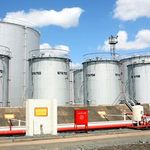
Then the lights went out - repeatedly - and not in remote corners of the republic, but at the nerve centres of our economy. Nairobi went dark. Jomo Kenyatta International Airport fell silent, runways dead, terminals lit by backup systems not designed to carry a nation’s reputation.
The grapevine on internet platforms like X (formerly Twitter) about the reasons for such wide-sweeping blackouts has not helped Kenya’s reputation either. No foreign adversary needed to test our airspace; the country demonstrated, unprovoked, how to bring itself to its knees.
Multiple times. It should never take more than one airport blackout for a serious state to update its doctrine on energy as a national security asset. It is an opinion that having Kenya Power Company as the only national utility scale power distributer is a national security concern in itself.
Our mineral story - or more accurately, our mineral habit - is another window into how casually we treat the assets that the world considers strategic. In a century defined by rare earths, lithium, cobalt, niobium and graphite, we still sign mining licences as if they are real estate leases.
Other nations treat those resources as bargaining chips for their future industrial capacity. We treat them as ribbon-cutting opportunities. The difference is philosophical, not administrative.
It is the difference between seeing minerals as revenue and seeing them as leverage. It is now out there, global powers like China and the US showing a keen interest in our rare earth reserves, estimated to be worth about two thirds of our current debt stock, about $62 billion.
Minerals licences are not merely commercial instruments; the world treats them as geopolitical assets. Mrima Hills is certainly atop US Vice President JD Vance’s agenda when he visits. We will concede ground, given the president’s blunder in foreign relations with former Us President Joe Biden. But what will we get in return for the conceded ground? Or perhaps, forgone revenue?
There will be national security consequences to this – but econnomic in nature and may fly over the heads of the current state bureaucrats.
Instead of allowing a non-exploitation concession on the rare earth elemsnts, we could get into a mutually beneficial relationship into building a rare earth refinery – setting us up for major defence, space and global electronics supply chain race.
The economic multiplier around that would be able to inject over $240 billion into the Kenyan gross doemstic product over the next 10-15 years and creating thousands of jobs in the process. That is a strategic national security imperative.
When you look beyond us, the Nord Stream sabotage in Europe didn’t just destroyed two pipelines; it rewired the continent’s entire thinking about energy, alliances and vulnerability.
China’s export controls on rare earths, gallium, germanium and advanced battery technology weren’t mere trade decisions - they were strategic manoeuvres, to remind the world that controlling supply chains can be more decisive than controlling armies. Energy and minerals are now geopolitical instruments. This is not theory. It is the operating system of modern power.
In Kenya, we have structured our national security imagination as if the only legitimate threats are those that can be confronted in uniform. Defence, intelligence and policing remain vital pillars - but power has migrated, and our thinking has not caught the flight. As it stands, we have perfected exceptional talent in mastering structure instead of leverage.
So what would a state that actually intended to keep its future look like?
A serious republic would not design a national security architecture that excludes the custodians of its currency, its energy lifelines and its economic bargaining chips from the core of strategic decision-making. You cannot defend a country’s sovereignty if the stewards of the economy and the stewards of the energy system sit outside the room, where security strategy is defined.
Imagine a small, concentrated office: an advisor who is not ornamental but obligatory, whose job is not to whisper in corridors but to convene the minds that can translate risk into plan, and plan into executed contingency.
Imagine Treasury on the core panel of security decisions because finance is where coercion often begins.
Imagine Energy at the table because when the lights go out, the social contract frays faster than the printed slogans in our press conferences. Imagine a requirement - not a suggestion - that any strategic concession, infrastructure contract, or cross-border asset transfer arrive with a security-impact assessment and a mitigation plan.
You manage risk by naming it, by assigning authority, and by making failure expensive and public. The alternative is improvisation in the teeth of catastrophe, and improvisation is the luxury of those whose options have not yet been exhausted by miscalculation.
A state that confuses the comfort of ceremony, with the rigor of preparedness is a state that will discover its limits in messy, irreversible ways. Put Treasury and Energy into the National Security Council by law. Institutionalise a National Security Advisor to integrate defence, intelligence, finance, energy, cyber and minerals.
This is not bureaucratic cosmetics. It is how sovereign states survive the century. National security is no longer a uniformed domain - it is a whole-of-state discipline. It requires a mind at the centre that integrates defence, intelligence, economic resilience, energy stability, technological sovereignty and resource strategy into a single national posture. Many countries call that role a National Security Advisor.
We treat it as optional decor. A third-rate aide to the president, when this is the individual that ought to consolidate military, civilian, economic and energy intelligence into a presidential daily advisory brief.
The state must stand tall at all times as an organ of resilience. Regimes fail; the state must always endure. There is dignity in admitting that the world has changed, and Kenya must change with it or perish.
Brian is a business reporter at NTV and Felix is a software engineer and a businessman based in Kenya
Unlock a world of exclusive content today!Unlock a world of exclusive content today!