Reality check: The uncounted stakeholder

Taking care of yourself is not stepping away from the business. For the founder, it is the most serious risk management there is.

Photo credit: Shutterstock

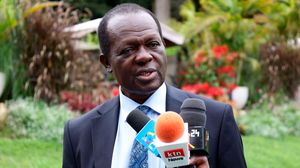
There is a small town in Laikipia where, this past week, residents stood at the gates of an air base holding placards. The United States, in partnership with the Kenyan government, intends to build a bio-isolation facility there at Nanyuki, a place to quarantine American citizens exposed to Ebola while working across the border in the Democratic Republic of Congo. 

Washington has committed around $13.5 million toward Kenya's preparedness. President William Ruto has defended the plan as one of 24 facilities, insisting it will serve Kenyans too. "We know what we are doing," he said. "People should relax."
The High Court was less relaxed. It suspended construction twice in one week. Kenya has recorded no Ebola cases. Neighbouring Uganda has reported nine, with one death. The strain driving the outbreak has no approved vaccine. And so the country argues, loudly, about a facility for a disease that has not yet arrived.

Beneath the noise sits an old and uncomfortable question. Who carries the risk, and can the people running the system be trusted to protect those who depend on it? This is not distant news for founders. It is a mirror. Because every founder is, in some quiet way, the system that has built no isolation unit for itself. We pre-position nothing. We assume the body will hold.

We tell ourselves we know what we are doing, that we can push through, that people should relax, even as the court of our own physiology begins issuing its suspensions. Sleep first. Then appetite. Then patience. Then the slow erosion of the very judgment the business depends on.

The founder is the single point of failure in a system that refuses to admit it has one. There is a moment most founders will recognise.

The body begins to signal that it needs to stop. Not next quarter. Now. And the system, the deals mid flight, the payroll due Friday, the investor who wants a call, answers with a flat and total no.

There is no surge capacity. No deputy who can hold the line. No facility prepared in advance for the day the founder goes down. So the founder overrides the signal, performs optimism and keeps moving. Until the signal becomes a symptom.

I have watched what happens when a key person simply disappears from a system for a few days. In any company, when someone goes quiet, the questions begin. Where is he? Is he alright? The absence itself becomes information.

Now multiply that by the weight a founder carries, and you begin to see the real exposure. When a founder goes dark, it is not one desk that falls silent. It is an entire web that begins to ask the same frightened question. This is the part we rarely map honestly. So let us build the full view of who is actually in play when one founder's health fails.

The employees, whose salaries and whose own families sit downstream of decisions only the founder makes. The customers, who bought a promise of reliability. The suppliers waiting on payment.

The wider community that quietly treats the successful founder as a private insurance fund, a source of black tax and last resort rescue.

And then, almost always uncounted, the one stakeholder the founder forgets to list at all. Every other party gets a line in the risk register. The founder's own body and mind rarely do.

This is where the operating system many of us carry becomes a diagnostic rather than a slogan. Strategically, indispensability is not strength. It is fragility wearing a crown. A founder who cannot be absent for two weeks has not built a company.

He has built a life support machine that happens to employ people. The strategic work is unglamorous and urgent. A second in command who is genuinely trusted. Authority distributed before a crisis forces the question.

In mindset, the trap is subtler. Indispensability feels like meaning. If everything flows through me, then I matter. But that is a scarcity story dressed as pride, and it quietly guarantees that the moment you fall, everything you built falls with you.

Spiritually, there is a harder reckoning. We say we are building so that others may stand. Yet a system designed around a single irreplaceable person is not built for others at all. It is a monument to our own importance. Legacy is not what collapses when you rest. Legacy is what holds.

So the lesson the Laikipia argument offers founders is almost literal. You do not wait for the disease to arrive before you build the capacity to isolate and recover. You build it while the skies are still clear, because clarity rarely precedes the crisis.

Name the person who can run things for two weeks, then leave for two weeks and let them. Write down what only lives in your head. Take the break before the body schedules it for you, on terms you will not get to negotiate.

Taking care of yourself is not stepping away from the business. For the founder, it is the most serious risk management there is.

The body, like the public, does not believe the press statement. It keeps its own records. And one day, quietly, without asking permission, it presents the bill. The question was never who depends on you. It is whether anything you built can still stand on the day you finally rest.

Michael Anthony Macharia is a serial entrepreneur, founder of Seven Seas Technologies and Ponea Health

PAYE Tax Calculator

Note: The results are not exact but very close to the actual.