Poor quality construction materials fuel Kenya’s building collapse crisis

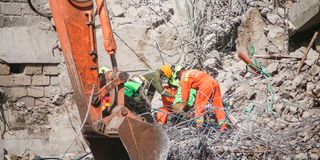
Rescue Personnel continue with search operations for one missing person trapped under the debris of the collapsed building in South C on January 5, 2026. 

Photo credit: Billy Ogada | Nation Media Group

The collapse of buildings in Kenya, exemplified by the recent incident in South C, is driven not solely by the negligence of engineers, but a key underlying issue: material failures and the use of sub-standard construction materials.

Witness accounts and early investigations paint a picture of structural fragility. The building did not topple; it pancaked – a mode of failure where rebar separated from concrete, a sign of poor material integrity.
This observation must drive the investigation beyond individuals and into the market. Which investor, having poured tens or hundreds of millions of shillings into a venture, would cut corners and risk their entire fortune and lives?

We should also question professional competence. Can an experienced architect or engineer knowingly be so reckless as to oversee a project doomed to fail? Construction crews on site should be equipped to identify sub-standard cement, steel or reinforced concrete.

Can the Kenya Bureau of Standards (Kebs) certify that the materials used in the South C building met the minimum quality standards?

The lynching of the technical crew, owner and approval officers is a necessary part of accountability for negligence, but it is narrow. This is a decades-long crisis hiding in plain sight.

Authoritative reports have been sounding the alarm for more than a decade. Data from the National Construction Authority (NCA) shows more than 86 building collapsed between 2009 and 2019, with many of the causes being sub-standard cement and steel.

A 2021 NCA audit revealed that 35 per cent of buildings in Kenya are at risk of failure, predominantly due to material shortcomings. Kebs internal reports are equally damning. A 2022 analysis indicated that a staggering three out of five cement samples failed basic strength tests.

To reverse this tide, Kenya must make on-site material testing a non-negotiable legal requirement for projects.

Condemnation must translate into structural reform. For accountability to be truly served, Kebs must release its market surveillance reports on cement and steel for 2020-25.

A public policy expert and former CEO, Kenya Association of Manufacturers.

PAYE Tax Calculator

Note: The results are not exact but very close to the actual.