In 2024-5, a large number of elections were held worldwide: at least 80 countries from around the globe, home to about 65 percent of the world population, voted, including in the most populous nations – India, Indonesia, Bangladesh, Brazil, Mexico, Pakistan, Russia and the United States.
These elections had a big impact on global economics, business and politics, with a continuing shift to populism and right of centre politics.
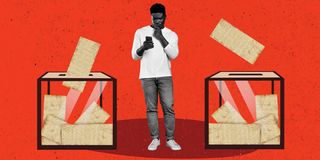
They proved that emotions are an integral thread in the fabric of politics. Though personal, emotions are also powerful rhetorical and structural tools used by leaders, the media, and citizens to shape public opinion and drive collective action.
Politicians use emotions to go around analytical thinking and trigger fast, instinctive, processing by voters.
Fear and anxiety are used to create a sense of urgency, justify restrictive policies on tariffs, immigration or security, or motivate voters to seek out and believe threatening information.
World-over, elections are won on fear, anger or hope. Obama’s 2008 campaign is one the most famous uses of hope in an election – Yes we can. All three Trump’s campaigns harnessed anger. The 2016 Brexit referendum was an anger campaign, while National Rainbow Coalition (NARC), 2002 was full of both hope and anger. The songs reflected it - unbowgabble for anger, and yote yawezekana for hope.
Today, the government’s narrative on transformation is about hope, with Singapore a moniker for the journey. The opposition’s narrative is about stroking anger.
Hope is by far the best for society. It functions as a unifying force, providing a vision for the future, to inspire collective progress. It leaves populations in an emotional state capable of positive individual action, crucial because that action is required to bring meaningful change at a personal level, such as increased income.
Anger and fear inhibit certain positive actions. Angry, fearful people may not invest or take other actions necessary for positive change such as increased incomes, in their lives.
Still, anger acts as a catalyst for political change. A favourite of populist movements, it targets "enemies" such as elites or out-groups, as the source of social problems. It has featured prominently in recent European and American elections.
Leaders will sometimes use public displays of emotion, such as weeping, to signal solidarity and build emotional ethos.
Appealing to the audience’s emotions and values creates authenticity. Emotions circulate between people and institutions like a form of capital, creating social boundaries.
Skilled politicians combine diverse emotions (anxiety, hatred, and pride) into single, powerful narratives of victimhood or triumph, to consolidate mass support.
One popular trick in this emotional bundling is the creation of "others". It strokes and exploits negative feelings such as distrust, against the out-groups. This is evident in the current opposition efforts to consolidate the Mt Kenya vote, with Somalis the target of the “otherness”.
Media and digital channels amplify emotions. Digital platforms are designed to prioritise emotionally charged content. Content that evokes high-arousal emotions (anger, awe, or joy) is significantly more likely to be shared and go viral than low-arousal content such as sadness.
A picture is worth a thousand words. Poignant images can bridge the communication gap between abstract policy and public empathy, often leading to rapid, though sometimes temporary, shifts in policy.
This management of public emotions for political ends has a considerable impact not just on democratic institutions, but the development process itself.
For example, the politics of resentment has led to democratic backsliding, even in the most advanced democracies. Intense public anger reduces trust in government institutions. Partisan loyalty allows leaders to assault constitutional checks with less public backlash.
Heightened fear makes citizens more willing to trade civil liberties for perceived personal or national security.
Critically, fear and anger negatively affect the development process.
The logical framework is one way to think about how development works. Inputs (budgets), lead to outputs (roads and electricity), which in turn lead to outcomes (more production), and the desired impacts (higher real incomes). But, this assumes the willingness of the citizen to take certain actions such as increase production. Outcomes and impacts are dependent those actions.
Efficient logistics offered by a good road leads to higher incomes only if the citizen engages in production, using the road to move her goods.
Electricity at home or market centre improves our lives when we use it for production. All this requires the right emotional frame – hopeful. No one invests while angry or fearful!
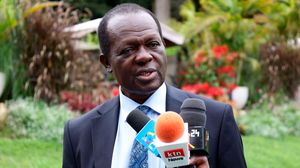
Ndiritu Muriithi is an economist and partner at Ecocapp Capital. He is also the chairman of KRA and former governor of Laikipia County. Email: [email protected]
Unlock a world of exclusive content today!Unlock a world of exclusive content today!