KRA should harness AI to unlock Kenya’s customs potential

VAT collections

To fully harness AI’s potential, KRA should pair its internal modernisation efforts with selective adoption of proven international solutions or best practices, engage stakeholders, and follow a results-driven implementation roadmap.

Photo credit: Shutterstock

Global trade is evolving at an unprecedented pace, presenting customs authorities with the dual challenge of facilitating trade while safeguarding security and ensuring optimal revenue collection.

Artificial Intelligence (AI) is emerging as a critical enabler in addressing these challenges, offering solutions to streamline operations, enhance risk management, and improve compliance.


As trade volumes surge due to e-commerce, supply chains diversify, and illicit activities become more sophisticated, traditional customs operations are struggling to keep pace.

This highlights the urgent need for transformation. AI is at the forefront of this evolution, poised to revolutionise customs by driving operational efficiency, enhancing security, and streamlining processes.

Currently, many customs administrations are exploring AI through fragmented, siloed initiatives, such as automating document processing or experimenting with machine learning for risk management.

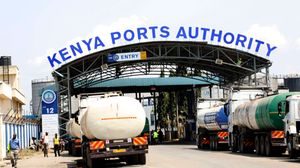
Locally, Kenya Revenue Authority (KRA) has also taken significant steps, piloting AI powered cargo scanners at the port and integrating them into its automated risk management systems. These scanners leverage machine learning to interpret cargo images and flag suspicious consignments for further verification, an important milestone in applying AI to enhance border security.

AI refers to a broad field of technologies and methods that enable machines to perform tasks that typically require human intelligence, such as reasoning, problem-solving, decision-making, and learning. AI is not a single technology but a collection of approaches, including rule-based systems, machine learning, and more.

Machine learning is a subset of AI that focuses on developing algorithms that learn patterns from data and improve performance over time without relying on explicitly hard coded instructions.

Machine learning models use statistical techniques to make predictions or decisions based on input data. For example, in computer vision, machine learning can classify objects in images – such as identifying mobile phones, clothes or shoes – or in natural language processing, it can interpret and analse text.

While KRA’s use cases demonstrate progress, they remain isolated and fall short of unlocking AI’s full potential across the entire customs value chain.

KRA can expand its AI implementation by automating broader risk management processes.

For example, AI can detect tax fraud and unlawful cross-border trade by analysing customs declarations and flagging suspicious transactions far more efficiently than traditional methods.

In post-clearance audits, AI can review vast data sets and match fields across multiple documents such as customs declarations, pre-verification certificates of export, packing lists, bills of lading, invoices, and certificates of origin, among others.

This enables automated identification of discrepancies like quantity mismatches, value inconsistencies, or origin gaps, significantly improving compliance and operational efficiency.

To manage the evolving challenges in international trade and customs, KRA should transition toward a cognitive customs model, characterised by advanced technological and operational capabilities. This transformation requires substantial investment to embed AI into the core of customs operations.

While many customs authorities remain at the experimental or opportunistic stages of AI adoption, moving toward a cognitive stage enables benefits such as predictive analytics, autonomous processes optimisation, and data-driven decision-making.

This shift enhances efficiency, security, and adaptability in an increasingly complex global trade environment, while enabling proactive risk management, improved trade facilitation, and a more transparent supply chain, ultimately fostering economic growth and international cooperation.

In February 2025 KRA’s Commissioner General announced that its ambition to become a data-driven revenue administrator would be realised through the creation of a technology-focused department – the Business Strategy, Technology and Enterprise Modernisation Department.

This internal alignment aims to streamline workflows, reduce redundancies, optimise internal resources, and leverage advanced analytics and automation for effective delivery of KRA’s mandate. This transformation underscores KRA’s commitment to tax compliance through efficient administration, technology-driven solutions and service excellence.

International initiatives can also accelerate this transformation.

Misclassification of commodities and Harmonised System (HS) codes leads to significant revenue loss for Customs worldwide. To address this, the World Customs Organisation (WCO) launched BACUDA (Band of Customs Data Analysts) project – a collaborative research platform that brings together Members and data scientists.

One of its flagship outputs is the HS Code Recommendation AI, designed to assist traders and Customs officials by using historical data to suggest accurate HS codes based on commercial descriptions of goods, reducing classification errors and improving efficiency.

To fully harness AI’s potential, KRA should pair its internal modernisation efforts with selective adoption of proven international solutions or best practices, engage stakeholders, and follow a results-driven implementation roadmap.

This approach will deliver safer, more efficient, and transparent customs processes, strengthening compliance, facilitating trade, and positioning Kenya as a leader in modern Customs administration.

The authors are consultants within PwC’s Tax Line of Service

PAYE Tax Calculator

Note: The results are not exact but very close to the actual.