On introspection, 2025 will be remembered as the year Kenya’s mobility and automotive sector pivoted decisively toward a stronger, more inclusive future. After years of fragmented discussions, pilot programmes, and cautious optimism, the country has moved from conversation to action.
As investor confidence continues to grow and government policy becomes clearer, consumers are demanding safer, more efficient, and environmentally responsible mobility solutions.
The most visible shift has been in e-mobility, where pilots have matured into a functioning market moving beyond experimentation to scale, commercial viability, and ecosystem building. Investment in local assembly and partnerships, and the integration of financing, after-sales support, and fleet solutions, has helped turn e-mobility from a future concept into a practical, customer-ready offering.
The proposed National Automotive Development Bill 2025 offers predictable incentives and renewed investor confidence. Locally assembled vehicles are increasingly getting preference for reliability and total cost of ownership rather than patriotism alone.
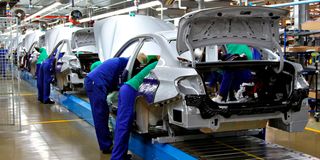
The revival of Kenya Vehicle Manufacturers (KVM), including reactivated assembly lines for multiple brands, demonstrates what happens when policy, investment, and industrial expertise align. As CFAO Mobility, our acquisition of KVM highlights Kenya’s potential to anchor an East African automotive value chain, create jobs, and transfer technology at scale.
Beyond assembly, Kenya must develop components manufacturing, supplier networks, and technician-training ecosystems. The African Continental Free Trade Area continues to open up regional markets, but long-term policy consistency and targeted incentives are essential to unlock the full industrial potential.
Financing has emerged as a powerful enabler. Consumers, SMEs, and logistics operators increasingly demand flexible solutions that match real income cycles.
However, challenges like currency volatility, high global logistics costs, and the dominant used-vehicle market continue to strain margins. Even as e-mobility gains momentum, infrastructure must scale to meet the rising demand.
As we get into 2026, the lesson we are carrying with us is that mobility revolution is no longer aspirational. It is happening now, powered by Kenyan innovation, resilience, and ambition, and the task ahead is urgent: to sustain the momentum.
The report by the Kenya National Bureau of Statistics (KNBS) indicating that the country recorded a surge in demand for trucks, mini-buses and station wagons points to a sector that is ready to take-off.
Cleaner cities, smarter transport solutions, broader vehicle access, and stronger industrial foundations are within reach, and Kenya must build them together.
The writer is the managing director of CFAO Mobility Kenya.
Unlock a world of exclusive content today!Unlock a world of exclusive content today!