How to stop Africa’s wealth drain

Reducing leakages is equally essential. Stronger institutions, modernised tax systems, and digitalisation can close loopholes.

Photo credit: Shutterstock

Conversations about Africa’s development usually begin with the same question: where will the money come from? Governments, development agencies, and private sector leaders spend countless hours negotiating new loans, pitching to investors, and courting donors.

However, the African Development Bank Group’s (AfDB) African Economic Outlook 2025 figures prompt a different conversation. The continent is not short of external capital. It is losing more than it is gaining.
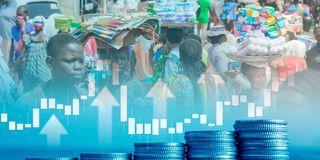
The data is stark. Africa attracted about $204.6 billion in external financial flows in 2023, including foreign direct investment (FDI), aid, portfolio investment, and remittances.

In the same period, an estimated $587 billion left the continent. For every dollar coming in, close to three dollars leave. The outflow surpassed the $578 billion in total revenue collected by African governments in 2023. It is hard to think of a clearer picture of a continent leaking its own potential.

The numbers upend the long-held narrative that Africa’s biggest financing challenge is a shortage of external capital. Africa is not underfunded. It is undervalued, under-accounted, and unable to retain much of the wealth it generates.

Capital flight is only one part of a wider story. The AfDB report shows that Africa can potentially mobilise an additional $1.43 trillion each year by tightening its systems, improving how resources are used, and addressing the areas where money quietly disappears.

That figure exceeds the estimated $1.3 trillion in annual financing needed to achieve the Sustainable Development Goals by 2030.

I have worked in development finance long enough to know how quickly conversations turn to external partners. I also know how rarely we ask the harder question: why does a continent so rich in natural capital, human talent, and economic promise lose so much of the wealth it generates?

A major source of loss lies in governance weaknesses that allow illicit financial flows to flourish. Profit shifting, mis-invoicing, underpriced natural resource deals, and manipulated export values drain billions.

These practices quietly move wealth out of Africa long before it appears in national accounts. Africa’s public expenditure efficiency gap stands at 39 percent, meaning that for every dollar spent, almost 40 cents of value is lost.

The continent also loses ground because it undervalues its assets. Many national accounts still rely on outdated frameworks that fail to capture the informal economy. Natural capital, from forests to mineral wealth and carbon sequestration, is rarely captured accurately in GDP calculations.

The AfDB’s analysis shows that, if carbon sequestration alone is accounted for, Africa’s nominal GDP in 2022 could have been $66.1 billion higher.

The blue economy, projected to be valued $405 billion by 2030, remains treated as peripheral in many national plans.
Remittances offer untapped potential as well.

Africans abroad send home about $91 billion annually, but high transaction costs and the dominance of informal channels limit broader impact. Remittances are projected to reach $500 billion annually by 2035 if reforms reduce costs and strengthen formal financial channels.

All of this brings us to the real work: solutions that stop the capital drain and reposition African countries to build from within.
One major priority is updating national accounting systems so countries can properly value their economic activity.

This means integrating the informal sector, which accounts for up to 65 percent of activity in some countries, and valuing natural assets and environmental services. Better data helps governments plan more effectively, negotiate from a position of strength, and create space to raise domestic resources.

Reducing leakages is equally essential. Stronger institutions, modernised tax systems, and digitalisation can close loopholes.

Kenya’s experience offers a telling example. After fully digitalising tax procedures in 2016, the country collected an additional $1 billion in the 2016–17 fiscal year, a 12.7 percent increase.

Improved public spending is another critical step. Without better systems, new revenue will leak through the same gaps.

There is room to combine several reforms here: formalising even part of the informal sector, which could generate an additional $125 billion annually; lowering remittance costs; deepening regional trade under the African Continental Free Trade Area; and supporting local manufacturing. All options offer ways to expand revenue without new taxes.

Victoria Sabula is the CEO of Africa Enterprise Challenge Fund (AECF)

PAYE Tax Calculator

Note: The results are not exact but very close to the actual.